Sound Coverage Planning for Large Venues: A 2026 Guide
What if clearer sound across a large venue depends less on turning up the volume and more on where the sound goes? A louder main system can make nearby seats uncomfortable while people further back still struggle to follow. That’s why sound coverage planning for large venues starts with the listeners, not the equipment.
If you’re unsure how a room’s shape, audience layout and acoustic conditions will affect what people hear, start by mapping the intended listening areas. The goal is consistent, intelligible sound across those areas, with a system suited to the space and programme.
This guide explains how to map listener zones, assess room conditions and compare coverage approaches, including when an audio line array may be appropriate. You’ll also learn how equipment configuration, testing and live operation can address coverage risks before they affect the event. Plan carefully, test thoroughly and keep every listening area in view.
Table of Contents
What sound coverage planning for large venues needs to achieve
Sound coverage planning for large venues is the process of designing and operating audio so it’s clear, appropriate and usable throughout the audience areas an event intends to serve. The aim isn’t simply to make sound audible or every seat equally loud. It’s to deliver a consistent experience that suits the programme, from the front of the room to the furthest audience zone.
Start by defining the event’s audio priorities. Is the focus intelligible speech, impactful music, audience interaction, or a combination that changes during the event? A clear answer gives the production team practical criteria for planning before selecting or positioning equipment.
What does good sound coverage mean in a large venue?
Audibility is only the starting point. A voice may be audible but difficult to understand. Music may reach the whole room yet feel harsh in one area and weak in another. Good coverage considers clarity, consistency and listening comfort across the places people will sit, stand or move.
The right result depends on how the audience uses the venue. At a conference, speakers need to be understood, including during questions from the floor. A live performance may call for a fuller musical experience, while a presentation with playback and audience discussion needs both. A sound reinforcement system uses audio equipment to support and distribute sound to listeners, but its design still needs to reflect the event’s purpose.
Consistent coverage doesn’t mean identical sound everywhere. Listening conditions vary across a venue, so aim for an appropriate experience in each intended audience area rather than applying one volume setting throughout.
Why the event brief comes before equipment selection
Equipment choices should follow the programme, not lead it. A useful brief describes what people need to hear and how the audio will be used: spoken presentations, recorded playback, live performance, audience participation or a mix. It should also flag changes in format, such as a formal address followed by questions from the audience.
Those changes affect the design. A microphone setup that works for a presenter may not suit an audience member speaking from elsewhere in the room. Music playback and live performance place different demands on the system, too. Mapping these moments early helps the production team plan speaker coverage, inputs, transitions and on-site operation.
With a defined brief, audio line array systems can be considered as one part of a venue-specific approach, rather than treated as the automatic answer for every large space. Set clear priorities, design deliberately and keep the audience’s listening needs at the centre.
How venue shape, acoustics and audience zones affect sound coverage
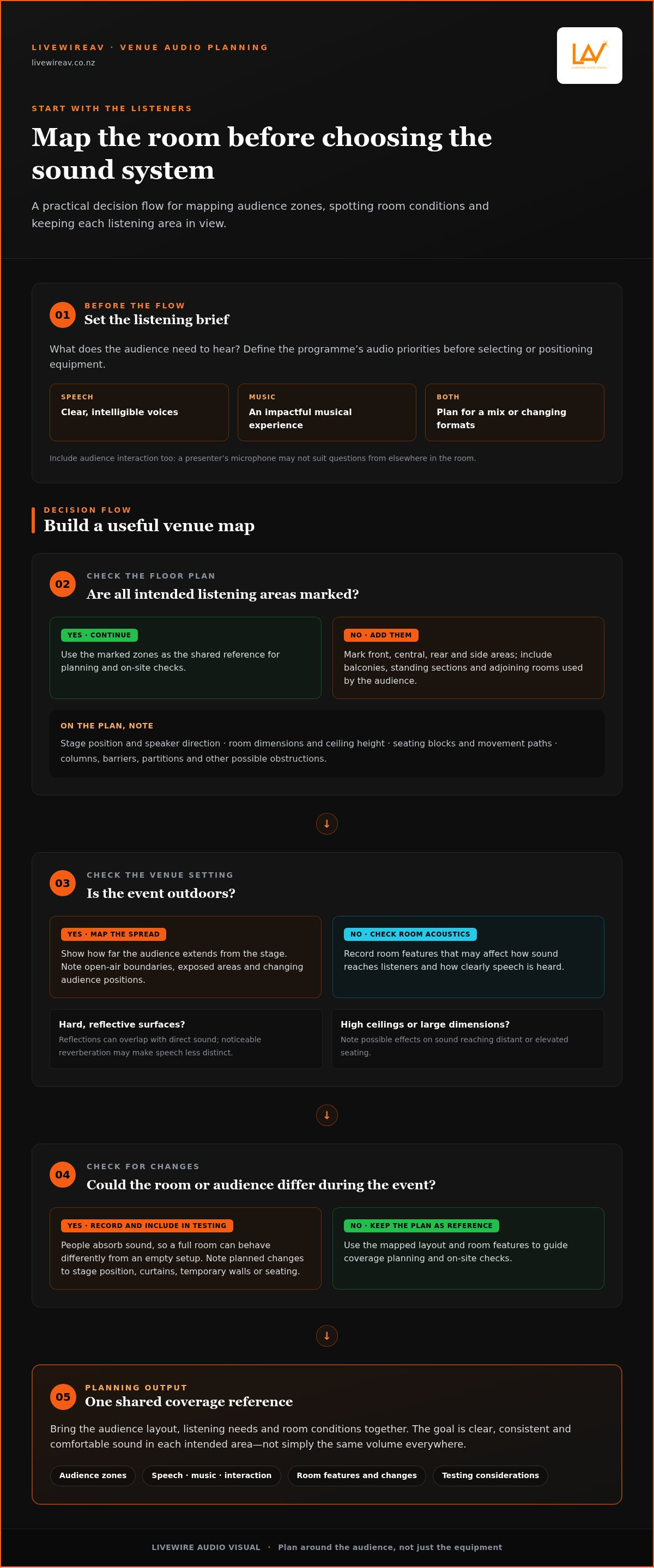
A venue plan is most useful when it shows where people will listen, not just where the walls are. For sound coverage planning for large venues, start with a floor plan and mark the stage, audience areas, room dimensions, ceiling height, balconies, partitions and likely movement paths. Include seating blocks, standing areas and any separate rooms used for the event.
Next, divide the audience into listening zones. Label each area by its position and use, such as seated speech audience, standing crowd, side seating or a zone where people may ask questions. This makes potential gaps and obstacles easier to identify before system design begins.
How to divide a large audience area into listening zones
Mark the front, central, rear and side areas, then add balconies, standing sections or adjoining rooms if they’re part of the audience. For each zone, note where people will be and whether they need clear speech, music or both. Include movement paths, such as entrances and walkways, so temporary crowd positions are part of the plan.
Simple planning diagram, viewed from above
Rear seating / balcony: check distance and sightlines
Side zone | Central audience | Side zone
Front audience: note stage edge and any obstructions
Stage → mark speaker positions and audience-facing direction
Use a floor plan where possible, marking barriers, columns and room divisions that could block a direct path between speakers and listeners. A sketch is also useful if it clearly identifies the zones and areas that need closer attention.
Which room conditions can change sound clarity?
Hard, reflective surfaces can send sound back into the room. When reflections overlap with direct sound, speech may become less distinct, particularly in a space with noticeable reverberation. High ceilings and large room dimensions can also affect how sound reaches distant or elevated seating. Record these features on the plan instead of treating the room as an empty rectangle.
Occupancy matters as well. People absorb sound, so a room can behave differently when full than during an empty setup test. Stage position, curtains, temporary walls and seating changes may also alter listening conditions. Note planned changes and include them in testing.
For an outdoor event, don’t assume sound will behave as it does indoors. Mark how far the audience spreads from the stage and consider open-air boundaries, exposed areas and changing audience positions when planning coverage.
A clear map gives the technical team a shared reference for planning and on-site checks. LivewireAV’s event audio production brings venue information, equipment configuration and technical operation together around the audience layout.
Which sound coverage approach suits a large venue?
The right arrangement depends on the audience layout, listening distance and programme, not venue capacity alone. A main loudspeaker system may suit a room where the audience sits within its useful coverage area. A distributed system can serve distinct sections, while supplementary delay positions may help extend coverage to distant seating. Compare each approach against the venue plan and event priorities, as every option has trade-offs.
Speech-led events need clear, consistent voice reproduction across the audience. Music-led programmes may call for broader musical impact, while a mixed programme needs to handle both without making speech uncomfortable or music uneven. Sound coverage planning for large venues should account for these differences before the system design is settled.
When might distributed loudspeakers or delay positions help?
If the audience extends around a corner, into a separate space or well beyond the main system’s useful coverage, supplementary loudspeakers may help reach those areas. Their role is to support the main coverage, not simply add volume. The production team needs to coordinate their timing and level with the main system. Base those decisions on the actual layout and listening positions, not a fixed speaker count.
When can a line array be considered?
An audio line array may suit some large-audience productions, particularly where audience geometry, throw distance and programme requirements support that design. It isn’t the automatic choice for every large venue. Equipment type alone can’t guarantee even or intelligible coverage: configuration, aiming, room conditions and operational tuning all matter. A venue-specific assessment keeps the system choice tied to the listening areas and event content.
How to build a sound coverage plan before event day
A useful plan turns the event brief and venue information into decisions the production team can check and communicate. For sound coverage planning for large venues, document the intended audience experience and the assumptions behind the design. If the room layout or programme changes, the team can then identify what needs to be reviewed.
What information should the coverage plan capture?
Bring together the details that shape the audio design: floor plans, audience layout, expected attendance pattern, programme, stage arrangement and venue constraints. Include practical information such as access routes, rigging provisions, power arrangements and the event schedule where relevant. For conferences, the audio visual planning for large conferences resource can help place sound requirements in the wider production context.
Mark what’s known and what needs a venue walk-through or technical review. For example, note when a proposed stage position is based on a draft floor plan or audience seating may change. Recording assumptions helps prevent mismatched expectations on event day.
How should the plan be tested and refined?
Use a clear sequence to move from requirements to a tested setup:
1. Define the brief. Record the programme, priority listening needs and any changes between sessions or event segments.
2. Gather venue information. Collect current plans, audience and stage layouts, venue constraints and relevant access, rigging and power details.
3. Map coverage goals. Identify the audience areas to serve and record the design approach, assumptions and items needing review.
4. Configure and check the system. Set up to match the plan, then soundcheck from representative listening positions across the venue, not just beside the mixing position.
5. Refine and brief the team. Assess speech clarity, tonal balance and level consistency against the event brief. Record changes, final system positions and operating responsibilities.
A soundcheck should reflect the programme. Test spoken content for intelligibility, then check playback or live material if it’s part of the event. Listen from relevant zones, including distant or obstructed positions, and note where adjustments improve the experience. If the room layout, occupancy or schedule changes, revisit the affected parts of the plan rather than relying on the original setup.
Coordinated planning, equipment configuration and experienced technical operation help keep the design connected to what happens on site. Plan event audio coverage with LivewireAV as part of your production preparation.
How LivewireAV supports sound coverage through event delivery
A coverage plan needs to work in the venue, not just on paper. LivewireAV brings planning, equipment configuration, logistics and experienced technicians together so the audio setup reflects the event programme and intended audience areas. Audio line array systems may form part of the design when they suit the venue, but the approach is shaped around the production rather than a default system.
Clear communication carries the plan through setup and show time. The production team coordinates system positions and checks against the venue layout and schedule, then operates the audio in line with the running order. If a session changes, a speaker moves or audience areas are adjusted, the team can respond with the coverage objectives in view.
What happens between the coverage plan and show time?
Before the audience arrives, the system is configured and checked against the plan. Technicians assess representative listening areas, confirm the audio suits the programme and align operating responsibilities with the event schedule. During the event, they monitor audio and manage cues, helping presenters, playback and performance elements move from one segment to the next.
Prepared roles matter when live conditions shift. If timing changes or a programme item is replaced, the team can identify which audio requirements are affected and coordinate a response. That keeps decisions focused and helps avoid rushed adjustments that overlook other listening areas.
Outdoor events bring additional variables, including open-air conditions and the way the audience is spread across the site. For more on planning production around those conditions, see LivewireAV’s outdoor event production guide.
What should organisers prepare for a sound planning discussion?
Bring the event brief, venue floor plan, audience layout and draft programme. Note where speech, live performance, playback and audience interaction feature, and flag likely changes to the stage or room arrangement. These details give the production team a practical starting point for sound coverage planning for large venues.
LivewireAV’s event audio production and technical management bring those requirements into a coordinated plan, from equipment logistics and configuration through to on-site operation. Share the venue conditions and event objectives to shape a proposal around the production’s needs.
For a considered next step, discuss an event production proposal with LivewireAV.
Set your event up for clear, confident sound
Reliable coverage starts with the audience and the venue, not a volume setting. Map the listening areas, account for room conditions and match the system approach to the programme, whether the priority is clear speech, music or both. Then test representative positions and refine the plan before the event begins.
That preparation gives the production team a clear basis for equipment configuration and live operation. LivewireAV provides event production across New Zealand, with experienced technicians on site and audio line array systems among the capabilities used for venue-specific productions. The right design depends on the room, audience layout and event objectives.
Bring your event brief, floor plan and draft programme into the planning conversation. Discuss sound coverage planning for your event with LivewireAV and shape an approach around the people who need to hear. With clear priorities and considered technical support, you can move towards event day with greater confidence.
Frequently Asked Questions
How do you plan sound coverage for a large venue?
Start by defining what the audience needs to hear, then map the venue and intended listening areas. Sound coverage planning for large venues should account for stage position, room shape, audience layout, obstructions and programme requirements. Use that information to compare a main system with distributed or supplementary coverage, then document the design assumptions. Before the event, test representative audience positions and refine the setup against the brief.
What does even sound coverage mean?
Even sound coverage means listeners across the intended audience areas can hear audio that’s clear, appropriate and comfortable for the programme. It doesn’t mean every seat must have exactly the same volume. A speech-focused event needs presenters to remain intelligible in different zones, while a music-led event may prioritise a consistent musical experience. The aim is to avoid areas where sound is unclear, harsh or noticeably weaker than the event requires.
Does venue size determine how many speakers an event needs?
No. Venue size alone doesn’t determine speaker numbers. Room shape, ceiling height, audience distance and layout, reflective surfaces, obstructions and the programme all influence the design. A large audience in one open area may need a different approach from a smaller audience spread across balconies or separate rooms. Speaker positions and quantities should follow a venue-specific coverage plan, rather than a general rule based only on floor area or attendance.
Is a line array always the best option for a large venue?
No. An audio line array can suit some large-audience productions, but it isn’t the automatic choice for every venue. Its suitability depends on audience geometry, distance, event content and the wider system design. Other arrangements may better serve a particular room or programme. The equipment type alone doesn’t guarantee clear, consistent sound, so assess and test the design against the actual audience areas and listening needs.
Can one sound system cover multiple areas in a venue?
Sometimes. A main system may cover several audience areas if their positions and listening conditions suit its coverage. Balconies, adjoining rooms, distant seating or areas around obstructions may need a different arrangement, such as distributed loudspeakers or supplementary delay positions. Coordinate timing and level so listeners experience coherent sound as they move between zones. The venue layout and programme determine whether one system is suitable.
What information is needed to plan event sound coverage?
Gather a current floor plan, audience and stage layouts, expected attendance pattern, draft programme and venue constraints. Note whether the event includes speech, playback, live performance or audience participation, and identify access, rigging, power and schedule considerations where relevant. Mark areas that may be obstructed and record assumptions about the layout. This gives the production team a practical basis for designing and reviewing coverage.
How do you check sound coverage before an event begins?
Schedule a soundcheck and listen from representative positions across the venue, including distant, side or obstructed areas. Assess speech clarity, tonal balance and level consistency against the event brief, and check playback or performance audio where applicable. Record adjustments and share the final system positions and operating responsibilities with the production team. If the audience layout or programme changes, review affected coverage areas before the event starts.


Comments