Reliable Event AV Partner: What Dependable Production Looks Like
What if the best sign of a reliable event AV partner isn’t the equipment list, but how they plan for the moments when every cue matters? A microphone that fails, a late schedule change or unclear responsibility can interrupt the programme and pull attention away from your message.
It’s reasonable to expect more than impressive gear. Dependable delivery comes from clear communication, coordinated technical planning and experienced people managing the details on site. When audio, visuals, lighting and the running order are planned together, organisers face fewer unknowns and guests get a smoother experience.
This article explains what to look for in an event AV partnership, how preparation and live technical management help keep production on track, and why clear ownership matters on the day. You’ll also see how LivewireAV brings together full technical production, on-site technicians, LED walls, projection, camera packages and hybrid or livestream production for events across New Zealand. Practical, coordinated and composed: that’s what dependable AV delivery looks like.
Table of Contents
What makes a reliable event AV partner essential to event success?
Technical delivery should support the event, not compete with it. A microphone that cuts out, a presentation that’s difficult to read or a missed cue can interrupt a speaker and unsettle the audience. The question isn’t simply whether equipment is available. It’s whether the production team understands the programme and can manage its technical demands without drawing attention away from the event.
A reliable event AV partner aligns planning, equipment and live delivery. That means understanding what presenters need, how guests will experience the room and how technical elements fit the running order. Audio, visuals and lighting are parts of the wider audiovisual technology used to communicate information and shape an event. Their value depends on how well they serve each session.
Reliable AV isn’t just equipment on site; it’s the right production, prepared and managed around the event.
When speech is clear, presentations are easy to see and lighting suits the room, presenters can focus on their delivery and audiences can follow the programme. The most elaborate setup isn’t automatically the right one. Choose technical elements according to the event’s purpose, venue conditions and audience needs.
What does reliability look like in live event AV?
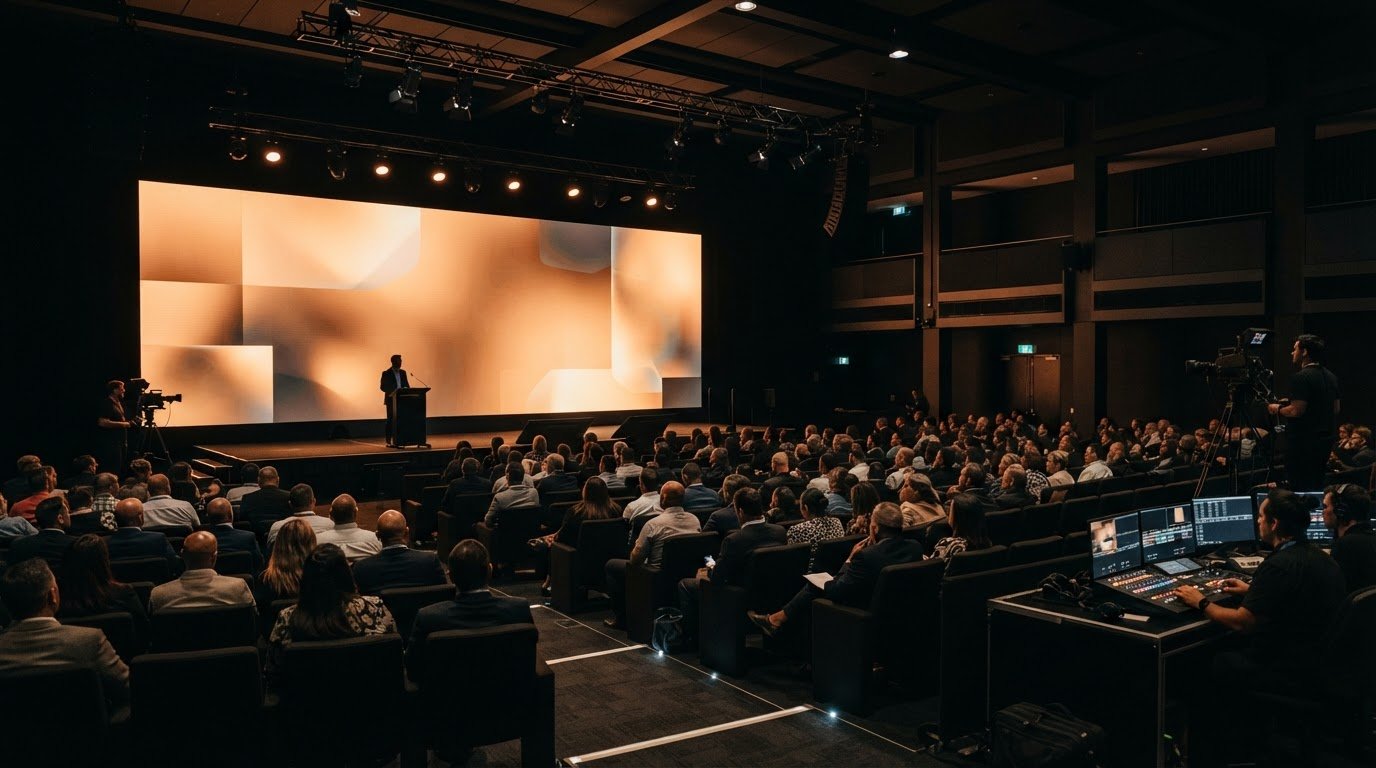
It starts before guests arrive. The production team communicates clearly, works through the brief and prepares a plan around the actual programme. For a conference with presentations and panel discussions, for example, plan how speakers and panellists will be heard, how slides will remain legible from around the room and how transitions will be cued.
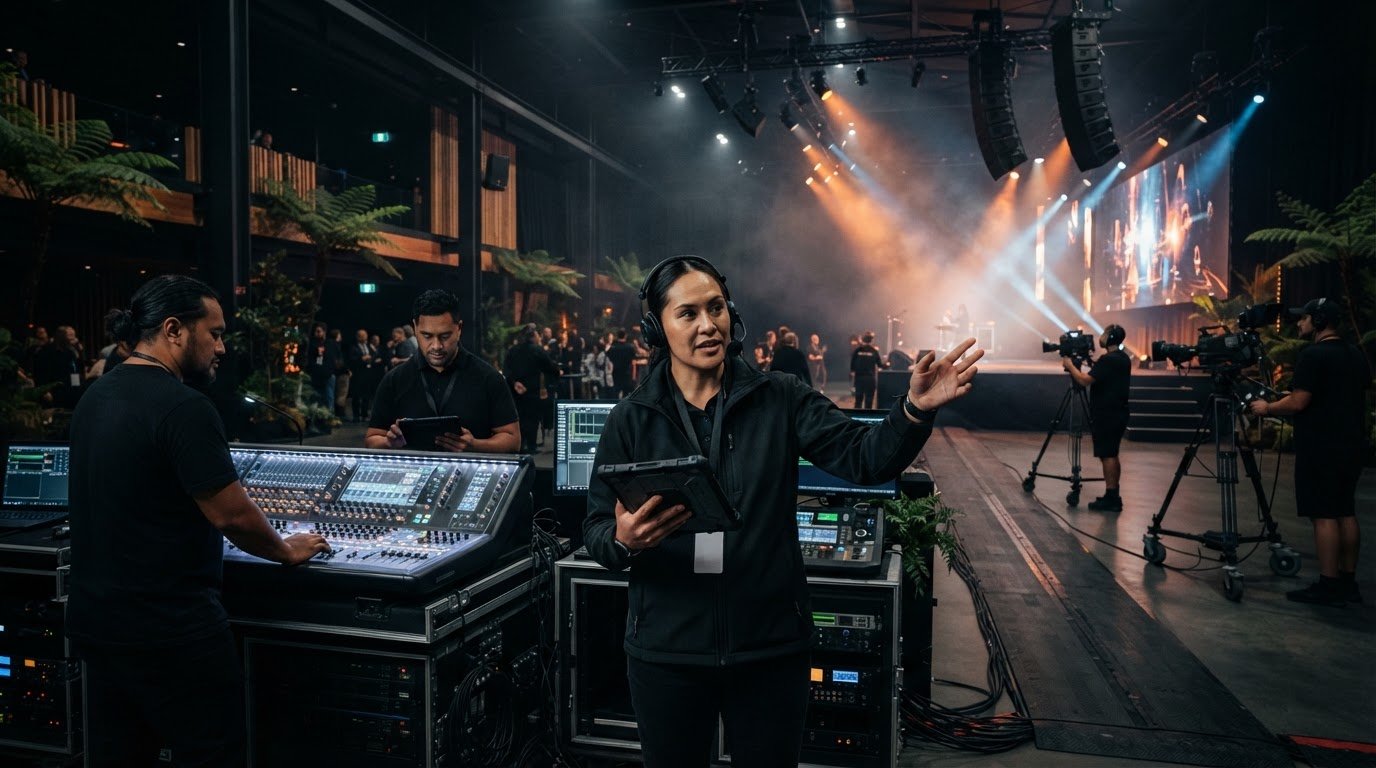
On site, experienced technicians manage equipment and cues, taking responsibility for their part of the delivery. That matters when a session runs late, a presenter changes order or a cue needs adjusting. Composed problem-solving helps the event continue with minimal disruption, while clear communication keeps organisers informed without adding to the pressure.
Which events benefit from a dedicated AV production partner?
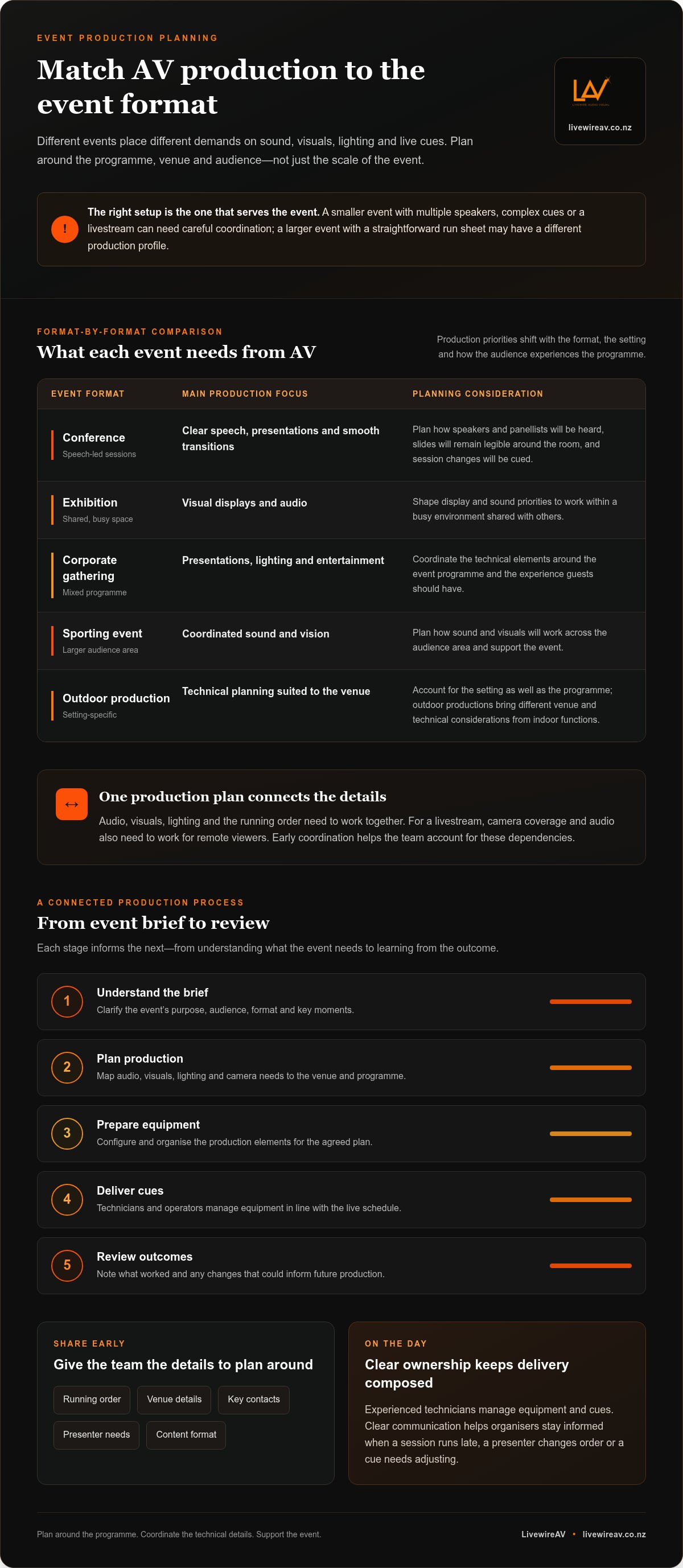
Production needs vary by format. Conferences often centre on speech, presentations and smooth transitions between sessions. Exhibitions may need visual displays and audio that work within a busy, shared space. Corporate gatherings can combine presentations, lighting and entertainment, while sporting events may call for coordinated sound and vision across a larger audience area.
Outdoor productions bring different venue and technical considerations from indoor functions, so planning needs to account for the setting as well as the programme. Scale is only one factor. A smaller event with multiple speakers, complex cues or a livestream can require careful coordination, while a larger event with a straightforward run sheet may have a different production profile. A capable partner shapes support around these details and coordinates the relevant technical disciplines.
How planning and technical management make event AV more dependable
Dependable event production is built in stages, with each decision informing the next. A clear process connects the brief to the equipment, crew and cues needed on the day. It also gives organisers a practical way to track decisions and share changes before they affect the running order.
Understand the brief: clarify the event’s purpose, audience, format and key moments.
Plan production: map audio, visuals, lighting and camera needs to the venue and programme.
Prepare equipment: configure and organise the production elements for the agreed plan.
Deliver cues: have technicians and operators manage equipment in line with the live schedule.
Review outcomes: note what worked and any changes that could inform future production.
These stages connect rather than operate in isolation. A speaker’s presentation needs to be visible on screen while their voice carries clearly through the room. A panel discussion brings different microphone and cue requirements. For a livestream, camera coverage and audio also need to work for remote viewers. Early coordination gives the team time to account for these dependencies.
Early coordination turns separate technical requirements into one production plan, making live delivery easier to manage.
From event brief to production plan
The plan should reflect the audience, format, programme and venue, not default to a standard equipment package. A presentation-led session may centre on clear speech and readable slides; a panel needs a smooth way to manage contributions and transitions. An exhibition may have different display and sound priorities, while a livestream brings camera and vision switching into the plan.
Make the brief useful by sharing the running order, presenter needs, content format and venue information together. This helps the production team identify dependencies, such as a screen change, lighting adjustment or camera shot that needs to align with a speaker’s cue. LivewireAV’s premium event production guide offers further context on planning technical delivery around an event.
From setup to live technical management
On-site preparation turns the plan into a working setup. Technicians and operators configure the required equipment, coordinate their roles and work around event timings so production is ready for the programme. Clear communication between the organiser and production team helps ensure schedule changes reach the people managing the affected cues.
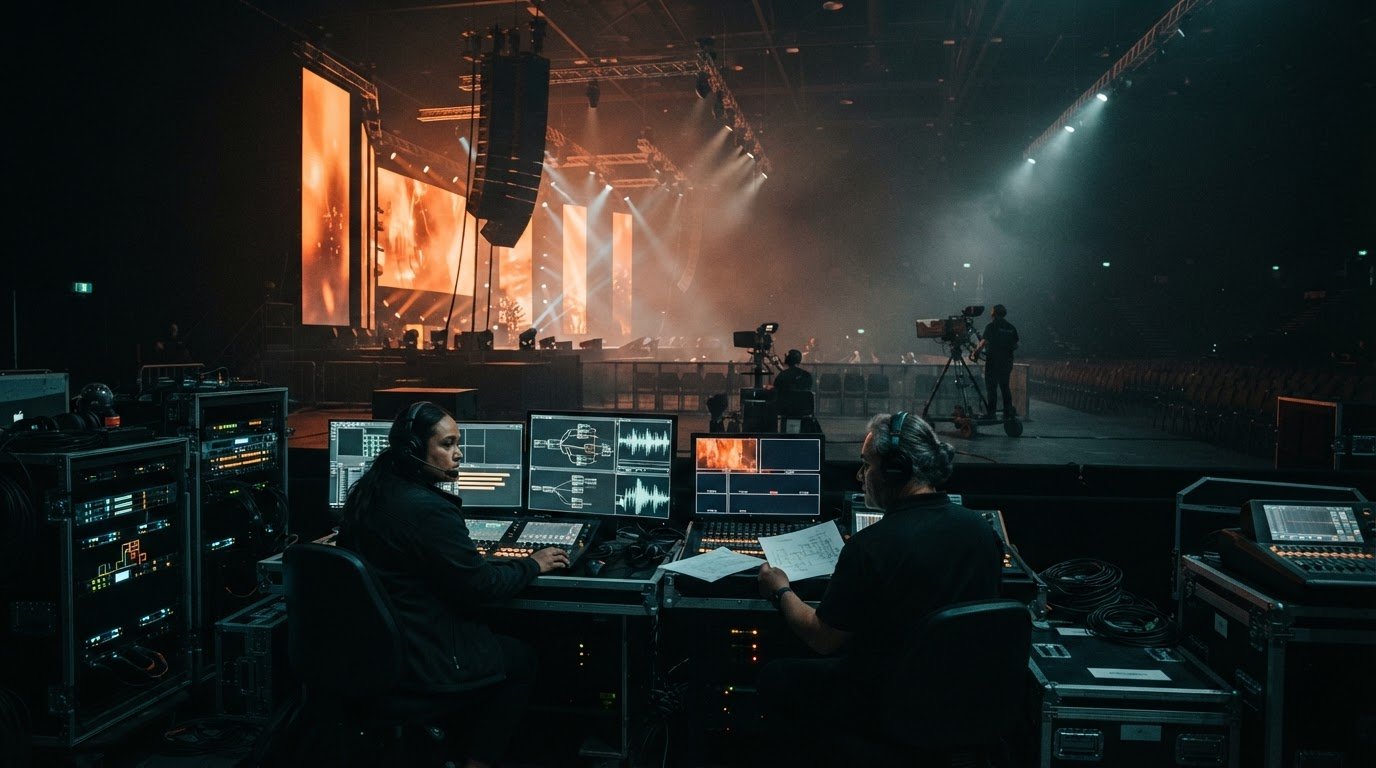
During the event, operators follow the run sheet and monitor their technical elements. If a presenter is delayed or a session order changes, the team can adjust cues and communicate the implications calmly. Preparation reduces avoidable uncertainty, but live events can still change. Professional technical management helps the team respond while keeping the audience experience in view.
A reliable event AV partner brings planning and live operation into the same process. LivewireAV’s event production support connects technical planning with on-site delivery for organisers shaping production around their event and venue.
How event format and production needs shape the right AV partnership
Event format is a useful starting point for production planning, but it doesn’t dictate a standard equipment package. A conference, exhibition and outdoor sporting event place different demands on sound, sightlines, movement and timing. A reliable event AV partner considers how people will use each space and follow the programme, then shapes technical support around those needs.
Match technical production to the event format
Start with the audience experience. At a conference, clear speech, readable presentations and well-managed transitions are central. Exhibitions and corporate gatherings can involve several spaces, people moving between activities and visual content that needs to attract attention. Sporting and outdoor productions have their own live context, so the programme, venue and audience layout all inform the plan.
Use these priorities as a guide, not a fixed formula. A conference with a streamed panel, for example, has different requirements from a presentation-only session. Consider the number of spaces, the content and how the audience will engage, as well as the event’s scale.
Coordinate audio, visuals, lighting and broadcast needs
Technical elements need to work together. Audio line array systems can support planned sound coverage where appropriate, with the event and space informing what’s suitable. LED walls or projection can present content, while intelligent lighting design can support the room’s programme. Choose according to the material being shown, viewing conditions and audience layout, not just the equipment category.
For conferences, consider how sound, presentation visuals and session changes fit together. The guide to audio visual for large conferences explores those production considerations. If remote attendees are part of the event, camera packages and vision switching add another layer: camera views, presenter audio and presentation content need to be coordinated for the online audience as well as the room. Hybrid conference AV setup covers how those needs shape production.
A tailored plan connects the event’s purpose to its technical choices. That keeps equipment decisions practical and helps the production team coordinate audio, visuals, lighting and broadcast elements as one considered experience.
How organisers can work smoothly with an event AV partner
A productive working relationship starts with useful information and clear ownership. Organisers know the event’s purpose and priorities; the production team translates those details into technical planning and delivery. Sharing information early helps both sides spot dependencies, clarify decisions and keep the audience experience at the centre of the plan.
What information helps shape an event production plan?
Give the production team a joined-up picture of the event, rather than isolated equipment requests. Include the format, audience expectations, venue context and programme so technical decisions reflect how the event will run. A reliable event AV partner can then shape production around the priorities instead of treating every event as the same setup.
Event format and audience: explain whether the event is a conference, exhibition, corporate gathering, outdoor production or another format, and what attendees need to see and hear.
Programme and run sheet: share session order, transitions, speakers, panel discussions and any moments that need specific cues.
Presentation content: note how presentations will be delivered and what visual material will be shown.
Venue context: provide relevant room layouts and information about the spaces being used, including any movement between areas.
Additional production needs: identify livestreaming, camera coverage, lighting and screen requirements where they form part of the event.
Clear priorities help the production team make sensible trade-offs if the brief or programme changes. If audience visibility is central, for instance, screen planning becomes a key part of the discussion. If the event includes a livestream, consider camera and vision-switching needs alongside the in-room experience, not as an afterthought.
How to keep event-day coordination clear
Agree on a shared programme and the right contacts for decisions before the event. Organisers can nominate who approves changes, presenters can be briefed on how their cues will be communicated, and the production team can use the agreed running order to coordinate technical actions. Keeping one current version of the programme helps prevent conflicting updates.
On the day, route schedule changes through the agreed organiser contact and pass them promptly to the on-site technicians. A delayed speaker or reordered session may affect presentation playback, camera coverage or lighting cues. Brief, specific updates help operators respond without interpreting a flurry of separate messages. Presenters should know who will signal their cue and where to direct any technical request.
Lighting deserves the same advance coordination as other production elements. The event lighting design guide explores how lighting can be planned in relation to the event and its programme.
A clear brief, shared schedule and agreed contacts give the organiser and production team a common reference before and during delivery. LivewireAV’s event production information explains how technical planning and on-site delivery fit together.
How LivewireAV supports reliable event production across New Zealand
For corporate and large-scale events throughout New Zealand, LivewireAV brings technical planning, production equipment and experienced on-site technicians together. This coordinated approach gives organisers one production team to work with across the technical details, from the event brief through to cues during the programme.
Reliability depends on how the details fit the event, not on equipment in isolation. A presentation-led conference, an exhibition with varied spaces and an outdoor production have different audience needs and operating conditions. LivewireAV tailors production to the event and venue, coordinating the relevant audio, video and lighting elements around the programme.
One production team across core technical disciplines
Audio, visuals and lighting support different parts of the audience experience, but their timing and purpose need to align. Clear sound helps presenters reach the room; LED walls or projection can make content visible; lighting can support the programme’s atmosphere and transitions. LivewireAV brings these disciplines into full technical production, with technicians and operators managing equipment and cues on site.
For events with remote audiences, hybrid and livestream production adds camera packages and vision switching to the coordination. Camera views, presentation content and event cues need to work with the in-room programme, so the experience is considered for both audiences. The production plan can bring together:
Audio, including line array systems where suited to the event’s sound requirements.
LED walls or projection shaped around the content and viewing needs.
Intelligent lighting design aligned with the programme and venue.
Camera packages and vision switching for event coverage and livestreams.
The aim isn’t to use every technical element at every event. It’s to select and coordinate what supports the brief, then have the production team manage it as part of the live delivery.
A tailored partnership for the event in front of you
LivewireAV works with organisers to understand the event, venue and programme before shaping production requirements. That context helps determine which technical disciplines need to work together, how the event’s content should be presented and where experienced operators need to manage cues. On site, technicians oversee their production elements and coordinate with the organiser as the event unfolds.
For organisers, a useful starting point is a brief that sets out the event format, schedule, audience, venue details and any presentation or livestream requirements. It gives the production team a clear foundation for developing an event-specific plan, with room to refine details as the programme takes shape.
LivewireAV’s event production services bring technical planning, equipment and on-site delivery together around your requirements.
Set your event up for confident delivery
Start by defining what a successful event should feel like for the people attending. Is the priority helping every guest follow a presentation, creating a strong visual impression or connecting an in-room audience with people watching remotely? A clear answer gives production planning a useful focus.
Bring your AV partner into the planning conversation before technical decisions are locked in. A reliable event AV partner can translate your priorities into practical production choices, so technical details support the purpose of the event rather than compete with it.
Pull together your initial ideas, programme and key questions, even if some details are still taking shape. A focused discussion can clarify the next decisions and give your team a steadier foundation for planning.
Share your event brief with LivewireAV to start planning technical production around your requirements.
Frequently Asked Questions
What does a reliable event AV partner do?
A reliable event AV partner coordinates technical planning, equipment and on-site delivery so production supports the event’s purpose. The team considers how sound, screens, lighting and cues fit the programme, then technicians manage those elements during the event. This goes beyond supplying equipment: it connects the technical setup to presenters’ needs and the audience experience. Good preparation and responsive management reduce uncertainty, although live production can still change.
How early should I involve an event AV partner?
Involve the production team as soon as you can share useful details about the brief, programme and venue. Early context gives them a clearer basis for tailoring a proposal and identifying how technical requirements fit together. There’s no single lead time that suits every event. A draft schedule, event format, audience profile and known presentation or livestream needs are useful starting points, even if some details are still being finalised.
Can one event AV partner manage sound, lighting and visuals?
Yes. Coordinated production can bring sound, lighting and visuals together around the event programme. For example, a speaker’s presentation, microphone and lighting cue can be planned as connected parts of the same session. The right combination depends on the format, venue and audience needs, so not every event requires every discipline. LivewireAV’s audio, video and lighting production supports event-specific planning rather than a one-size-fits-all setup.
What information should I provide to an event production team?
Share the event format, audience, venue context, programme and current run sheet. Include presentation content or formats, along with any camera, screen or livestream requirements that are part of the brief. It also helps to explain the event’s priorities, such as supporting speaker visibility or connecting remote attendees. If the schedule is provisional, label it clearly and share updates so the technical plan reflects the latest information.
Does an event AV partner provide technicians on the day?
An event production partner can provide technicians and operators to configure and manage production equipment and cues on site. Their work may include preparing the setup for the programme, responding to cue instructions and coordinating technical changes with the event team. LivewireAV provides experienced technicians and operators as part of its event production work. Share the running order and presenter requirements so the crew can align their work with the event.
Can LivewireAV support hybrid and livestream events across New Zealand?
Yes. LivewireAV provides hybrid and livestream event production for events across New Zealand. The technical plan depends on the event format, programme and audience, including how in-room presentations and speakers need to be represented for remote attendees. Sharing the run sheet, content plans and camera requirements helps shape the production approach and coordinate the live event with the livestream.
What is the difference between AV equipment hire and full technical production?
Equipment hire generally focuses on providing hardware, while full technical production brings design, setup and technical management together. Coordinating equipment with operators means technical elements can be planned around the run sheet and managed during the event, rather than treated as separate components. LivewireAV provides full technical production, including equipment and on-site operators, with production shaped to the event’s requirements.
Comments