Integrating LED Walls into Conference Stage Design: The 2026 Technical Guide
- 4 days ago
- 11 min read
A modern conference stage is no longer just a platform for a speaker; it is a high-performance broadcast environment where the digital and physical must coexist perfectly. When you are integrating LED walls into conference stage design, you are making a structural choice that defines the entire attendee experience. Precision. Composure. Reliability. We understand the weight of these decisions. The fear of a flickering screen during a keynote or the frustration of moiré patterns ruining a livestream is a valid concern for any organiser. You need technical control that remains invisible to the audience.
We agree that in high-stakes environments, technical excellence should be a standard requirement rather than an occasional achievement. This guide provides the expertise you need to master the technical and creative nuances of high-resolution LED walls for a seamless, high-impact result. We will break down the 2026 standards for pixel pitch and refresh rates, ensuring your visuals remain crisp both in the room and on camera. We will also explore how to coordinate lighting and structure to create a professional environment where your work takes centre stage.
Table of Contents
The Evolution of Conference Staging: Why LED Walls are the Modern Standard
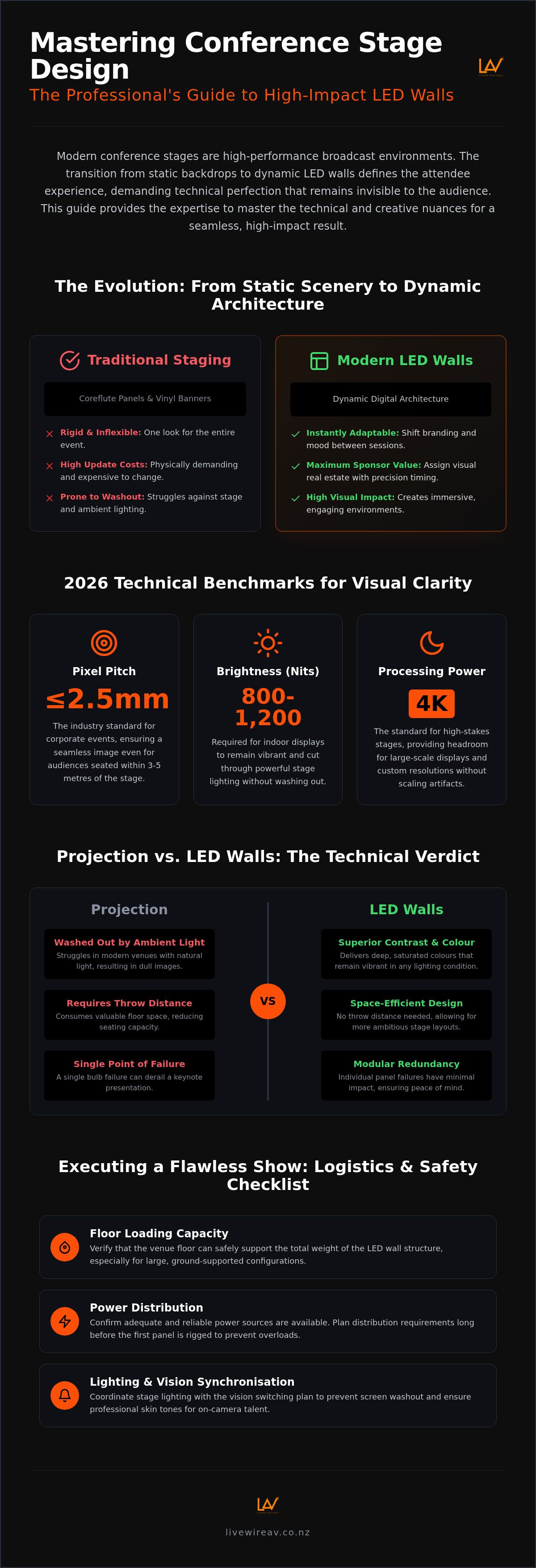
Conference staging has moved beyond the era of static coreflute panels and vinyl banners. These traditional methods were once the only option; however, they were rigid, expensive to update, and physically demanding. Today, digital architecture is the standard. Precision. Versatility. Impact. By integrating LED walls into conference stage design, organisers can shift branding instantly between sessions. This allows a single room to transform from a corporate plenary to an evening awards gala without a single stagehand moving a physical panel. This flexibility ensures that every sponsor receives the correct visual real estate at the exact moment it's required.
Projection vs. LED Walls: The Technical Verdict
When integrating LED walls into conference stage design, the logistics of space become much simpler. Standard projection often struggles in modern, sun-drenched venues. High-ambient light washes out images, leaving them dull and uninspiring. Modern LED display technology solves this through superior contrast ratios and deep colour saturation. Unlike projectors, LED panels don't require a "throw distance," which saves several metres of valuable floor space behind or in front of the stage. This technical efficiency allows for larger seating capacities or more ambitious stage layouts. Reliability is also a key factor. A projector bulb failure is a single point of failure that can derail a keynote. An LED wall's modular nature provides a much higher level of redundancy and peace of mind.
The Psychology of Visual Immersion
Long conference days often lead to presentation fatigue. Static backgrounds contribute to this mental slump. Large-scale digital visuals help maintain attendee focus by creating emotional environments that change with the speaker's narrative. Motion graphics and subtle environmental shifts keep the visual field active without being distracting. This digital-first approach is especially critical for hybrid events. It ensures brand consistency for both the in-room audience and those watching via a livestream. A well-designed digital stage looks as sharp on a laptop screen as it does from the back of a ballroom. This transition to LED is not just about brightness; it's about creating a professional, cohesive environment that respects the audience's attention.
Technical Specifications for Visual Clarity: Pixel Pitch and Resolution
Achieving visual clarity begins with the pixel pitch. This measurement defines the distance between the centre of each LED pixel. When integrating LED walls into conference stage design, a pixel pitch of 2.5mm or lower is the industry benchmark for corporate environments. This specification ensures that the front row of the audience, often seated within 3 to 5 metres of the stage, experiences a seamless image. If the pitch is too high, the resolution breaks down into visible dots. This compromises the professional finish of your presentation. Precision. Clarity. Impact.
Brightness is another critical factor. Indoor displays typically require 800 to 1,200 nits to remain vibrant under stage lighting. Outdoor environments are different. They often necessitate 5,000 nits or more to combat direct sunlight. Balancing these levels requires a disciplined approach to technical site visits. For those planning complex national events, partnering with a steady technical production team ensures these specifications are calibrated for the specific venue conditions. We focus on the "Golden Ratio" of viewing distance, ensuring the screen size and resolution are perfectly matched to the room's dimensions.
Calculating Ideal Resolution for Content
4K processing is now the standard for high-stakes stages. It provides the headroom needed for large-scale displays without losing detail. Most content follows a 16:9 aspect ratio; however, modern designs often use bespoke wide formats that require custom resolutions. Matching your source material to the screen's native resolution is essential to avoid scaling artifacts. Latency is also a concern for live Image Magnification (IMAG). We prioritise low-latency signal paths to ensure the speaker's movements on screen remain perfectly in sync with their live voice. This direct cause-and-effect relationship between preparation and execution is what creates a seamless experience.
Eliminating Moiré Patterns for Livestreams
Moiré is the visual interference caused by overlapping pixel grids and camera sensors. This wavy, distracting effect can ruin a high-quality livestream. To eliminate it, we focus on camera placement and focal length. Positioning cameras at a slight angle or using a shallower depth of field can soften the pixel grid enough to satisfy the sensor. High refresh rates, specifically 3840Hz or higher, are also mandatory. This prevents the flickering often seen when digital screens are filmed. We treat the stage as a broadcast set. We ensure the technical setup is as robust for the remote viewer as it is for the person in the front row.
Creative Layouts and Architectural Integration: Reimagining the Stage
Modern stage design has moved beyond the constraints of the standard rectangular screen. While a central "letterbox" wall is functional, it often fails to utilise the full architectural potential of a venue. By integrating LED walls into conference stage design as structural elements, you can create a more sophisticated environment. Depth. Texture. Visibility. These are the pillars of a well-considered layout. Using LED columns or staggered "wings" adds a vertical dimension to the stage, framing the speaker and drawing the audience's eye toward the centre of the action. This approach transforms the screen from a simple display into a piece of digital architecture.
Curved LED panels offer another level of immersion. When configured correctly, they create a "cockpit" feel that wraps around the presenter. This is particularly effective for high-stakes keynotes where the speaker needs to feel connected to their visual data. For more bespoke sets, "LED wraps" allow screens to be integrated directly into physical set pieces, such as custom-built lecterns or tiered staging. Layered designs, where panels are placed at varying depths, create a 3D visual effect that adds significant production value without requiring a massive physical footprint. This methodical approach to layout ensures the technology supports the narrative rather than distracting from it.
Sightline Management for Large Audiences
In large national conference halls, organising screen height is a critical logistical priority. Every delegate must have a clear view of the content, regardless of their seating position. We focus on calculating the exact elevation required to clear the heads of the front rows while staying within the venue's rigging limits. Side-screens, or Image Magnification (IMAG), are essential in these massive spaces. They ensure that the speaker’s presence is felt even at the back of the room. Balancing these digital surfaces with physical set elements requires a venue-aware mindset. We ensure that the digital real estate enhances the physical stage, creating a cohesive environment where every detail has been accounted for.
Digital Branding and Dynamic Backdrops
Integrating LED walls into conference stage design allows for "living" backdrops that respond to the tone of each session. Unlike static banners, these digital environments can shift from a calm, professional morning aesthetic to a high-energy awards theme instantly. Using alpha-channel content is a key strategy here. It allows for "floating" graphics, where sponsor logos or data points appear on the screen without a visible background box. This keeps the stage looking clean and modern. It’s a pragmatic solution for managing multiple sponsors, as logos can be rotated or updated in real-time without cluttering the physical space. This level of technical control ensures your branding remains sharp, consistent, and professional throughout the entire event.
Synchronising the Production: Lighting and Vision Switching
Integrating LED walls into conference stage design requires more than just mounting panels; it demands a broadcast-first approach to the entire visual environment. Control. Coordination. Clarity. One of the primary technical hurdles is the "Light Wash" challenge. While modern LED panels are exceptionally bright, poorly aimed stage lighting can still degrade contrast and wash out delicate on-screen details. Precision is essential here. We ensure that stage fixtures are shuttered away from the screen surface, maintaining the integrity of your digital content while keeping the presenter perfectly illuminated. This methodical preparation prevents the screen from looking "milky" or faded during high-stakes moments.
Large-scale screens often function as the primary light source in the room. This can significantly impact the skin tones of speakers on camera. If the screen is displaying a bright blue graphic, the presenter may appear unnaturally cool to the camera sensor. We manage this through meticulous pre-production colour-matching. By calibrating our camera packages to the specific output of the LED wall, we ensure a natural, professional look for both the in-room audience and the livestream viewers. This direct cause-and-effect relationship between technical calibration and visual quality is a hallmark of a disciplined production.
Integrating Intelligent Lighting Design
Successful integration depends on matching the colour temperature of your stage lighting to the LED wall. We typically standardise our fixtures at 5600K to align with the daylight-balanced output of modern digital screens. This creates a cohesive visual field that looks natural on camera. We also employ strategic backlighting. This technique creates a necessary "separation" between the speaker and the screen, preventing the presenter from "blending" into the digital background. For more in-depth atmosphere tips, you can explore our guide on live event lighting design.
Vision Switching for High-Stakes Delivery
The vision switcher is the silent engine behind a high-impact show. In a hybrid environment, the switcher manages multiple layers of content, including live camera feeds, presentation decks, and remote speakers. We prioritise seamless transitions. There's no room for "black frames" or glitchy cuts during a keynote. Using "Picture-in-Picture" (PiP) allows us to show the speaker and their slides simultaneously, which is vital for maintaining engagement. We ensure the "Program" feed for the livestream is as polished as the view in the ballroom. If you require professional vision switching and production for your next national event, our team provides the steady hand needed to navigate these complexities.
Executing a Flawless Show: Logistics, Safety, and Technical Management
Integrating LED walls into conference stage design is a physical undertaking as much as a digital one. The heavy reality of LED technology is often underestimated by those accustomed to traditional projection. A standard 16ft by 10ft wall represents a significant weight load that requires careful structural consideration. Planning. Precision. Safety. A technical site visit is the non-negotiable first step in our process. We verify floor-loading capacities and identify certified rigging points to ensure the installation is secure. This venue-aware approach allows us to determine whether a ground-stacked or flown configuration is the most stable choice for the environment.
Power requirements are equally demanding. Large-scale screens have a significant electrical draw that standard wall sockets cannot support. We manage this by coordinating dedicated power distribution systems, ensuring the screen operates without interruption. Reliability is not left to chance. We operate with a zero-failure mindset, employing redundant signal processing and backup power paths wherever possible. This direct cause-and-effect relationship between meticulous preparation and technical control provides the quiet confidence required in high-stakes environments.
The Role of the Technical Director
The Technical Director serves as the steady hand behind the scenes. They manage the complex intersection of audio, video, and lighting cues to ensure the show remains on schedule. During the live event, their composed leadership allows the client to focus on their message rather than the machinery. This role is essential for maintaining precision when navigating the variables of a national tour or a major keynote. For a broader view of how we manage these moving parts, you can read our guide on full service event production.
Pre-Production and Technical Rehearsals
Technical rehearsals are the final safeguard against unforeseen errors. We conduct a thorough "Content Check" on the actual screen to verify file formats, aspect ratios, and colour accuracy. A professional LED wall installation typically requires four to eight hours for a successful "bump-in" and calibration. We organise the load-in schedule to protect this time, allowing our expert technicians to fine-tune every pixel. A full technical rehearsal is the only way to guarantee a seamless transition between complex visual cues. This disciplined approach ensures that when the first guest arrives, every technical detail has already been proven to work perfectly.
Achieving Technical Precision for Your Next Stage
Integrating LED walls into conference stage design is a significant technical undertaking that requires a steady hand and a venue-aware mindset. Success relies on balancing high-resolution specifications with the structural realities of your environment. By prioritising pixel pitch, synchronised lighting, and rigorous pre-production planning, you ensure that your message is delivered without distraction. Precision. Reliability. Composure. These are the standard requirements for any high-stakes event.
If you're ready to elevate your event with expert technical management and state-of-the-art LED and audio equipment, our team is prepared to assist. We provide a national New Zealand service with a calm, professional approach that lets your work take centre stage. Request a tailored technical proposal for your next conference to begin the planning process. A well-executed digital stage is a powerful tool for engagement. With the right preparation, your next conference will be a seamless and high-impact experience for every attendee.
Frequently Asked Questions
What is the best pixel pitch for a corporate conference stage?
A pixel pitch of 2.5mm or lower is the benchmark for corporate conference stages. This ensures that delegates seated in the front rows experience a crisp, seamless image without visible pixels. For high-resolution requirements, P1.8mm is often selected for its superior detail. Choosing the correct pitch depends on the minimum viewing distance and the complexity of your presentation content. Precision and clarity are the primary objectives for any professional stage.
How do I prevent moiré patterns on my conference livestream?
Preventing moiré patterns requires a combination of high refresh rates and strategic camera placement. Ensure your LED panels operate at 3840Hz or higher to eliminate flickering on recorded video. Our technicians also adjust camera focal lengths and angles to soften the pixel grid. This methodical approach ensures that the livestream feed remains sharp and professional. It's a standard part of our broadcast-first technical strategy for hybrid events.
Can an LED wall be used in a venue with lots of natural light?
Yes, LED technology is the ideal solution for venues with high levels of natural light. Unlike traditional projection, which often looks washed out in bright environments, LED panels provide the high contrast and brightness needed to stay vibrant. For indoor spaces with large windows, we typically specify displays with at least 1,000 nits of brightness. This ensures your branding and presentations remain clear and impactful throughout the entire day.
How much power does a large LED wall typically require?
Large LED walls require a significant amount of electrical power that standard wall outlets cannot provide. A typical mid-sized configuration often necessitates a 32-amp or 63-amp three-phase power supply. We manage this through dedicated power distribution systems to ensure stability and safety. Calculating the exact draw is a critical part of our pre-production planning. This prevents circuit overloads and ensures your show runs without any technical interruptions.
Is it better to ground-stack or hang an LED wall for stage design?
The choice depends on your venue's structural limits and the desired aesthetic. Hanging an LED wall creates a clean, floating look but requires certified rigging points and additional labour costs. Ground-stacking is often a more cost-effective and flexible alternative, especially in hotels with lower ceiling heights. We assess both options during our technical site visit. We prioritise the method that offers the most stability and the best sightlines for your audience.
What content resolution should I provide for a bespoke LED stage?
You should provide content that matches the native resolution of your specific screen configuration. While 4K processing is the modern standard, integrating LED walls into conference stage design often involves bespoke wide formats that require custom pixel maps. We provide your creative team with a detailed pixel map during the pre-production phase. This ensures your graphics are pixel-perfect and avoids any stretching or distortion during the live presentation.
How does an LED wall impact the lighting design of the event?
An LED wall acts as a massive light source that significantly influences the room's atmosphere. We balance this by matching our intelligent lighting fixtures to the screen's colour temperature, typically around 5600K. This prevents the speaker from appearing washed out or discoloured on camera. Strategic backlighting is also used to create separation between the presenter and the screen. This coordinated approach ensures a cohesive and professional visual environment for all attendees.
What is the difference between an indoor and outdoor LED screen for events?
The primary differences are brightness and weather protection. Outdoor screens are designed to combat direct sunlight with brightness levels exceeding 5,000 nits; however, indoor screens usually operate between 800 and 1,200 nits. Outdoor panels also feature IP-rated weatherproofing to handle wind and rain. Indoor panels focus on higher resolution and tighter pixel pitches for closer viewing. We select the appropriate technology based on your venue's environment and the audience's proximity.


Comments