Architectural Lighting for Corporate Events: 2026 Guide
- 16 hours ago
- 11 min read
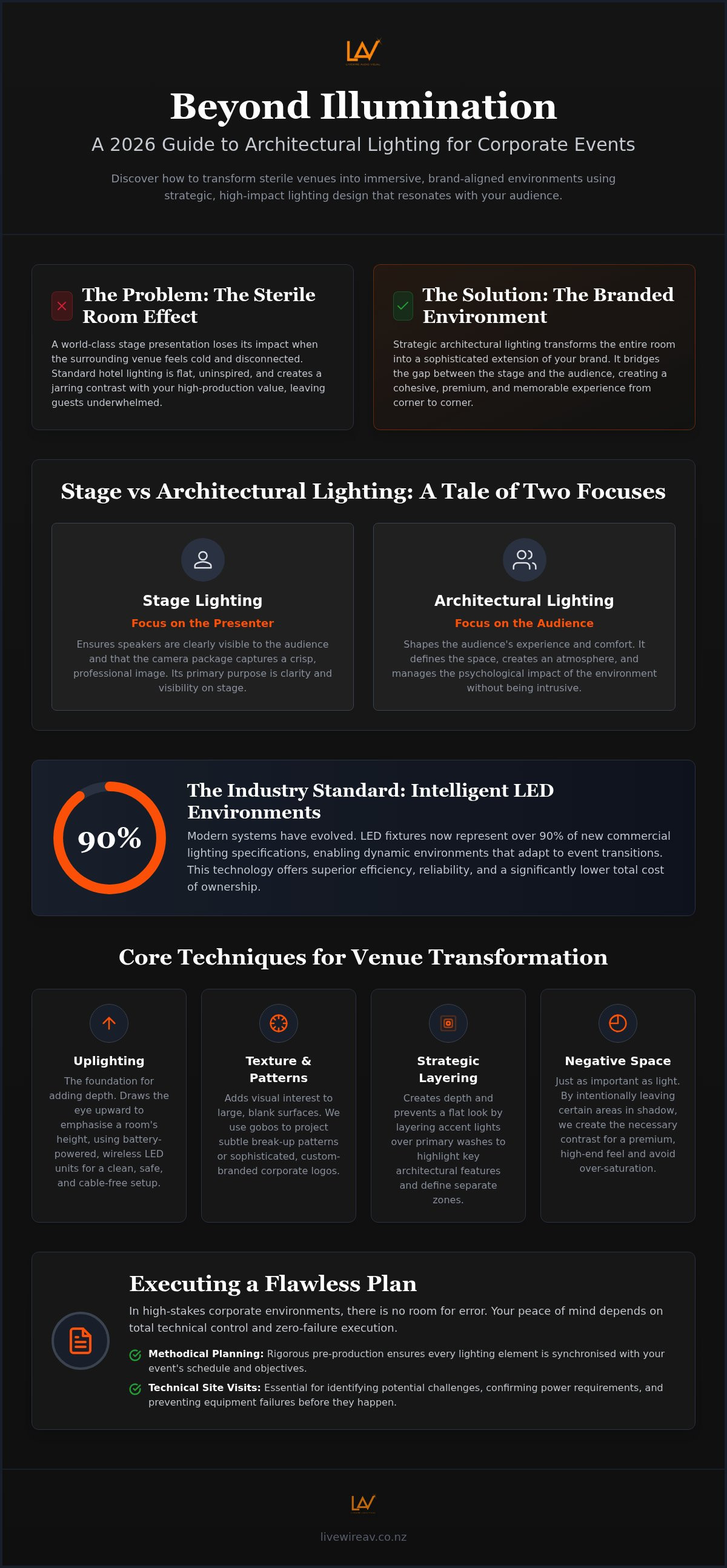
A world-class stage presentation loses its impact the moment a guest looks away from the LED wall and sees a sterile, shadowless hotel ballroom. This jarring disconnect between high-end stage visuals and a cold venue atmosphere often leaves event organisers feeling uneasy. You want your brand to be felt in every corner of the room, not just on the screen. It's a challenge of scale, tone, and technical precision that requires professional architectural lighting for corporate events to solve effectively.
We understand that in high-stakes environments, your peace of mind depends on total technical control. This 2026 guide reveals how to transform any venue into a sophisticated, brand-aligned environment. Precise. Immersive. Reliable. We'll show you how to eliminate the "sterile room" effect and ensure your lighting design integrates seamlessly with your stage production. From modern LED efficiency to intelligent control systems, this overview of the latest industry standards provides a roadmap for creating a cohesive event space. You'll learn how to maintain an impressive brand presence through meticulous, zero-failure execution that lets your work take centre stage.
Table of Contents
Beyond Basic Illumination: The Strategic Role of Architectural Lighting in 2026
Architectural lighting design is the intentional application of light to accentuate a venue's structural features while establishing a specific atmosphere. It is a precise discipline. It is purposeful. It is technical. For high-calibre corporate branding, standard venue house lights are rarely sufficient. These systems are designed for utility rather than impact; they offer flat, uninspired illumination that often clashes with your brand’s visual identity. Professional architectural lighting for corporate events ensures the room feels like an extension of your company, not just a rented space.
In 2026, the industry has shifted toward "Intelligent Environments." Lighting is no longer a static element set at the start of the day. Modern systems respond dynamically to event transitions, shifting the room's energy as the schedule moves from keynote presentations to networking sessions. This adaptability is underpinned by high-efficiency LED technology. Current data shows that LED fixtures now represent over 90% of new commercial specifications, offering a total cost of ownership significantly lower than traditional fluorescent options. Using these systems isn't just a design choice; it's a commitment to professional sustainability and operational efficiency.
The Difference Between Stage and Architectural Lighting
Stage lighting focuses on the presenters. It ensures the audience can see the speakers clearly and that the camera package captures a crisp image. Architectural lighting for corporate events focuses on the audience experience itself. You can't rely on stage wash to light a room. Over-spill from the stage often creates uncomfortable glare for guests and washes out the ambient environment. Properly designed venue lighting manages the psychological impact on attendees, improving comfort and engagement by defining the space without being intrusive.
Defining the Branded Environment Concept
We don't just light a room; we design a brand experience. This approach treats the physical venue as a canvas for your corporate identity. Lighting serves as the essential visual bridge between the physical space and your digital content on the LED wall. It creates a unified look that feels intentional and composed. A branded environment is a physical space where every structural element and light source is synchronised to reflect a company's specific visual identity and values. This level of detail ensures your brand presence is felt throughout the entire venue, not just on the main stage.
Core Techniques for Enhancing Venue Structures and Features
Transforming a standard hotel ballroom or industrial warehouse requires more than high-intensity beams. It involves a strategic application of event lighting techniques designed to create depth through layering. We use primary washes for base visibility and then layer accent lights to highlight specific architectural details. This prevents the room from feeling flat or cavernous. Equally important is the use of negative space. By intentionally leaving certain areas in shadow, we create the contrast necessary for a premium feel. This avoids the over-saturation that often makes corporate galas look cluttered or amateur.
Uplighting: The Foundation of Venue Transformation
Uplighting is the starting point for most venue transformations. We place fixtures at the base of columns, alcoves, or textured walls to draw the eye upward and emphasise the room's height. In 2026, the industry standard has shifted entirely to battery-powered, wireless LED units. This eliminates unsightly cables and taped-down power runs across the floor. It's a cleaner, safer setup that prioritises guest movement. Choosing the right beam angle is a technical necessity; narrow beams are essential for tall pillars, while wider washes are better for broad, flat wall surfaces.
Adding Depth with Texture and Break-up Patterns
Depth isn't just about brightness; it's about texture. We use gobos to project subtle patterns onto large, blank surfaces like air-walls or ceilings. These break-up patterns add visual interest without being distracting. For branding, custom corporate gobos offer a sophisticated, non-intrusive way to place a logo within the room environment. The 2026 trend has moved toward digital projection mapping, allowing for dynamic, moving textures that can shift colour or intensity as the event transitions from a formal session to an evening function.
Highlighting Architectural Focal Points
Pin-spotting is a precise technique used to highlight centrepieces, award trophies, or registration desks. It guides the eye and provides visual cues for attendees. We use light to define different zones within a single large venue, creating a natural flow from the foyer to the main plenary session. This ensures guests feel oriented and comfortable from the moment they arrive. If you're looking to refine your space, our intelligent lighting design services focus on these small details that make a significant difference to the overall atmosphere.
Technical Harmony: Balancing Light with LED Walls and Cameras
Architectural lighting for corporate events must function as part of a wider technical ecosystem. It is not an isolated design choice. When you invest in an LED wall rental for events NZ, the room's ambient light needs to be managed with surgical precision. If the architectural fixtures are too bright or aimed incorrectly, they create "colour spill" that washes out the high-contrast visuals on your screens. This reduces the impact of your digital presentations and makes the stage look cluttered. A Technical Director ensures every lighting cue is synchronised with the on-screen content, maintaining a perfect balance between the physical room and the digital display.
Managing colour temperature is another critical factor. Professional cameras are sensitive to the mix of light sources in a room. If the architectural lighting is too warm while the stage lighting is cool, the resulting video feed will look inconsistent and unprofessional. We calibrate the entire room to ensure a cohesive look that translates perfectly to both the naked eye and the camera lens. This level of technical coordination prevents the "muddy" look often seen in poorly managed venues. It provides a clean, high-definition finish that reflects the quality of your brand.
Lighting for the Lens: The Hybrid Event Requirement
Hybrid events demand a specific approach to lighting design. What looks good to the naked eye can often appear distorted on a broadcast. Standard warm architectural light often requires colour correction to avoid making speakers look unnatural on video feeds. During a hybrid conference AV setup NZ, we balance the ambient room light with the high intensity of the LED screens. This prevents the cameras from struggling with exposure. We focus on minimising harsh shadows across multi-camera angles. This ensures the experience for remote viewers is just as polished as it is for those in the room.
Pixel Mapping and Content Integration
Modern architectural lighting for corporate events allows for deep integration between stage graphics and the room itself. Pixel-mappable fixtures enable us to extend the visual energy of the stage into the audience. If your on-screen content features a specific brand gradient, we mirror those exact hues in the room's uplighting. This creates a seamless transition between high-energy segments, like awards, and more formal plenary sessions. The result is a unified visual environment where the technology works together rather than competing for attention.
Executing a Flawless Plan: Technical Logistics and Site Visits
Executing a design is where the "Calm Professional" reputation is earned. It's about precision. It's about planning. Architectural lighting for corporate events requires a methodical approach that starts long before the first fixture is uncased. We treat technical logistics as the foundation of the creative vision. Without a clear understanding of venue limitations, even the most sophisticated design risks failure. Our process removes the anxiety of technical failure through steady, matter-of-fact preparation.
A key part of this preparation involves technical site visits for events. These are non-negotiable for success. We identify power drop locations and circuit capacities early to prevent overloads. A common concern for organisers is whether high-impact lighting will exceed the venue's power limits. Thanks to the energy efficiency of 2026 LED technology, which uses significantly less power than legacy systems, we can deliver immersive environments on standard circuits. We account for every watt long before your guests arrive.
The Technical Site Visit Checklist
Identifying exact power drop locations and circuit capacities to avoid mid-show overloads.
Measuring throw distances for uplights and identifying rigging points or floor-mount restrictions.
Assessing natural light ingress for daytime events, as sunlight can wash out subtle architectural cues.
Managing Venue Constraints and Safety
Safety is paramount in high-traffic environments. We focus on meticulous cable management, ensuring all runs are discreet and "taped down" to create a trip-free environment for your guests. Every setup adheres to venue-specific fire and safety regulations. This includes working around "non-negotiable" features like existing chandeliers or protected wall art. We integrate our lighting with these features rather than fighting against them. This ensures the venue's character is enhanced, not obscured.
The Production Timeline: Setup to Strike
Architectural lighting is often the first element to be installed and the last to be removed. It defines the boundaries of the production. We coordinate closely with other vendors, such as florists and caterers, to ensure our light placement is spot on and doesn't interfere with their setups. Having a dedicated lighting operator on-site allows for real-time adjustments as the room fills with guests. If you want to ensure your next project is handled with this level of meticulousness, our team is ready to provide full technical production management.
The LivewireAV Approach: Precision Lighting Design and Management
LivewireAV positions itself as the steady hand behind the scenes. We understand that architectural lighting for corporate events is the visual glue that integrates high-tech stage production into a physical venue. Our approach is grounded in over 10 years of experience managing high-stakes environments where precision is the standard requirement. We don't just provide hardware; we provide a sense of total technical control. By integrating live event lighting design into a full production package, we ensure that every element of your event is visually cohesive. Precise. Reliable. Composed.
Our goal is to alleviate the stress often associated with technical production. We do this by projecting a sense of total control, allowing you to move through your event with confidence. When the technical foundation is solid, the branding becomes more impactful. This cause-and-effect relationship between our preparation and your peace of mind is what defines our service. We take the time to account for every detail long before the first guest arrives, ensuring the technology remains invisible so your work can take centre stage.
Seamless Technical Management
Our technicians operate with a quiet confidence that only comes from deep technical knowledge and rigorous preparation. We rely on modern, well-maintained equipment to ensure total reliability throughout your programme. This focus on meticulousness extends from the first site visit to the final strike. Clear, honest communication is our priority. We move through the planning stages with a methodical rhythm, creating a cadence that feels thorough and well-considered. This allows you to focus on your attendees while we manage the invisible complexities behind the scenes.
Bespoke Solutions for National Events
Every corporate function carries a unique tone. Whether you're hosting a formal gala or a large-scale conference, our lighting designs are tailored to suit your specific scale and branding. One of the primary advantages of our service is the simplicity of a single point of contact. Managing audio, video, and lighting through one provider eliminates the friction of coordinating separate vendors. It ensures that the visual bridge between your on-screen content and the room atmosphere is perfectly synchronised. Ready to start? Contact the LivewireAV team for an expert consultation to discuss a tailored technical proposal for your next project.
Elevating Your Next Corporate Environment
Professional architectural lighting for corporate events is the difference between a standard meeting and a premium brand experience. It functions as the visual bridge between your digital content and the physical venue. By prioritising technical harmony and methodical site preparation, you ensure a seamless environment that remains reliable from setup to strike. The shift toward intelligent, energy-efficient fixtures in 2026 allows for greater creative impact without compromising on operational safety or power constraints.
With 10+ years of technical event management experience, LivewireAV provides the expertise and modern equipment required for comprehensive national service. Our expert technicians handle the complexity of intelligent lighting design so you can focus on your guests. We take pride in our grounded approach, ensuring every detail is accounted for with total composure. Ready to transform your venue? Discuss your next corporate event with the LivewireAV team for a tailored technical proposal. We look forward to helping you create an immersive, stress-free environment for your attendees.
Frequently Asked Questions
What is the difference between stage lighting and architectural lighting?
Stage lighting ensures presenters are visible and look natural on camera. Architectural lighting for corporate events focuses on the room's perimeter, structural features, and the guest environment. While stage lights are functional for vision, architectural lights are atmospheric. They create the visual glue that connects the audience to the brand. Using both in tandem prevents the room from feeling like a dark void behind a bright stage.
Can architectural lighting be used for daytime corporate events?
Architectural lighting is effective for daytime events provided the designer accounts for natural light ingress. We use high-output LED fixtures to ensure brand colours remain visible against ambient sunlight. While subtle textures might be lost in bright rooms, saturated uplighting on columns and alcoves still provides a premium feel. It's about adjusting the intensity to match the room's brightness while maintaining a professional, composed atmosphere.
How much power does a professional lighting rig require for a large gala?
Modern LED lighting rigs are exceptionally efficient and often require far less power than legacy systems. For a mid-size gala, a professional rig can often run on a few dedicated 10-amp circuits without risk of overload. Current 2026 LED technology has reduced total power draw significantly. We conduct technical site visits to identify power drop locations and ensure the venue's electrical capacity supports the full production package safely.
Is it possible to match architectural lighting to our exact brand colours?
We can match specific brand colours with high precision using advanced multi-chip LED technology. These fixtures use red, green, blue, amber, white, and sometimes ultraviolet chips to mix millions of hues. By providing your brand's Pantone or hex codes, our technicians can calibrate the architectural lighting for corporate events to ensure perfect consistency. This creates a unified visual identity that flows from your digital content into the physical space.
What are the benefits of wireless LED uplighting for corporate functions?
Wireless LED units provide a cleaner, safer setup by eliminating the need for power and data cables across the floor. This is particularly beneficial in high-traffic areas where cables could pose a trip hazard to guests. These battery-powered fixtures offer total placement flexibility. We can light isolated pillars or remote alcoves that would otherwise be inaccessible. It allows for a meticulous, cable-free finish that maintains the venue's professional aesthetic.
How does architectural lighting affect the quality of a livestream or video recording?
Architectural lighting is essential for providing depth and background context in a livestream. Without it, speakers often appear as if they are standing in a black void. We manage the colour temperature of the room lighting to ensure it complements the stage lighting. This prevents the background from looking muddy or discoloured on camera. Proper background illumination ensures a professional, high-definition broadcast that looks as good as the live experience in the room.
Do we need a dedicated lighting technician for a standard corporate dinner?
A dedicated operator is recommended for any event that includes transitions or awards. While basic uplighting can be set and left, a technician ensures that the lighting responds to the event's rhythm. They manage real-time adjustments for speeches, video playback, and dining. This level of technical management provides the calm professional execution required for high-stakes corporate dinners. It ensures that every lighting cue is handled with precision and total composure.
How early should we involve a lighting designer in our event planning process?
Involve a lighting designer during the early planning stages, ideally when you're selecting a venue. Early collaboration allows us to assess the venue's structural features and power limitations before they become issues. This methodical approach ensures that the lighting design is integrated into the overall event strategy. It provides the time needed for meticulous planning and clear communication, which are the foundations of a seamless, stress-free technical execution.


Comments