Stage wash vs spotlighting for events: how to choose the right lighting
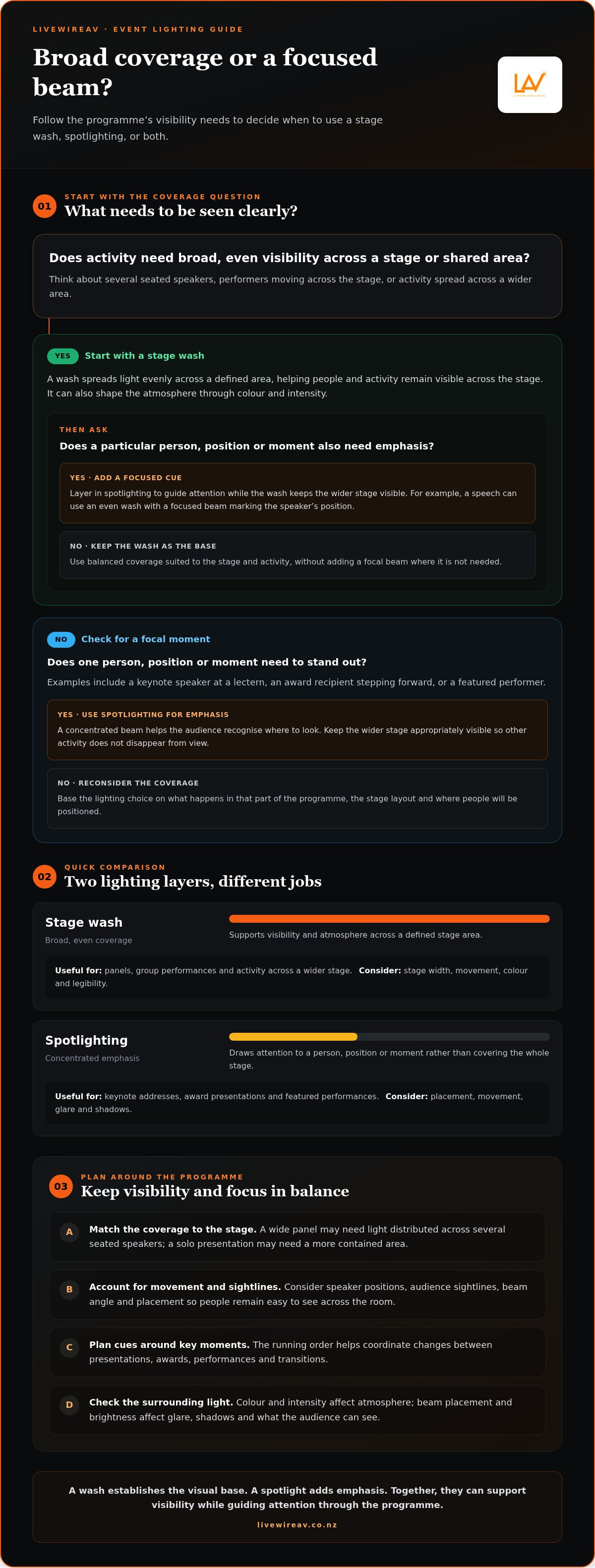
A spotlight can make a speaker stand out, but without enough light across the rest of the stage, the result may feel stark rather than clear. That’s why stage wash vs spotlighting for events is rarely an either-or decision. A wash provides broad, even visibility and atmosphere; a spotlight draws attention to a person or moment.
Choosing event lighting means balancing clear visibility with the right feel for each part of the programme, from presentations to performances and transitions. The stage layout, audience sightlines and planned movement all affect what will work.
This guide explains what stage wash and spotlighting each contribute, when one may take priority, and how the two can work together. It also covers how to brief your production team so lighting cues support the programme and feel coordinated from start to finish.
Table of Contents
Stage wash vs spotlighting for events: what each lighting approach does
The key difference in stage wash vs spotlighting for events is coverage. A stage wash spreads light across a defined area, while spotlighting concentrates it on a person, position or moment. Both affect visibility and audience attention, but they solve different problems: a wash establishes a consistent visual base, while a spotlight adds emphasis.
What is stage wash lighting?
Stage wash is an even spread of light across a defined stage or performance area. It helps speakers, performers and other activity remain visible across that space, rather than drawing attention to just one person. A wash can also establish the visual tone. Colour and intensity influence how the stage feels, from a neutral setting for a presentation to a more atmospheric look for a performance.
Coverage needs to suit the stage and what happens on it. A wide panel discussion may need light distributed across several seated speakers, while a solo presentation may use a more contained area. The aim is balanced visibility, not simply filling the stage with light.
What is spotlighting at an event?
Spotlighting uses focused light to make a person, position or moment stand out. It can guide attention to a speaker at a lectern, a recipient during an award presentation or a performer during a key section. Its coverage is more concentrated than a wash, helping the audience recognise where to look.
A spotlight doesn’t replace general stage visibility. If only one person or area is lit, other activity may be harder to see. Spotlighting works best when its focus supports the programme and the wider lighting keeps the rest of the stage appropriately visible.
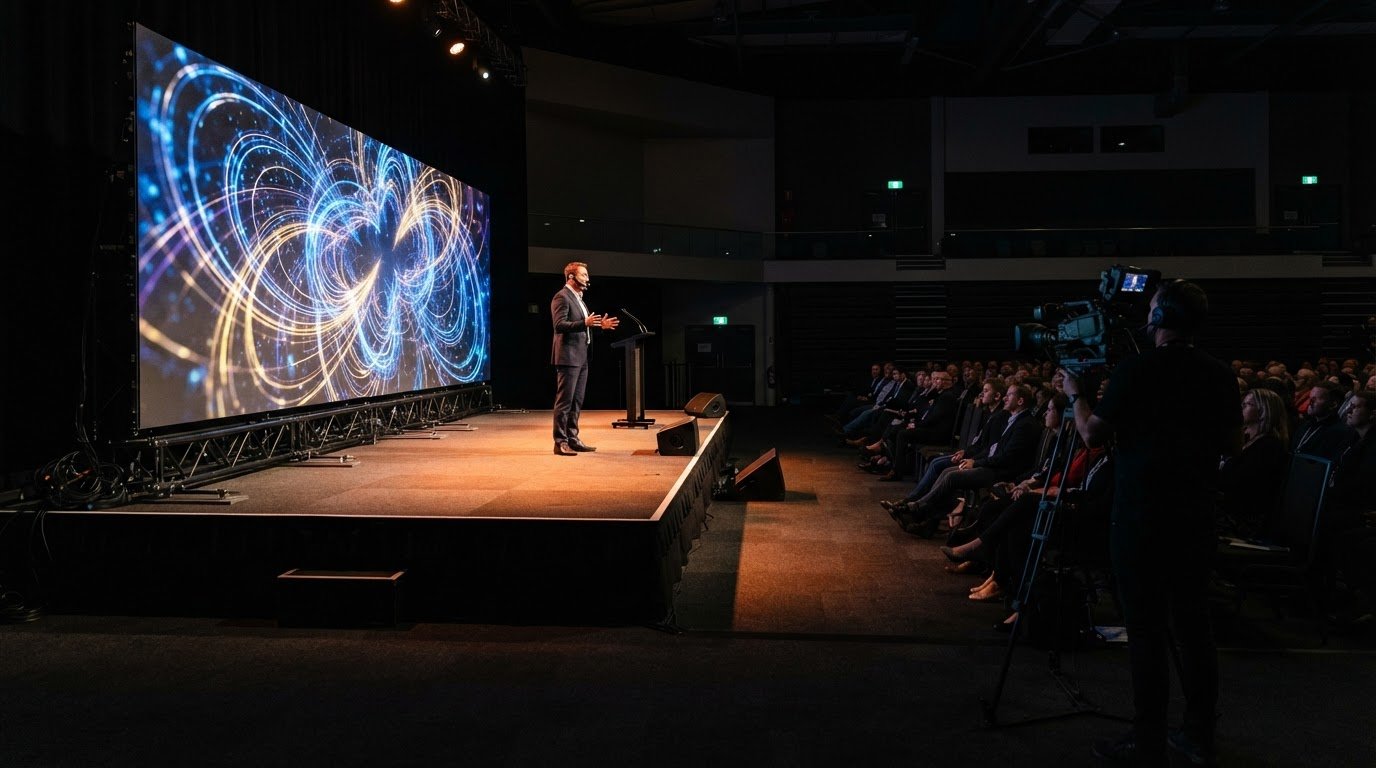
For a speech, an even wash can keep the stage readable while a focused beam marks the speaker’s position. During an awards moment, a spotlight can draw attention to the recipient as they step forward, with the surrounding wash maintaining context. The balance depends on the running order, stage layout, speaker positions and the visual priorities for each moment.
These choices sit within a broader lighting design. Stage lighting covers the tools and techniques used to support visibility, focus and atmosphere, as well as the work of designers and technicians. For an event, the practical question is how each lighting layer serves the audience: what needs to be seen clearly, and where should attention go next?
How stage wash and spotlighting shape visibility, focus, and atmosphere
Each approach changes what the audience sees and where their attention goes. A wash spreads light across an area, supporting consistent visibility and a unified look. A spotlight creates a concentrated point of emphasis. In practice, stage wash vs spotlighting for events is about balancing coverage with focus, not choosing one effect for every moment.
Where broad coverage helps the audience
A wash is useful when people need to remain visible across a shared space. During a panel, speakers may turn to one another or shift in their seats; during a performance, performers may move across the stage. Even coverage helps prevent parts of the activity from fading into shadow. Colour and intensity also shape the room’s tone, so they should complement the event’s visual direction without making faces or stage details harder to see.
When focused light creates useful emphasis
A focused beam can guide attention to a keynote speaker, an award recipient stepping forward or a featured performer. It gives a moment visual priority, but it doesn’t provide general visibility across the whole stage. The beam’s angle and placement, its brightness and the surrounding light all affect what the audience sees. A lighting plan should account for glare, shadows and movement, especially if a speaker leaves a lectern or a performer crosses the stage.
A wash is most useful when visibility needs to extend across a stage; spotlighting is most useful when a person or moment needs clear emphasis. The two can be layered, with broad coverage providing a base and a focused beam guiding attention. For an additional overview of fixture types and their uses, see Beam, Spot, and Wash Lights: What's the Difference?
The right balance depends on the programme, stage layout and visual priorities. LivewireAV’s event lighting design is part of its professional event production, bringing lighting into the wider technical plan.
Stage wash vs spotlighting: which suits different event moments?
Lighting needs can change from one item in the running order to the next. A conference might move from a keynote to a panel, then into a product presentation, with each moment calling for a different balance of coverage and emphasis. Stage wash vs spotlighting for events isn’t always an either-or choice: a broad base can support visibility while a focused cue draws attention at the right time.
Lighting for speakers, panels, and presentations
Start with facial visibility. Decorative colour or dramatic contrast shouldn’t make it harder for the audience to see who’s speaking. A wash can cover a lectern and the surrounding presentation area; for a panel, it should account for every seat and the full stage depth. If presenters move between a screen and a lectern, plan coverage for the whole route. Selective focus can then add emphasis without leaving other speakers in darkness.
Lighting for awards, performances, and featured moments
A broad base of light helps maintain visibility as the programme shifts between segments. A focused cue can distinguish a winner stepping forward, a featured performer or a product reveal. The change should feel connected to the moment, not abrupt or late. Align cues with the running order and rehearse transitions so operators can respond smoothly to entrances, movement and handovers.
The best starting approach follows the visual goal for each item, then adapts to the stage and programme. Planning both layers together makes it easier to move from clear, even coverage to focused emphasis without treating either as a complete solution on its own.
How to plan stage wash and spotlighting for your event
A clear lighting brief starts with the programme, not a fixture list. For stage wash vs spotlighting for events, decide what the audience needs to see at each point, then shape coverage and cues around the stage, venue and wider production. Reviewing the setup and rehearsing cues can reveal shadows, blocked sightlines or transitions that need adjusting before guests arrive.
Build the lighting brief around the programme
Use this sequence to turn event requirements into a practical plan:
Define key moments. Mark speeches, panel discussions, entrances, awards, performances and reveals in the running order. Note who needs visibility and where attention should go.
Map the stage. Record the stage layout, depth, lectern and seating positions, screens, entrances and likely movement paths. Include speaker positions, even if they may change during the event.
Set visibility needs. Identify functional requirements first, such as keeping faces visible across a panel. Then note atmosphere and visual priorities, including preferred colours or moments that need extra emphasis.
Plan and rehearse cues. Match lighting changes to the running order, entrances and awards. Rehearse transitions so cues follow the action cleanly rather than drawing attention to the change itself.
Share the running order, stage layout, speaker positions and visual priorities in the brief. This gives the lighting design a clear basis and helps identify where a broad wash, focused emphasis or a combination will best serve each moment. For broader design considerations, read live event lighting design.
Coordinate lighting with the wider production
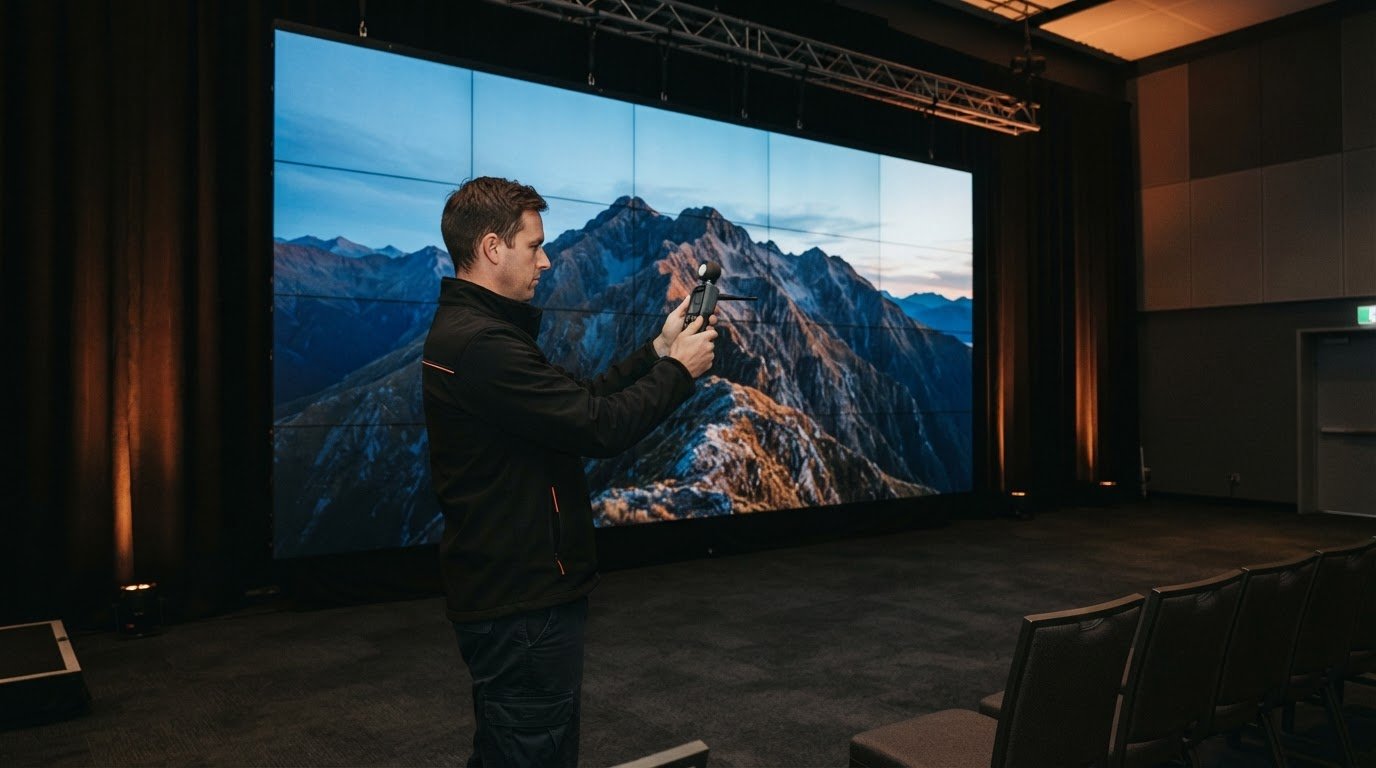
Lighting is part of the full stage picture. Screens and projection can compete with bright light or affect how the stage looks on camera; staging and room lighting can also create unwanted shadows or reduce contrast. Reviewing the setup from the audience’s sightlines and, where relevant, the camera view helps identify these issues.
Cues should be coordinated with presenters, audio and show control. For example, a speaker’s entrance, microphone handover and presentation slide change may need to align as one planned transition. LivewireAV’s technicians prepare and operate cues as part of coordinated technical production. This wider production perspective helps lighting work with the rest of the event rather than as a standalone effect.
For a lighting plan shaped around your programme and stage, plan your event lighting with LivewireAV.
How LivewireAV brings stage wash and spotlighting together
A considered lighting plan starts with the event itself: its programme, stage, venue and audience. LivewireAV designs lighting around those requirements, balancing broad coverage with focused emphasis so speakers, performers and key moments are visible for the right reasons. For stage wash vs spotlighting for events, the aim isn’t to favour one approach throughout, but to coordinate both where they support the live experience.
From lighting design to show cues
The event brief provides the starting point for a practical lighting plan. It identifies the programme’s key moments, the people and positions that need visibility, and where a change in focus or atmosphere will support the audience experience. A wash can provide consistent coverage, while a spotlight cue can direct attention at a planned moment.
Technicians prepare and operate cues around the running order, helping transitions follow the action smoothly. Clear communication between the production team and event stakeholders gives everyone a shared understanding of what each cue is intended to do and how lighting fits alongside presenter movements and programme changes.
A production plan built around the event
Lighting doesn’t sit apart from the rest of the stage. Staging, screens, cameras and room use all affect the final look and what the audience can see. A presentation with projection, for example, has different visual priorities from a performance or awards segment. The balance of wash and spotlighting is shaped around those needs, rather than applied as a fixed setup.
LivewireAV integrates lighting with wider technical production, including audio and video, so the elements work together throughout the event. Experienced technicians and operators support the plan on site, with cues prepared to suit the programme and transitions.
Share your event requirements, programme and stage plans with LivewireAV to discuss a tailored production proposal. A clear brief helps shape a lighting plan around your venue, audience and priorities. Discuss your event production requirements.
Plan lighting that supports every moment
The right stage wash vs spotlighting for events depends on what each part of the programme needs: even coverage for clear visibility, focused light for emphasis, or a considered mix of both. Share the running order, stage layout and visual priorities early so the lighting plan can account for speakers, performers and transitions.
LivewireAV brings professional event lighting design and execution together with experienced technicians and operators. As part of full technical production across New Zealand, lighting is coordinated with audio and video to support a composed, cohesive event.
Discuss your event lighting and production requirements and request a tailored production proposal. A clear brief and a well-prepared team help make the stage easy to see and well suited to the moments that matter.
Frequently Asked Questions
What is the difference between a stage wash and a spotlight?
A stage wash spreads light across a defined area, while a spotlight focuses light on a person, position or moment. A wash helps maintain visibility across a stage; a spotlight adds emphasis. For stage wash vs spotlighting for events, consider whether the audience needs to see activity across a wider area or needs a clear visual cue about where to look. The two approaches can also be combined.
Is a stage wash enough for a conference or corporate event?
A stage wash may provide the main visibility a conference needs, particularly for presentations or panels where several people need to be seen at once. The right coverage depends on the stage layout, speaker positions, movement and use of screens. A focused cue can add emphasis for a keynote or a particular moment, but it shouldn’t make other speakers difficult to see. Plan lighting around the programme and audience sightlines.
When should an event use spotlighting?
Use spotlighting when a person, position or moment needs particular emphasis. Examples include drawing attention to a keynote speaker, highlighting an award recipient as they step forward, or distinguishing a featured performer. Consider how the subject will move and where the audience will be looking. The cue should support the moment without creating glare or distracting shadows, and it should work alongside enough general lighting to keep the wider stage visible.
Can stage wash and spotlighting be used together?
Yes. A wash and spotlight can work as coordinated layers: the wash supports visibility across the stage, while a focused cue directs attention to a speaker, performer or event moment. For example, a presentation might use a consistent wash while a spotlight adds emphasis during a product reveal. The balance depends on the programme and stage layout. Planning both approaches together helps transitions feel connected rather than like separate lighting effects.
How do I choose lighting for speakers and panels?
Start by making sure faces are clearly visible from the audience’s key sightlines. For a panel, account for every seat, the stage depth and any movement between panellists. For a presenter, include the lectern and any area they may move through. A wash can provide broad coverage, with focused light added selectively. Share speaker positions and the running order in the lighting brief so the plan can follow the event.
Does spotlighting replace general stage lighting?
No. Spotlighting creates focused emphasis, but it doesn’t necessarily make the rest of the stage easy to see. If a speaker moves outside the beam, or other people need to remain visible, general coverage is still important. A wash can provide that broader visibility, with a spotlight cue layered in when attention needs to shift. The lighting plan should account for the whole stage, not just the focal point.
What information should I include in an event lighting brief?
Include the running order, stage layout, speaker and performer positions, entrances, key moments and any planned movement. Note where the audience needs clear visibility, where a moment should receive extra emphasis, and any colour or visual priorities. Also describe screens, cameras and how the room will be used. These details help the production team plan lighting and cues around the event rather than treating fixtures as isolated choices.
Comments