Professional Lighting for Exhibitions: A Practical Guide
What if the most effective exhibition lighting is the lighting visitors barely notice? Professional lighting for exhibitions should make displays clear, guide attention and create the right atmosphere without competing with the work or clashing with the venue. Getting that balance right takes more than choosing fixtures. It means planning around the exhibition’s purpose, layout and practical production requirements.
It’s understandable to be unsure how lighting will affect visibility and visitor flow, especially when the venue has its own restrictions and other production elements to coordinate. A clear plan brings those decisions together. LivewireAV’s experienced technicians shape lighting design around the venue and event, with clear communication from planning through pack-down.
This guide covers the main decisions, from setting priorities for displays and visitor areas to coordinating lighting with the wider production. You’ll also find what to prepare before technical planning begins, so the design can reflect your goals and the realities of the space.
Table of Contents
What professional lighting for exhibitions needs to achieve
Professional lighting for exhibitions is planned illumination that helps visitors see, understand and engage with displays while supporting the event’s purpose and fitting the venue. It balances visibility, focus and atmosphere rather than simply adding brightness. The right approach depends on what’s being presented, how people will move through the space and what the venue allows.
For organisers, lighting is one part of the production plan. It should make key information easy to view, support the intended presentation and work alongside staging, projection and other event elements. A display may need clear, consistent visibility, while a presentation area may need a more defined focal point. The aim is not to make every part of the room equally prominent, but to give each area an appropriate role.
Practical illumination and atmosphere-setting are related, but they serve different purposes. General visibility helps people move around and read signs, while focused light can draw attention to a particular display or area. More restrained lighting may help create a considered mood, provided visitors can still see what they need to. The Wikipedia article on Lighting outlines the broader practical and aesthetic roles light can play.
How lighting influences the visitor experience
Light can guide attention without needing a sign to explain where to look. A brighter or more defined display area can establish a focal point, while balanced visibility around it helps visitors take in nearby information and continue through the space. The relationship matters: a strong focal point can lose its impact if surrounding areas are difficult to see.
Consider the visitor’s route as well as the display itself. People may approach from different directions, pause to read or move between stands. Lighting should support those activities and the intended atmosphere, not distract with stark contrasts or poorly considered placement.
Why exhibition lighting differs by event
A display-led exhibition may prioritise the items themselves and clear viewing from several positions. A trade-show stand or branded environment may need to distinguish its focal areas, support product visibility and sit comfortably within a busy shared space. Artwork, products, people and presentations each have different visual priorities, so one uniform approach may not suit them all.
The venue and schedule shape the plan, too. Existing light, ceiling height, available positions and neighbouring production elements all affect how lighting can be arranged. Programme timings matter if the space hosts presentations or changes use during the event. A venue-aware design accounts for these conditions early, so the lighting supports the organiser’s objectives and works with the room and wider production.
How exhibition lighting design brings displays into focus
A considered lighting design gives each part of an exhibition a clear visual role. It identifies what visitors should notice first, what needs to remain easy to read and how the surrounding space supports both. That hierarchy comes from balancing focal areas with the light around them, rather than treating every fixture or display in isolation.
A coherent lighting plan makes key displays clear, supports comfortable viewing and connects each zone to the wider event experience. This requires coordination with the exhibition layout and other production elements. For example, a screen or presentation area may need to remain visible without competing with a nearby display, while a gathering point needs enough light for people to orient themselves and take part.
Balancing focal displays and surrounding light
Consider where visitors will approach from, where they’re likely to pause and what falls within their line of sight. A well-defined focal display can stand out, while surrounding light provides context and helps people move between areas. If the contrast is too strong, adjacent information may be harder to see. If everything draws equal attention, the main feature can lose emphasis.
Reflections and spill deserve attention during planning. Glossy finishes, glazed surfaces and screens can reflect light into a visitor’s eyes or obscure the view, depending on fixture position and viewing angle. A walk-through or layout review can help identify likely sightlines and refine the design before event day. Consider the audience’s viewing positions, not just how a display looks from the production desk.
Zones can make the plan easier to communicate. Distinguish display areas from circulation routes and gathering points, then coordinate the lighting approach with each area’s purpose. This is especially useful in a shared exhibition environment, where nearby stands and production elements can influence the visual balance. Aim for zones that work together, without abrupt changes that make the space feel disconnected.
Planning colour and atmosphere consistently
Colour can appear different under different light sources, and surrounding finishes can affect how a display is perceived. Consider display materials, stand finishes and audience-facing areas together, rather than choosing a colour treatment for one feature in isolation. This matters when accurate appearance is part of the presentation. For objects with conservation needs, guidelines from the Conservation & Art Materials Encyclopedia Online offer relevant context on exhibit lighting and light-related preservation concerns.
Atmosphere is also a coordination decision. A restrained look may suit a product display, while a presentation area may call for a more defined visual focus. The design should account for how these areas relate, including any changes in use during the event. There’s no single colour setting or brightness level that suits every venue and display. The right choice depends on the material, viewing conditions and production plan.
Bringing these decisions together is part of venue-aware exhibition lighting design, where the layout, surrounding light and event requirements inform a practical plan.
Choosing an exhibition lighting approach for displays, stands and venues
There’s no single lighting setup that suits every exhibition. Start with the format, the material on display and how visitors will use the space. Use the comparison below to shape the brief, then adapt it to the actual venue and production schedule.
The table is a starting point, not a fixed specification. Venue conditions, display finishes and intended viewing positions all influence what will work. A space with strong existing light presents different considerations from one where the production controls more of the visual environment. Professional lighting for exhibitions should respond to those conditions rather than impose a default look.
Lighting for art and product displays
For artworks and products, plan for clear visibility and a considered presentation. Colour appearance can be affected by both the light and the materials around a display, so consider the object, its background and nearby finishes together. If an exhibit includes light-sensitive or otherwise delicate materials, involve a conservation specialist in setting suitable display conditions. MuseumNext’s insights on LED lighting for museums provide relevant context on balancing presentation with preservation considerations.
Lighting for trade-show stands and shared spaces
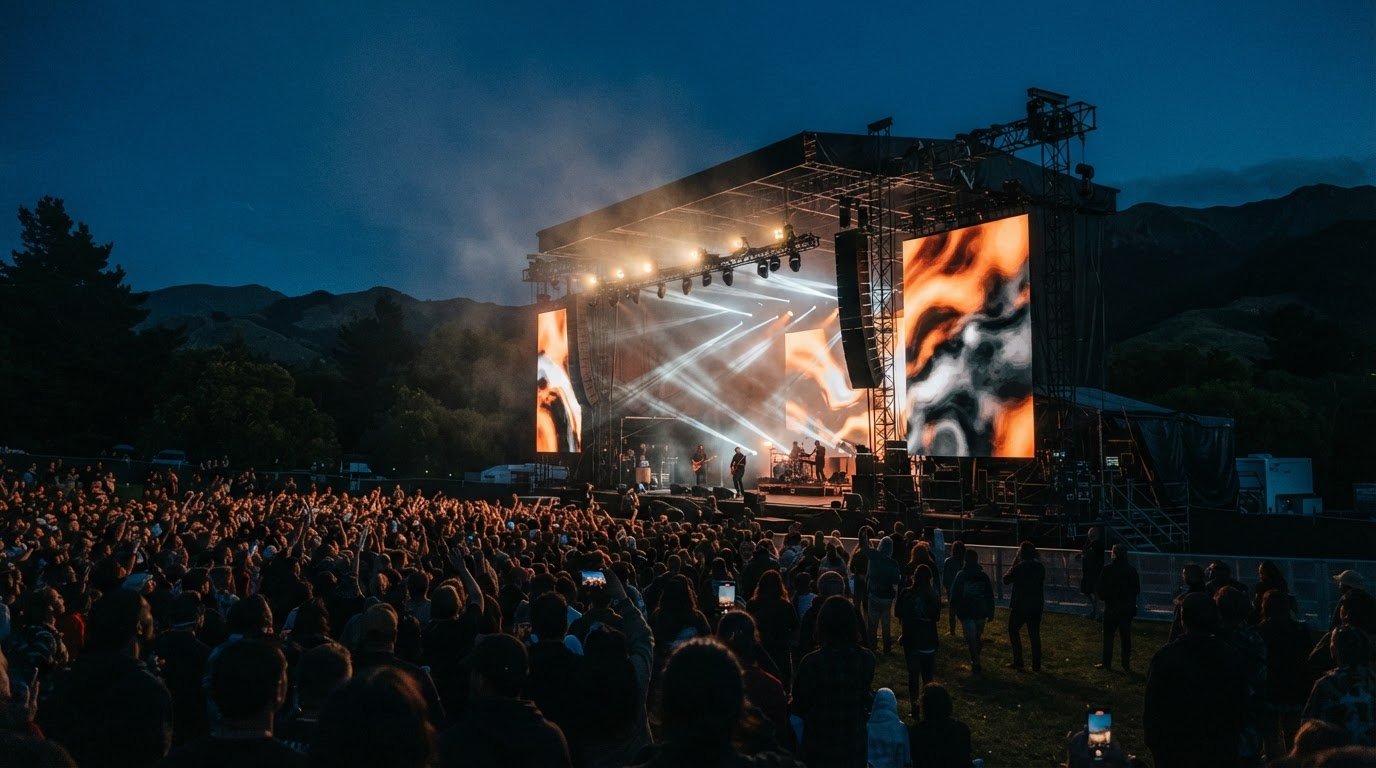
At a stand, consider what visitors see as they approach, where they’ll pause and how the focal area relates to surrounding activity. In a larger venue, stage and architectural lighting can help shape the wider event setting while keeping individual zones legible. If the programme includes screens, presentations or changing uses, coordinate lighting with vision, staging and event schedules so one element doesn’t undermine another.
Discuss these decisions as part of the production plan. A venue-aware design brings the display, audience movement and wider event requirements into one workable approach.
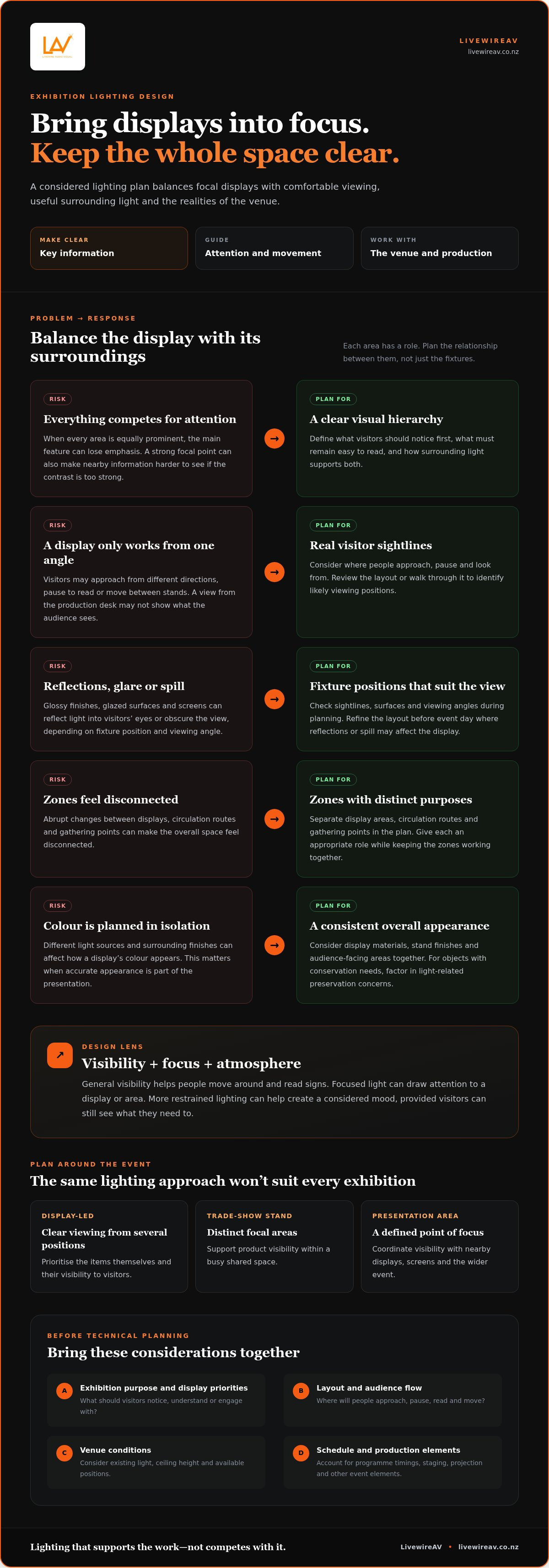
An exhibition lighting planning checklist for event organisers
A useful lighting brief turns event goals into decisions the production team can plan around. It doesn’t need to prescribe technical settings. It should explain what visitors need to see, how the space will be used and what the venue allows.
Before lighting design begins, prepare the exhibition format, display priorities, audience flow, programme timings and venue constraints. This gives the team a practical starting point for professional lighting for exhibitions and helps surface coordination needs early, rather than during setup.
Prepare the information for production planning
Gather the details below into one brief. Mark anything still being decided, so the team can distinguish confirmed requirements from open questions.
Exhibition format: Describe whether the space is gallery-style, a trade-show stand or a larger shared exhibition, and explain the event’s purpose.
Display priorities: Identify key works, products, signs, screens or presentation areas, and note what visitors need to notice or read.
Visitor experience: Map likely entry points, audience flow, places where people will pause and any gathering areas.
Programme timings: Share opening hours, presentation times and planned changes in how the space will be used.
Venue information: Provide available plans and details about existing lighting, setup conditions and known restrictions that could affect positioning or operation.
Production coordination: Record how lighting needs to work with staging, vision, projection and other relevant event elements.
A clear brief also helps align expectations. For example, if a presentation area is scheduled for use at set points in the programme, noting this lets the production team consider how the lighting will relate to the screen, stage and audience at those times.
Coordinate the plan before doors open
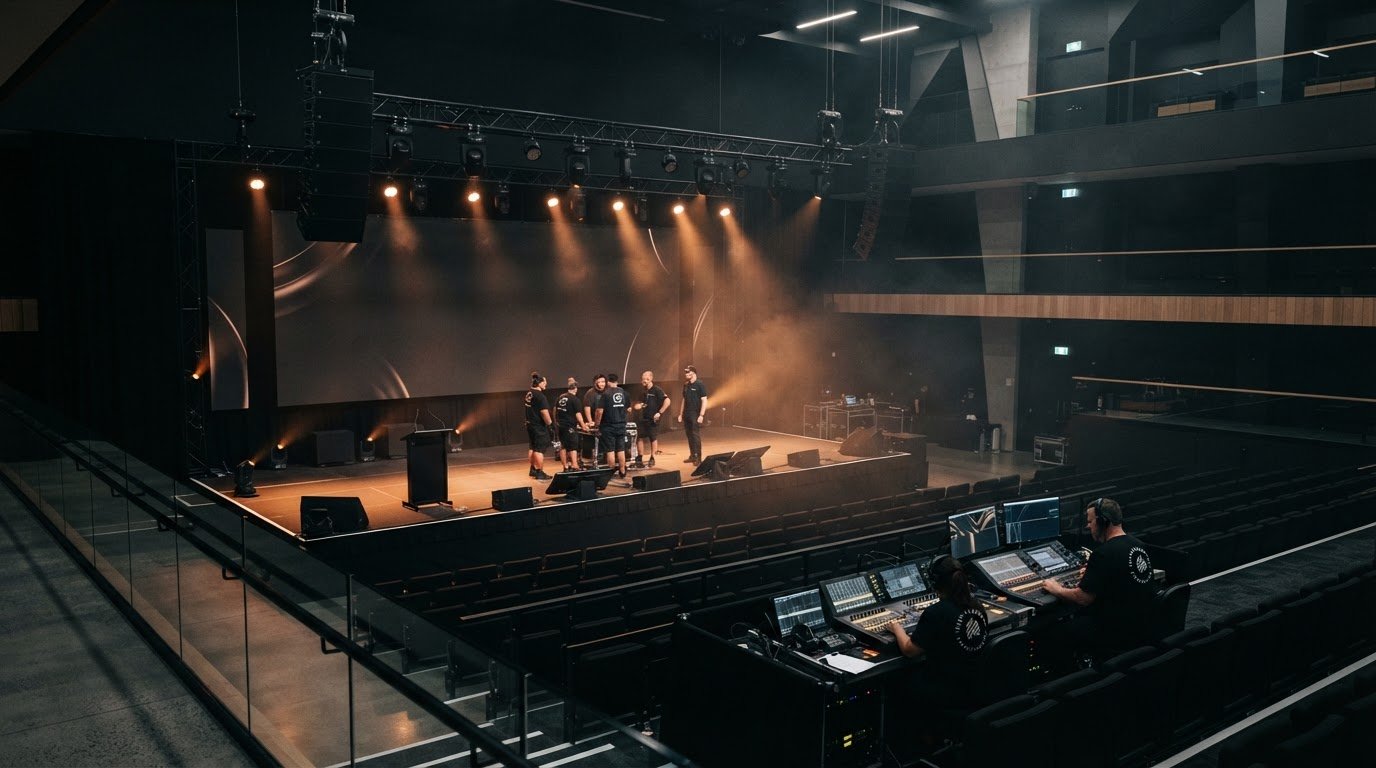
Use setup time to review the design in the actual space. Walk the visitor route and view important displays from the positions guests are likely to use. Check that key information remains visible, focal areas read as intended and lighting works alongside the rest of the production. If the layout or display placement has changed, communicate it promptly so the team can assess the effect.
Agree on cue timings and responsibilities wherever lighting needs to change during presentations or other programme moments. Make clear who is operating cues, who can communicate a change and how updates will reach the relevant crew. A shared understanding helps prevent uncertainty when the room is busy.
When the brief, venue details and programme are clear, experienced technicians can plan and operate lighting with better context. Organisers also have a consistent point of reference through setup and event operation.
For a coordinated approach across event production elements, explore full technical production as part of your planning.
How LivewireAV delivers professional lighting for exhibitions
Exhibition lighting needs to work in the room, for the displays and alongside the event programme. LivewireAV provides professional lighting production throughout New Zealand, with lighting design, stage and architectural lighting, and intelligent fixtures. The practical, venue-aware approach considers the event brief and conditions of the space, and how lighting fits the wider production.
With 10+ Years in operation and 10,000+ Events delivered, LivewireAV brings experienced technicians and operators, modern, well-maintained equipment and clear communication to event delivery. The team manages the technical detail with care, so organisers can focus on the exhibition and its audience.
A venue-aware lighting plan with experienced operators
Planning begins with the exhibition’s objectives and information about the venue. The display layout, visitor route, programme and other production requirements help shape a workable lighting plan. This keeps the design grounded in the event rather than treating fixtures as a standalone decision. If the layout or schedule changes, clear communication helps the team understand what that means for delivery.
Experienced technicians support the plan through setup and operation, with communication continuing through pack-down. This matters in busy event environments, where lighting must fit around other activity and the agreed schedule. Roles and key timings can be discussed as part of production planning, helping the team share an understanding of what needs to happen and when.
Plan lighting as part of the wider event production
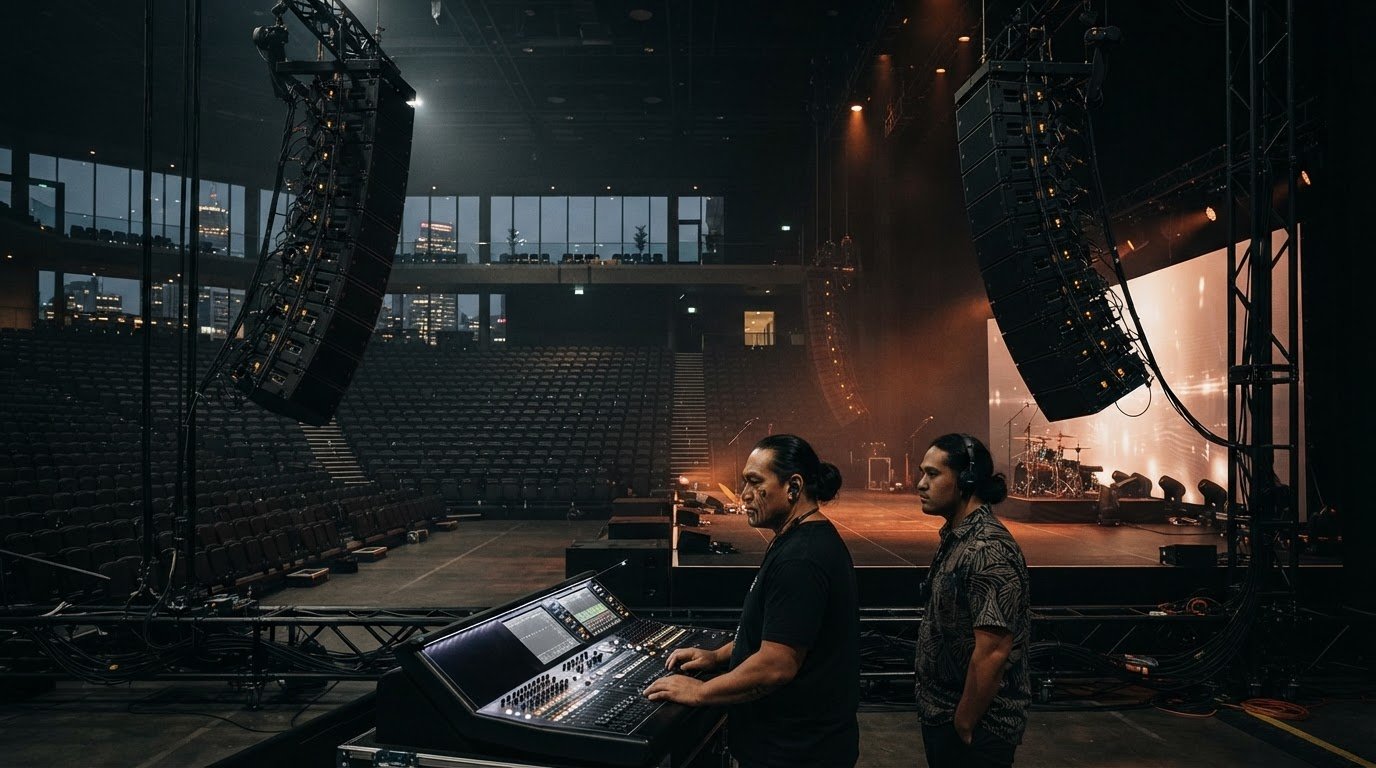
Lighting often shares the space with audio, vision and staging. A presentation, for example, may need lighting to complement the screen and speaker area, while the rest of the exhibition remains usable for visitors. Considering these elements together helps identify potential conflicts early and gives the production team a clearer picture of how the event should run.
LivewireAV’s full technical production brings event requirements into one coordinated plan. For organisers considering how design and delivery connect, live event lighting design is one part of that wider discussion. The production approach can be tailored to the exhibition brief, venue and programme, with clear communication as details develop.
If you’re planning an exhibition, share your objectives, venue information and programme to start shaping a tailored production proposal. Discuss exhibition production with LivewireAV.
Give your exhibition a clear production starting point
Your lighting brief turns exhibition goals into a coordinated production plan. Start with what visitors need to see and how the space will be used, then bring the venue information and programme into the conversation. The technical team can shape an approach around the event rather than relying on a one-size-fits-all setup.
LivewireAV brings 10+ Years in operation, 10,000+ Events delivered and experienced technicians and operators to professional lighting for exhibitions. Clear communication supports the work from planning through pack-down, keeping the production details in capable hands while your exhibition takes centre stage.
Share your event objectives, venue details and schedule with LivewireAV to start shaping a considered production proposal. Discuss your exhibition lighting requirements with LivewireAV.
Frequently Asked Questions
What is professional lighting for exhibitions?
Professional lighting for exhibitions is a planned approach to illuminating displays and event areas so visitors can see and engage with what’s presented. It considers how the space is used, what needs visual emphasis and how lighting sits alongside other production elements. A display, for example, may need a different treatment from a nearby presentation area. The design is shaped by the exhibition brief and venue, not just the fixtures available.
How do you plan lighting for an exhibition?
Start by identifying the exhibition’s purpose and the displays or moments visitors should notice. Map the layout and expected visitor route, noting viewing positions, signs, screens and presentation areas. Gather venue information and programme timings, and record any known constraints. Sharing these details with the production team gives them context to develop a practical plan. A draft layout or floor plan can make the brief easier to discuss and refine.
What is the difference between exhibition lighting and general lighting?
General lighting supports broad visibility across a room, while exhibition lighting is planned around specific displays, activities and visitor needs. A room may be bright enough for people to move through, yet still leave a product label hard to read or a presentation area visually unclear. Exhibition lighting considers these priorities and how they relate, rather than aiming for the same level of attention everywhere.
Can exhibition lighting affect how colours appear?
Yes. The light source and nearby surfaces can influence how colours are perceived, so a product, artwork or fabric may look different under different lighting conditions. This can matter if visitors need to compare colours or see material details accurately. Include colour-critical items in the design discussion, and review them in the space where they’ll be displayed. For sensitive or specialist exhibits, factor in relevant conservation advice.
How can exhibition lighting reduce glare?
Glare can be managed by considering where light falls in relation to display surfaces and visitor sightlines. A glossy panel or screen may reflect a fixture towards someone viewing from a particular angle. During setup, view the display from positions visitors are likely to use, including the approach path, and adjust the lighting plan if reflections distract from the content. The result depends on the venue, materials and layout.
Should exhibition lighting be coordinated with audio and vision?
Yes, particularly if the exhibition includes presentations, screens or scheduled demonstrations. Lighting choices can affect how a screen is viewed and how a presenter or display area reads to the audience. Sharing the programme and layout with the audio and vision teams helps align setup and operation. For instance, consider a presentation cue alongside screen content and speaker positions, rather than planning a lighting change in isolation.
When should exhibition lighting be planned?
Plan lighting as the exhibition layout and event programme take shape, before key production decisions are locked in. Early discussion gives the team time to consider venue conditions, display placement and how lighting will fit with staging or vision. If plans change later, share updates promptly so the production approach can be reviewed. A settled brief creates a clearer path from design discussion to event setup.
Comments