Bespoke Event AV Design: From Event Objectives to a Cohesive Technical Plan
What if the right event AV plan starts with the programme, not a list of equipment? Bespoke event AV design turns event objectives into practical decisions about what people need to hear, see and experience, and how the venue can support it.
It’s understandable to feel unsure which technical elements will make a difference. A generic package can overlook the room layout, audience, presentation format or moments that matter most. At the same time, creative ideas need a practical production plan. Start by connecting the event’s objectives with its venue and audience, then consider the technical approach.
This article explains how to shape those decisions into a clear, coordinated plan. You’ll learn what information to share, how programme format and venue conditions inform audio, vision and lighting, and how Full Technical Production brings those elements together. With 10+ Years in operation and 10,000+ Events delivered, LivewireAV understands the value of careful preparation and clear communication. The result is a plan shaped around your event, not a standard equipment package.
Table of Contents
What does bespoke event AV design mean for your event?
Technical choices should serve the event, not dictate it. Organisers may know the experience they want but be less certain about which systems will support it. Begin with the event’s purpose and programme. Then consider what the audience needs to hear and see, and what the venue can accommodate.
Bespoke event AV design is the process of matching technical decisions to an event’s objectives, programme, audience and venue. It turns those requirements into a considered plan for audio, vision and lighting, rather than treating equipment as the starting point.
Design is the planning stage: it establishes what the event calls for and how the technical elements relate to one another. Equipment selection follows, identifying the systems that fit the plan. Live operation comes later, when technicians and operators put that plan into practice during the event. Keeping these stages distinct helps organisers describe the experience they want before getting into equipment details.
How is bespoke AV design different from a standard package?
A standard package starts with a set configuration. It may suit an event with familiar requirements, but it doesn’t necessarily reflect the programme, room or audience in front of you. Bespoke planning reverses the order: first clarify what the event needs to do, then shape a suitable combination of technical elements.
Tailoring doesn’t mean adding more technology. It means choosing and coordinating the audio, vision or lighting systems that serve the programme, and leaving out elements that don’t. A presentation built around spoken content, for example, has different priorities from one that relies on visual material. The aim is to make deliberate choices based on the event’s needs, not assume that a larger system is automatically a better fit.
Which event details shape the design?
Four inputs help define the approach: the programme, the audience experience, venue conditions and presentation format. Together, they give technical planning a practical basis. A conference keynote, for example, may centre on a speaker addressing an audience with presentation content. Planning considers how speech and visuals fit the session and the room.
An awards evening has a different rhythm. It may move between introductions, acceptance speeches and moments where lighting helps establish the atmosphere. Those transitions matter when planning how audio, vision and lighting work together. The room layout and existing conditions also inform what is practical. Audience positions and how people will follow each moment help clarify priorities.
Clear event requirements keep the design focused. Share what happens, who it’s for, where it takes place and how content will be presented. That gives technical planning a reliable starting point, with each decision tied to the event rather than a preset equipment list.
How bespoke event AV design turns event goals into a technical plan
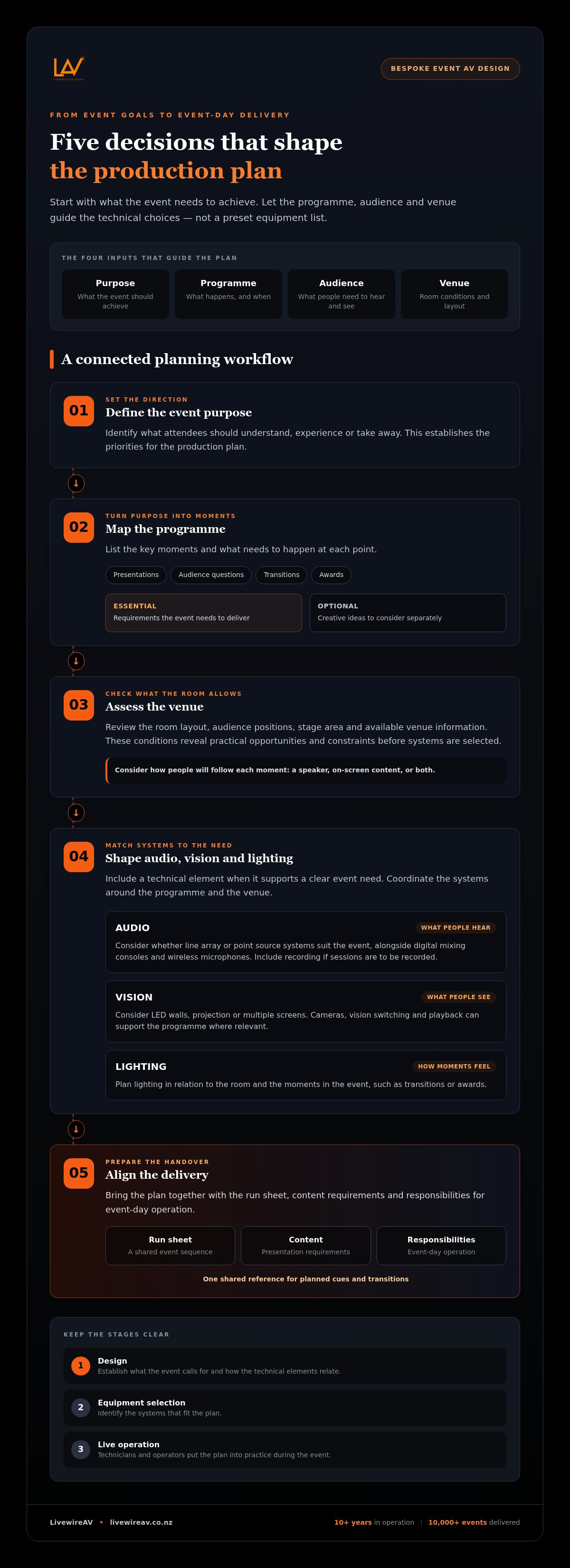
A useful technical plan doesn’t start with equipment. It starts by clarifying what the event needs to achieve, then connects that purpose to the programme, audience and venue. In bespoke event AV design, each choice informs the next, helping organisers move from broad ambitions to practical decisions about audio, vision and lighting.
A clear workflow keeps the planning focused:
Define the event purpose. Identify what attendees should understand, experience or take away. This sets priorities for the production plan.
Map the programme. List key moments such as presentations, audience questions, transitions and awards. Note what needs to happen at each point, and separate essential requirements from optional creative ideas.
Assess the venue. Consider the room layout, audience positions, stage area and available venue information. These conditions help identify practical opportunities and constraints before systems are selected.
Shape the systems. Match audio, vision and lighting to the programme and venue. Include an element when it supports a clear event need, rather than adding technology without a purpose.
Align delivery. Bring the plan together with the run sheet, content requirements and responsibilities for event-day operation. This gives the production team a shared reference for planned cues and transitions.
Start with the programme, audience and desired experience
Look beyond the event title to how each session will work. A keynote, a question-and-answer session and an awards presentation place different demands on how people hear and see what’s happening. Audience size and room layout also help shape the brief, as does whether attendees will follow a speaker, on-screen content or both.
Record essential requirements separately from creative ambitions. This makes priorities easier to discuss and keeps the plan grounded in the event’s purpose.
Translate the venue and programme into coordinated systems
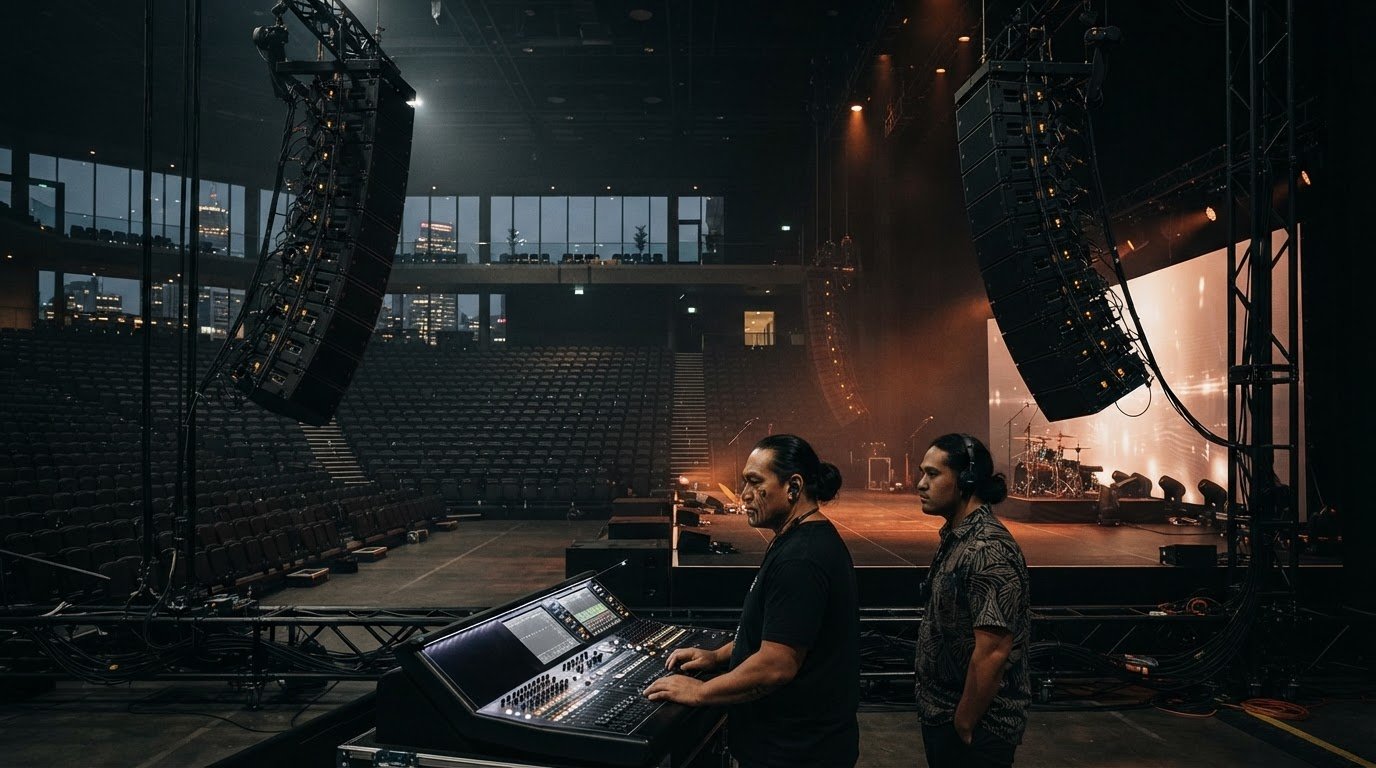
Venue conditions guide practical system choices. Audio planning may consider whether line array or point source systems suit the event, alongside digital mixing consoles and wireless microphones. If sessions are to be recorded, include that requirement in the audio brief too.
For vision, the plan may consider LED walls, projection or multiple screens, with cameras, vision switching and playback supporting the programme where relevant. Lighting is considered in relation to the room and event moments. LivewireAV’s venue-aware Full Technical Production connects these requirements through coordinated audio, vision and lighting, supported by clear communication and experienced technicians.
Once the purpose, programme and venue needs are clear, discuss your event production requirements as the next step in shaping a workable plan.
How to assess bespoke event AV design choices without overcomplicating the brief
A clear comparison keeps technical discussions focused on what the programme requires. For each proposed element, ask what event need it serves, which system could support it and what venue or programme detail affects the decision. This keeps bespoke event AV design centred on purpose and coordination, not on accumulating equipment.
Bespoke doesn’t mean more. It means selecting relevant systems and making sure their roles fit together. Use this simple table to organise the conversation:
When does the event need audio, vision or lighting?
Audio matters when people need to hear a speaker, panel or audience contribution. The room and where people will be seated help shape the approach. Line array and point source systems are options within a wider audio plan. Vision supports shared information, from presentation content to other material in the programme. Consider LED walls and projection alongside sightlines and how the content will be used.
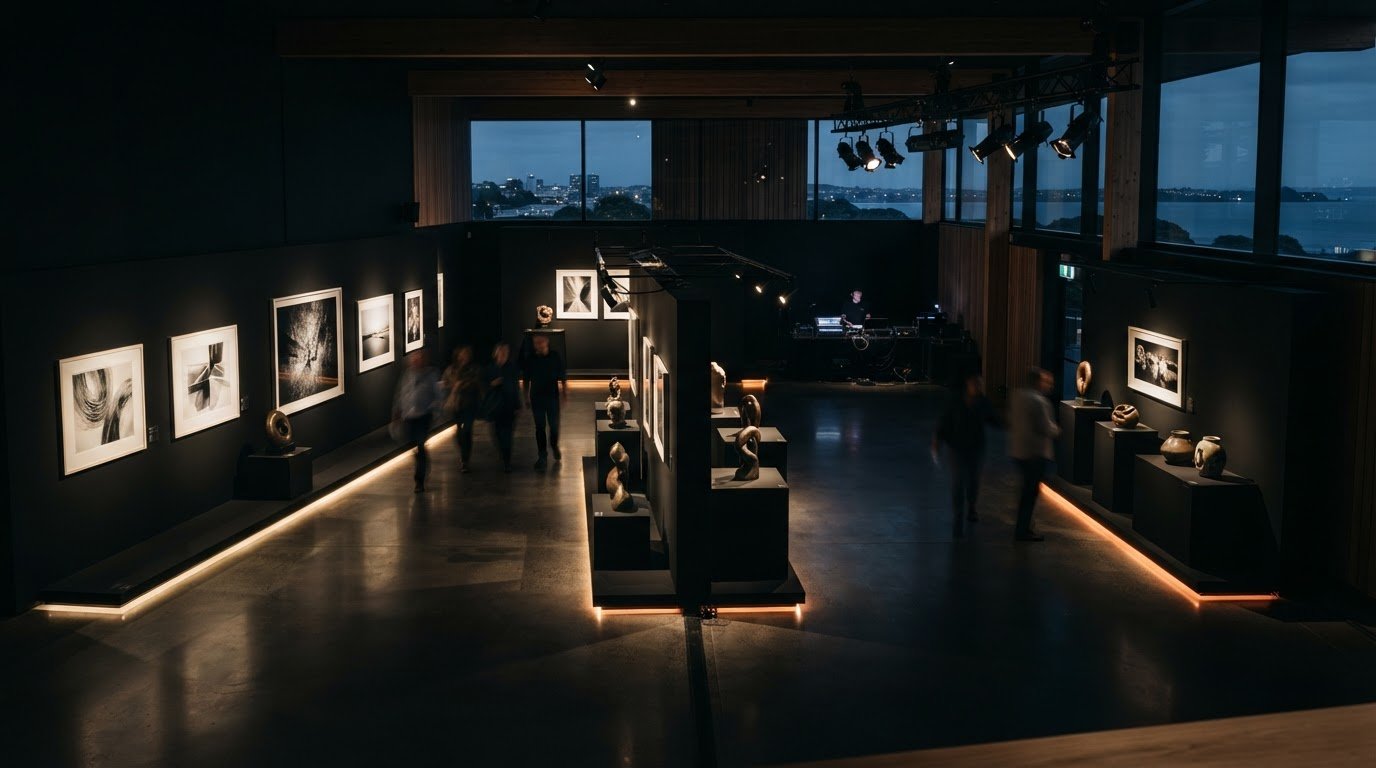
Lighting can establish a focus on stage or contribute to the atmosphere of a space. Intelligent lighting design is most useful when it responds to the programme, such as a speaker introduction or transition, rather than being added without a clear purpose. For conference organisers weighing these elements, audio visual for large conferences offers a conference-specific production perspective.
How do you balance creative intent with practical delivery?
Sort ideas into three groups: must-haves that support core programme needs, useful enhancements that improve the intended experience, and elements that don’t serve either. This gives the production conversation a clear order. An ambitious visual concept, for example, can be weighed against its fit with the content, venue and audience, rather than treated as an automatic requirement.
Venue-aware planning helps connect creative intent with practical choices. Share the purpose of each idea, relevant venue information and how it fits the run sheet. Clear communication helps the technical plan account for those details and coordinate audio, vision and lighting as one production. If lighting is central to the experience, live event lighting design explores how it can be considered as part of the wider plan.
What to include in a bespoke event AV design brief
A useful brief explains what the event needs to achieve and what attendees should experience. It doesn’t need to name equipment or use technical language. For bespoke event AV design, clear information about the event, programme and venue gives the production team a practical starting point for developing a coordinated plan.
Use this checklist to gather the details you know before technical planning begins:
Event purpose and format: Describe the event type, its key objectives and what attendees should take away.
Programme flow: Note the order of sessions, key moments, transitions and any parts of the programme that need particular attention.
Audience: Outline who will attend and any relevant listening, viewing or participation needs.
Venue information: Share the venue details available to you, including room layout, stage arrangements, audience positions and known access considerations.
Presentation requirements: List planned presentations, playback content, camera use or recording needs, where relevant.
Desired experience: Describe the visual or audio feel you’re aiming for, such as clear spoken content, a strong visual focus or lighting that supports the event’s atmosphere.
These points describe the event requirements, not the technical solution. You can explain that a speaker needs to be heard throughout the room or that presentation content should be visible to attendees without deciding which audio or vision system should be used. System selection and coordination can then respond to the programme and venue details.
What event information helps shape the design?
Make the brief specific about how the event will run. Note whether it’s a conference, exhibition, corporate event, sporting event or outdoor production, then outline the programme’s important moments and how attendees will take part. If you have venue information, include the room plan and known layout or access considerations. Add presentation files, playback, camera or recording requirements when they’re part of the event. This context helps connect production decisions to the actual run of the day.
How can the brief stay useful and manageable?
Keep confirmed requirements separate from ideas still being explored. For example, mark a scheduled presentation as confirmed, while describing a visual concept as an option under consideration. Record who makes decisions, how the planning team prefers to communicate and any important planning milestones. This keeps open questions visible without mistaking them for settled requirements.
Plain language is enough. Focus on what needs to happen, what the audience should experience and what information the venue can provide. LivewireAV communicates clearly from planning through pack-down, developing practical, venue-aware solutions as event requirements take shape. A straightforward brief keeps those conversations focused and gives the production team a useful basis for coordinating the technical plan.
To shape your event requirements into a practical production brief, discuss your event AV brief with LivewireAV.
How LivewireAV delivers bespoke event AV design through Full Technical Production
A considered design needs to work beyond the planning document. LivewireAV’s Full Technical Production brings audio, vision and lighting together around the event programme, venue and audience. The approach connects the organiser’s requirements to practical production decisions, with a technical plan developed for the event rather than treated as a preset equipment list.
LivewireAV provides Full Technical Production for conferences, exhibitions, corporate events, sporting events and outdoor productions across New Zealand. The work is supported by experienced technicians and operators, modern, well-maintained equipment and venue-aware planning. With 10+ Years in operation and 10,000+ Events delivered, LivewireAV brings practical production experience to events where clear coordination matters.
What does a coordinated production approach bring together?
Audio, vision and lighting each have a role. Planning them together helps ensure they support the programme as a whole. A speaker’s audio needs, the audience’s view of presentation content and the lighting around a stage or transition all affect the production plan. Decisions are considered in context, so the technical elements relate to the event rather than being planned in isolation.
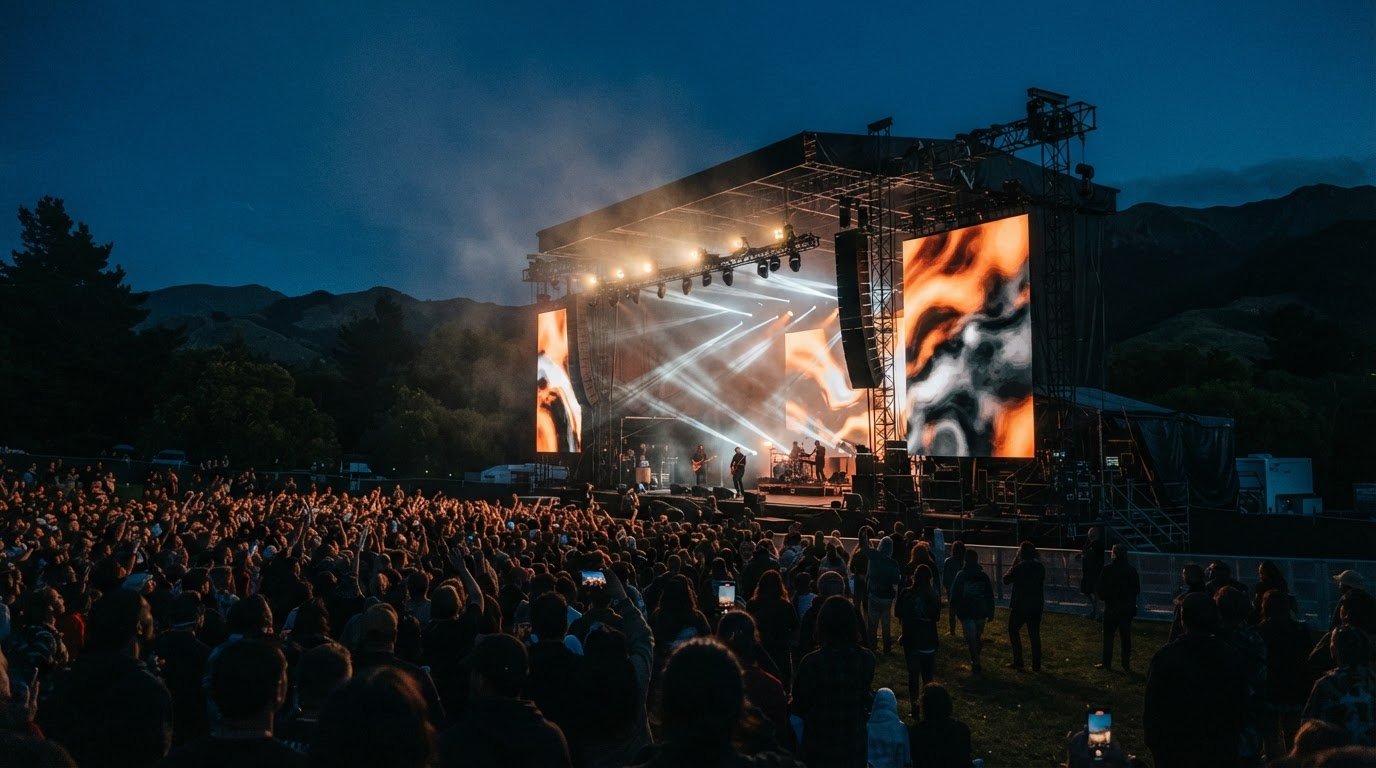
Depending on the brief, that may include audio line array systems, LED walls or projection, camera packages and vision switching, and intelligent lighting design. The relevant combination depends on what the programme calls for and the venue conditions. Coordinated Full Technical Production gives the event team a practical framework for aligning those elements, without assuming every event needs the same setup.
Why do communication and calm delivery matter?
Plans need to be shared clearly, especially when event details evolve. Straightforward communication helps organisers and production teams work from the same understanding of the programme, venue and priorities. It also supports coordination through the event process, from planning and production through to pack-down.
Live events can involve moving parts and time-sensitive decisions. Experienced technicians and operators support delivery in high-pressure environments, while a calm, detail-focused approach keeps attention on the work at hand. Careful preparation helps connect the agreed plan with the practical demands of the venue and programme.
To take the next step, share your event brief and discuss a tailored proposal with LivewireAV. Talk with LivewireAV about your event.
Move your event plan forward
The next useful step isn’t to solve every technical question before planning begins. Bring together the people shaping the programme and agree on what the event must achieve, what matters most to attendees and which ideas are still taking shape. That shared starting point makes it easier to turn creative intent into a practical conversation about bespoke event AV design.
Your brief can evolve as decisions are made. Start with what you know, flag what’s still open and use the planning discussion to clarify priorities. You don’t need to arrive with a finished technical solution. A clear sense of the event’s purpose gives production planning a useful direction.
Ready to put your event requirements into motion? Talk with LivewireAV about your event and take the next step with a clear, considered plan. Your ideas are a good place to begin.
Frequently Asked Questions
What is bespoke event AV design?
Bespoke event AV design is planning the technical approach around the event’s purpose and format, rather than assuming one setup suits every occasion. It translates requirements into considered choices about sound, screens, cameras or lighting. For example, a panel discussion may need a different audio plan from a product launch with visual content. The design establishes the approach; equipment selection and live operation are distinct stages.
What information should I provide for an event AV design brief?
Share the event format, draft programme, audience profile, venue details and what attendees need to hear or see. Add the run sheet if it’s available, plus presentation formats, playback content, camera use or recording needs. Note any room layout or access information you already have. If some decisions are still open, mark them as provisional. You can describe the desired experience in plain language without naming technical systems.
How is bespoke event AV design different from hiring equipment?
Arranging equipment alone focuses on supplying items; event AV design considers what the programme requires and how technical elements should work together. A screen may be part of a presentation, for instance, but the plan also needs to account for its place in the room and how content will be shown. LivewireAV’s Full Technical Production brings planning and technical delivery together, so organisers have a coordinated production approach rather than separate equipment choices to manage.
Does bespoke event AV design include audio, vision and lighting?
It can consider all three, with the event brief determining which elements are relevant. Audio supports spoken contributions and other sound; vision can include LED walls, projection or camera packages; lighting may address stage or architectural needs. A small meeting with limited presentation content may have different priorities from a gala with multiple programme moments. The design weighs each element against the event’s requirements, rather than treating every system as essential.
Can event AV design be tailored to different types of events?
Yes. A conference, exhibition, awards evening, sporting event or outdoor production can each call for a different technical approach. The format affects how people participate, what content is presented and how the event space is used. A livestream or hybrid component can also shape production needs. Share the distinctions that matter, such as audience interaction or a changing programme, so the design reflects the event rather than relying on a generic format.
When should I start planning event AV design?
Begin once you have a clear event purpose and an initial view of the programme and venue. Early discussion gives technical planning a chance to inform decisions that may affect the room layout, stage arrangement or content preparation. You don’t need every detail finalised first. Share what’s settled, identify what’s still being decided and update the brief as the event takes shape. There’s no single planning date that suits every event.
What does Full Technical Production involve?
Full Technical Production brings together the planning and delivery of event audio, vision and lighting. Depending on the event brief, this may involve systems such as line array audio, LED walls or projection, camera packages and intelligent lighting design. Experienced technicians and operators support the live production, working from the event requirements and programme. The technical approach is shaped for the project, so organisers can focus on communicating their needs rather than specifying every system.
Comments