Line Array System Hire: Plan Clear, Reliable Event Sound
Choosing a line array by size alone can leave parts of an audience with uneven sound. The venue, audience layout and event programme all shape the right approach. When you're searching for professional line array system hire, start by considering those details, not just the equipment.
Clear sound matters, but so does knowing who is responsible for the technical work. Planning and experienced onsite operators help keep sound delivery coordinated, so you can focus on the event. The right production plan considers the programme, venue and equipment together.
This guide explains how to plan line array sound around your venue and audience, what to consider when choosing an audio approach, and what technical support can involve. You'll also see how coordinated production can help when an event needs audio alongside vision or lighting.
With 10+ Years in operation and 10,000+ Events delivered, LivewireAV brings venue-aware planning, experienced technicians and clear communication to event production. Practical preparation and calm delivery help keep the technical work on track.
Key Takeaways
Understand the difference between an equipment list and the sound production that supports an event.
Match your audio approach to the event format, from speech-led conferences to music and sporting programmes.
Compare planning, equipment scope, onsite operation and communication when assessing line array system hire Auckland.
Prepare event objectives, programme details and venue information to help shape a practical production plan.
Consider Full Technical Production when audio, vision and lighting need coordinated management.
Table of Contents
What does line array system hire involve for an event?
Line array system hire involves providing a line array sound system as part of audio production planned around an event’s programme, audience and venue. The equipment is one part of the work. Sound production also involves deciding how audio fits the event and managing it during the programme. A line array generally consists of loudspeaker elements arranged in a vertical line to work together. For background on the concept and its applications, see Line array loudspeaker systems.
That distinction matters. An equipment list alone doesn’t explain how the sound approach relates to the room, where people will be seated or standing, or what they need to hear. Line array system hire Auckland is best considered as part of a production plan, rather than a simple comparison of speaker names or quantities. The right approach depends on the event in front of you.
What event requirements influence the sound plan?
Start with the audience and how they’ll use the space. A seated audience facing a stage has different listening needs from guests moving between exhibition stands. Room layout, audience positions and speaker placement all inform the planning discussion. Consider venue characteristics early, too. The shape and layout of a space can affect how the system is arranged and operated.
The programme also shapes audio requirements. A conference with presentations needs speech to be intelligible, while a music-led event may need a different balance and mixing approach. Events that move between speeches, video and music involve transitions, so the production plan needs to account for how each part connects. Sharing the running order helps the technical team prepare for those changes instead of treating every moment as the same sound task.
What is the difference between equipment hire and managed production?
Equipment supply centres on providing sound equipment. Managed production takes a broader view: planning the audio in context, coordinating technical delivery and operating equipment during the event. An experienced operator can manage the sound mix as programme elements change, helping presenters, playback and other audio sources fit the running order.
LivewireAV provides Audio Line Array Systems as part of its professional event production, supported by experienced technicians and operators, modern, well-maintained equipment and venue-aware planning. When an event also needs coordinated audio, vision and lighting, Full Technical Production brings those elements into a joined-up production plan. LivewireAV has 10+ Years in operation and 10,000+ Events delivered.
Plan for the event outcome, not just the equipment list. Clear information about the audience, programme and venue gives the technical team a stronger basis for shaping the sound approach and supporting delivery on the day.
How do line array systems fit different event formats?
There isn’t one sound plan for every event. A conference, exhibition, corporate function or sporting event may use a line array system, but the audience’s position, programme and venue shape how the audio is planned. For line array system hire Auckland, start with what people need to hear and how the event will unfold, not a one-size-fits-all system size.
Line array design is one part of the picture. For a deeper technical overview, The Science Behind Line Array Speakers explains the principles behind these systems. Event planning applies the sound approach to the specific setting and programme. Use the following considerations to guide planning, rather than as universal equipment recommendations.
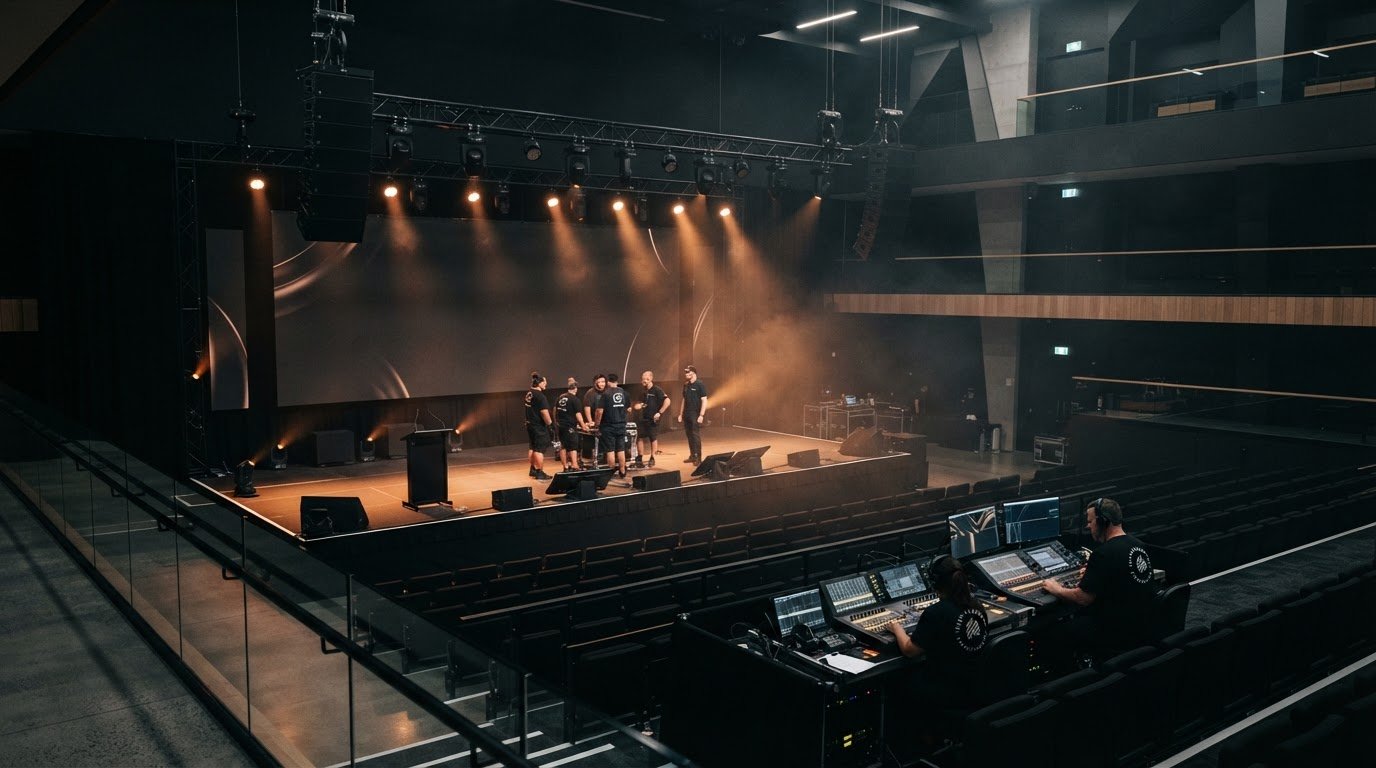
Conferences: Prioritise spoken presentations, microphone use and clear changes between speakers, video and other programme cues.
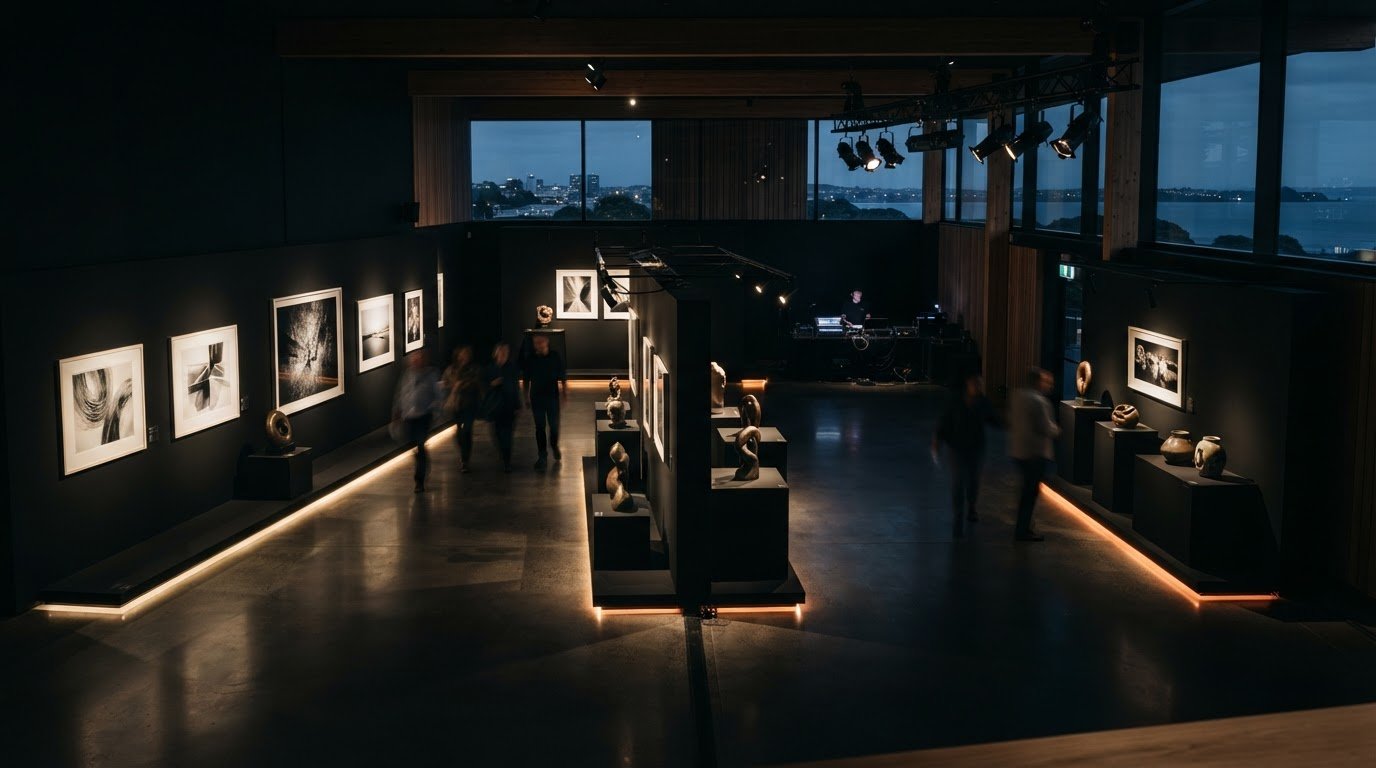
Exhibitions: Consider how attendees move between areas, where information is delivered and how sound fits around activity across the floor.
Corporate events: Map the shifts between speeches, playback and music so the audio plan reflects the full running order, not just the main address.
Sporting events: Account for announcements, commentary and music cues alongside the layout of the audience and event activity.
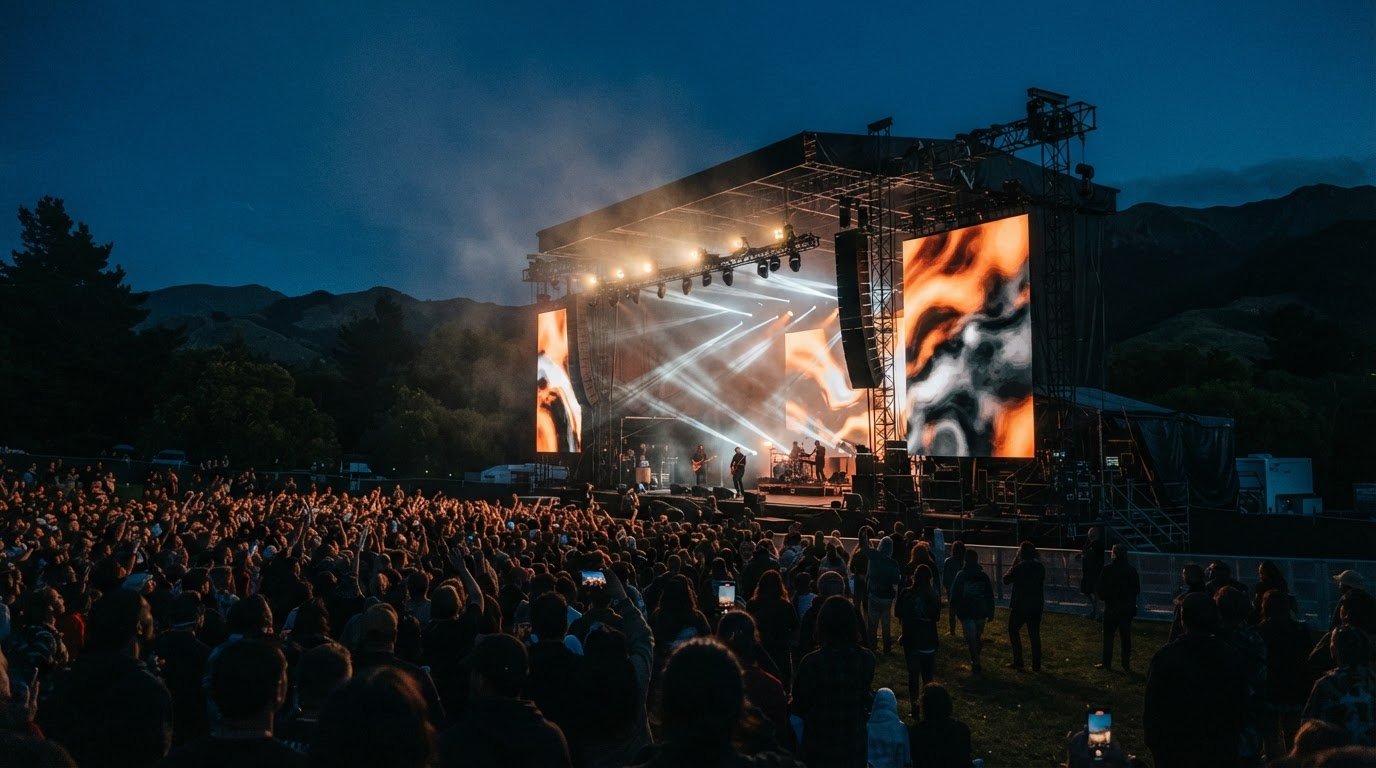
Outdoor productions: Discuss the site layout, audience areas, programme and production conditions early. Shape the sound plan around the actual setting rather than assuming it will work like an indoor venue.
What changes between conferences and live entertainment?
Speech-led events call for careful attention to microphone use and the sequence of presenters. Live entertainment can add music and more varied cues, changing how audio sources are managed through the programme. A digital mixing console gives the operator a central point for managing audio sources, while wireless microphones can support presenters who need to move around. The equipment and operation should reflect the event’s requirements.
Transitions deserve particular attention. If a presentation gives way to a video, then a speaker and background music, each change needs to be clear in the running order. Sharing those details helps the technical team plan the handovers instead of treating the event as one continuous audio task.
What should organisers consider for exhibitions and outdoor productions?
Exhibitions often involve movement, separate activity areas and competing demands for attention. Outdoor productions have their own site layout and operating context. In both cases, venue-aware preparation helps align the sound plan with where audiences gather, how the programme moves and what the space allows. Event format alone doesn’t determine the system approach.
Keep the planning focused on audience position, programme cues and venue context. If your event combines audio with other production elements, event audio production planning can sit alongside the wider technical requirements.
How should you compare line array hire options?
A useful comparison looks beyond the equipment list. For line array system hire Auckland, consider whether the proposed scope reflects your event’s format, venue and running order, and who is responsible for each part of delivery. A short list may look straightforward, but it won’t show whether planning, setup, operation or pack-down are covered.
Compare the production approach across these areas. They help clarify the scope and responsibilities for your event.
Planning: Consider how the event format, venue and programme inform the sound plan. LivewireAV uses venue-aware planning to shape a technical approach around the event.
Equipment scope: Look for a clear description of the audio equipment being supplied for the project. Don’t infer components, configurations or technical specifications from a general line array label. The equipment scope should relate to the event requirements.
Onsite operation: Clarify how technical operation fits the event schedule, including the management of audio cues and programme changes. LivewireAV’s experienced technicians and operators support event delivery onsite.
Communication: Consider how information and responsibilities are coordinated across the production. LivewireAV prioritises clear communication from planning through to pack-down, helping keep the process organised.
For conferences, sound is only one part of the technical picture. The audio visual guide for large conferences offers broader context on coordinating production requirements for a larger programme.
Which questions reveal the scope of a hire arrangement?
Before comparing proposals, set out the event format, venue, audience layout and programme. Clarify what the sound plan covers, who handles setup and pack-down, and how onsite operation fits into delivery. This makes the scope easier to understand and distinguishes equipment details from the work required to use the system during the event.
LivewireAV’s clear communication supports the process from planning to pack-down. Sharing the running order and venue information gives the team a practical basis for coordinating technical work and responsibilities.
Why does technical operation matter alongside the equipment?
Equipment is only one part of event sound. An operator works with the audio during the programme, managing cues as the event moves between speakers, playback and other planned elements. That role is especially relevant when timings shift or several programme components need to connect.
Experienced technicians bring a composed, attentive approach to the work. Clear roles and communication help organisers understand how the production will run. Compare the people and planning alongside the system so the production scope fits the demands of the event.
How can organisers prepare for line array system hire?
A considered sound plan starts with the event’s purpose, not a speaker list. For line array system hire Auckland, clear information about the programme and venue helps LivewireAV shape a practical, venue-aware approach. It also gives organisers and technicians a shared picture of the event before production decisions are made.
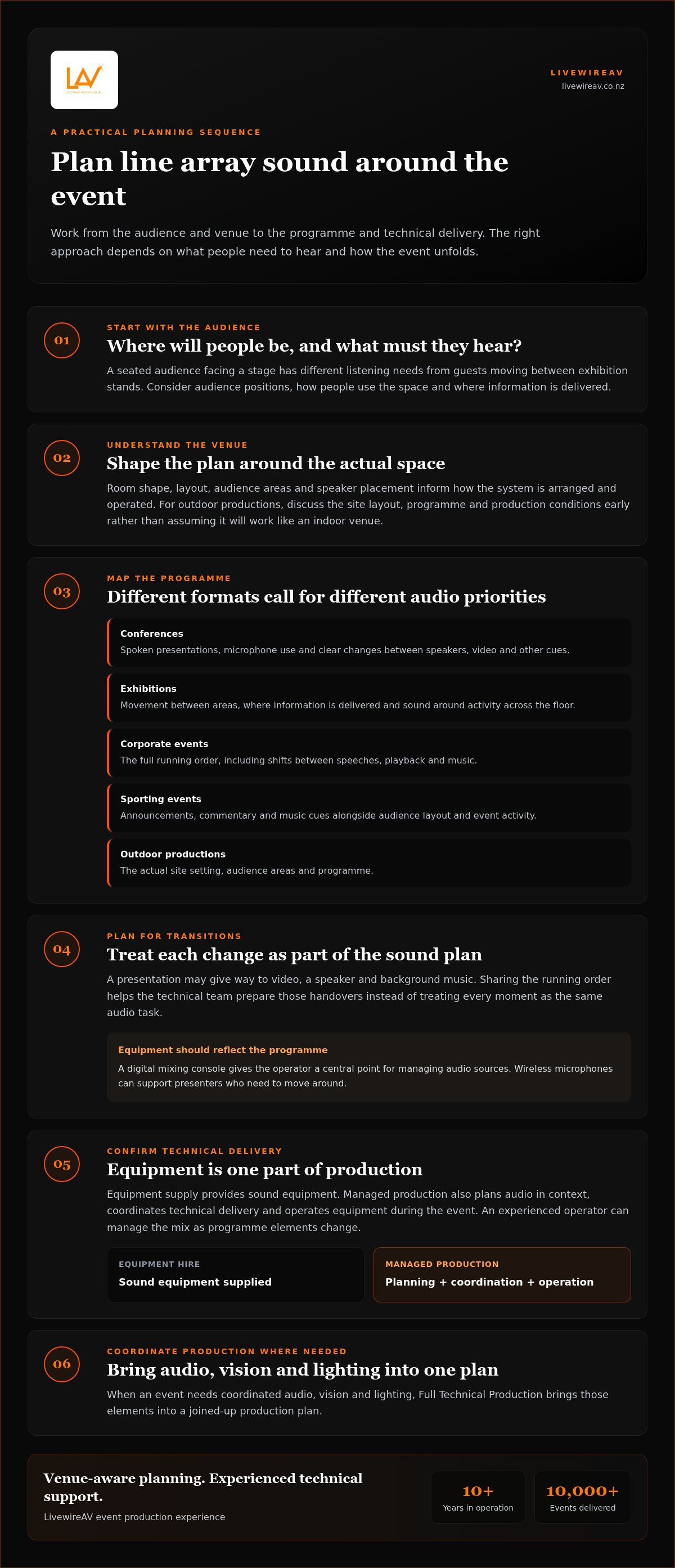
Use this sequence to bring the key details together:
Define the event objective. Describe what the audience should hear and the role sound plays, whether it supports presentations, music, announcements or a mix.
Outline the format and audience arrangement. Note whether people will be seated, standing or moving between areas, and where the main activity will take place.
Share the programme. Include the running order and key moments such as speaker changes, playback, music cues and transitions. This helps clarify how audio requirements change through the event.
Provide known venue information. Share available details about the room or site, its layout and the intended audience areas. Venue context helps inform the production plan.
List related technical needs. Identify microphone, playback or recording requirements, and include any vision or lighting elements that need to work alongside audio.
What information should organisers prepare?
Bring together the event format, audience arrangement, venue details and programme outline. Include key timings and moments that may affect sound, such as presentations, playback or recording. If the programme is still developing, share what’s known and flag what may change. A clear starting brief helps the technical team understand the event’s priorities and tailor the plan to its requirements.
How does production planning support event-day delivery?
Planning connects technical requirements with the running order. When organisers, technicians and operators share an understanding of cues and responsibilities, they can coordinate around the programme as it unfolds. Clear communication also helps surface changes in advance, so the technical approach can respond to the event rather than rely on assumptions.
For productions that combine audio with vision and lighting, plan those requirements together rather than treating them as separate afterthoughts. LivewireAV’s Full Technical Production brings these elements into a coordinated event plan. The premium event production guide also explores wider planning considerations for technical execution.
Preparation doesn’t need to be complicated. A clear brief, a current programme and useful venue information give the production team a solid foundation. LivewireAV brings experienced technicians, clear communication and 10+ Years in operation to event production.
For a sound plan shaped around your event, explore event audio production.
When is managed line array production the right next step?
Managed production is worth considering when sound is one part of a wider technical picture. If the event combines a line array system with screens, cameras or lighting, separate decisions can add coordination for organisers. A joined-up production approach brings those requirements into one plan, with the technical elements considered in relation to the programme and venue.
It can also suit events with several speakers, playback cues or changes between formal and entertainment segments. When the sound plan depends on timing and coordination, experienced operators can support delivery. The aim is to give the technical work clear direction.
Several technical elements: Audio, vision and lighting need to support the same event plan.
Frequent programme changes: Presentations, playback and other cues need to connect smoothly.
Venue-specific considerations: The production approach needs to reflect the event space and audience arrangement.
Limited organiser capacity: Coordinated technical delivery can reduce the need for organisers to manage separate production details themselves.
What does LivewireAV bring to an event production?
LivewireAV provides line array and point source systems as part of professional event production. Experienced technicians and operators work with modern, well-maintained equipment, shaping practical solutions around the venue and event requirements. Clear communication from planning to pack-down helps keep the technical work and responsibilities understood across the production.
When audio needs to sit alongside vision and lighting, Full Technical Production brings those elements together under a coordinated approach. This is useful for events where sound, screens, cameras or lighting cues interact across the programme rather than operating as unrelated parts.
LivewireAV brings 10+ Years in operation and 10,000+ Events delivered to event production. The focus is practical: understand the requirements, plan around the venue and communicate clearly with the people involved.
How can organisers take the next step?
To start a useful production discussion, share the event format, venue details, programme outline and technical requirements. Include the role of audio, vision and lighting, along with any key cues or changes that need to be managed. This gives LivewireAV a clear basis for preparing a tailored proposal around the event, rather than a generic equipment list.
If you’re weighing up line array system hire Auckland and need a coordinated production approach, you don’t need to have every technical detail settled before starting the conversation. Share what you know, including what’s still taking shape.
Discuss your event production requirements and outline what your event needs.
Give your event sound plan a clear starting point
Your first production conversation doesn’t need a finished technical brief. A working programme, venue details and a sense of what the audience needs to hear are enough to begin. As the event takes shape, those details can help align the sound approach with its purpose and the wider production.
For line array system hire Auckland, think beyond the equipment itself. Consider how you want the event to feel and flow, then bring that intention into planning. A considered technical approach helps keep production decisions connected to the experience you’re creating for guests.
LivewireAV brings experienced technicians and operators, modern, well-maintained equipment, and a steady, communicative approach to event production. With 10+ Years in operation and 10,000+ Events delivered, the team can shape a tailored proposal around your event requirements.
Start shaping your event sound plan with a conversation about your programme, venue and production needs.
Frequently Asked Questions
What is a line array system, and when is it used?
A line array system is an arrangement of loudspeakers used as part of an event’s audio production. It may suit events where the audience, programme and venue call for a planned sound approach, such as a conference with presentations or a corporate event with speeches and music. Choose the system based on the event’s needs, rather than a presumed audience size or fixed equipment formula.
Is a line array system suitable for a corporate conference?
It may be suitable, depending on the conference programme, venue and audience arrangement. A presentation-led session has different audio priorities from a conference that includes video playback, panel discussions or music between sessions. For example, a programme with several presenters may need a considered microphone and cue plan. Line array system hire Auckland can be planned around those specific requirements rather than the event label alone.
Can line array hire include technical operators?
Equipment supply and managed production are different arrangements: one centres on the system, while the other includes technical planning and operation. LivewireAV provides experienced technicians and operators as part of its event production work. An operator can manage audio cues during the programme, such as switching between a presentation source and a microphone as the event moves through its running order.
How do organisers choose between a line array and a point source system?
There isn’t a universal choice. The event and venue context should guide planning. Consider where the audience will be, what the programme includes and how the audio needs to support it. LivewireAV offers both line array and point source systems, so organisers can discuss the event requirements as a whole rather than decide from equipment terminology alone.
What information should I provide when requesting line array hire?
Share the event format, programme outline, venue information and relevant audio needs. Useful details include the audience arrangement, whether the event includes speeches or music, and any microphone, playback or recording requirements. If the running order is still changing, provide the current version and note what may shift. This gives the production team context to develop a tailored plan.
Does line array system hire include microphones and mixing?
Inclusions depend on the production scope, so don’t assume microphones or mixing are automatically part of every arrangement. LivewireAV’s audio offerings include digital mixing consoles and wireless microphones. A programme with multiple speakers and playback, for example, may need microphone planning and audio mixing as part of its production requirements. Sharing those needs helps shape the proposal around the event.
Can line array hire be part of full event production?
Yes. LivewireAV’s Full Technical Production covers audio, vision and lighting, making it relevant when these elements need coordinated technical delivery. A corporate event, for example, may combine a line array system with screens, video playback and stage lighting. Planning those components together helps align them with the programme rather than treating each technical requirement as a separate task.
Comments