Professional Event Sound Engineering: The Expert Guide to Flawless Audio
What if the most critical element of your event’s success is the one thing your guests should never actually notice? Great audio is invisible. It is the steady, clear, and reliable backbone of any high-stakes gathering. When you invest in professional event sound engineering, you are not just hiring speakers and microphones; you are securing the integrity of your message. You likely know the sudden anxiety that comes with a piercing burst of feedback or the sight of guests straining to hear a keynote speaker from the back of the room. These technical failures don't just interrupt the flow; they undermine the professional atmosphere you have meticulously planned to create.
We agree that technical jargon like line arrays or signal flow can feel overwhelming when you simply need the system to work. This guide will demystify the process and show you how expert engineering transforms a basic venue into an immersive auditory experience. You will discover the practical steps required to eliminate dead spots, manage difficult acoustics, and provide the total peace of mind that comes from technical control. We will look at the essential equipment, the importance of precise planning, and the logistical reasons why professional oversight is a standard requirement for excellence.
Table of Contents
What is Professional Event Sound Engineering?
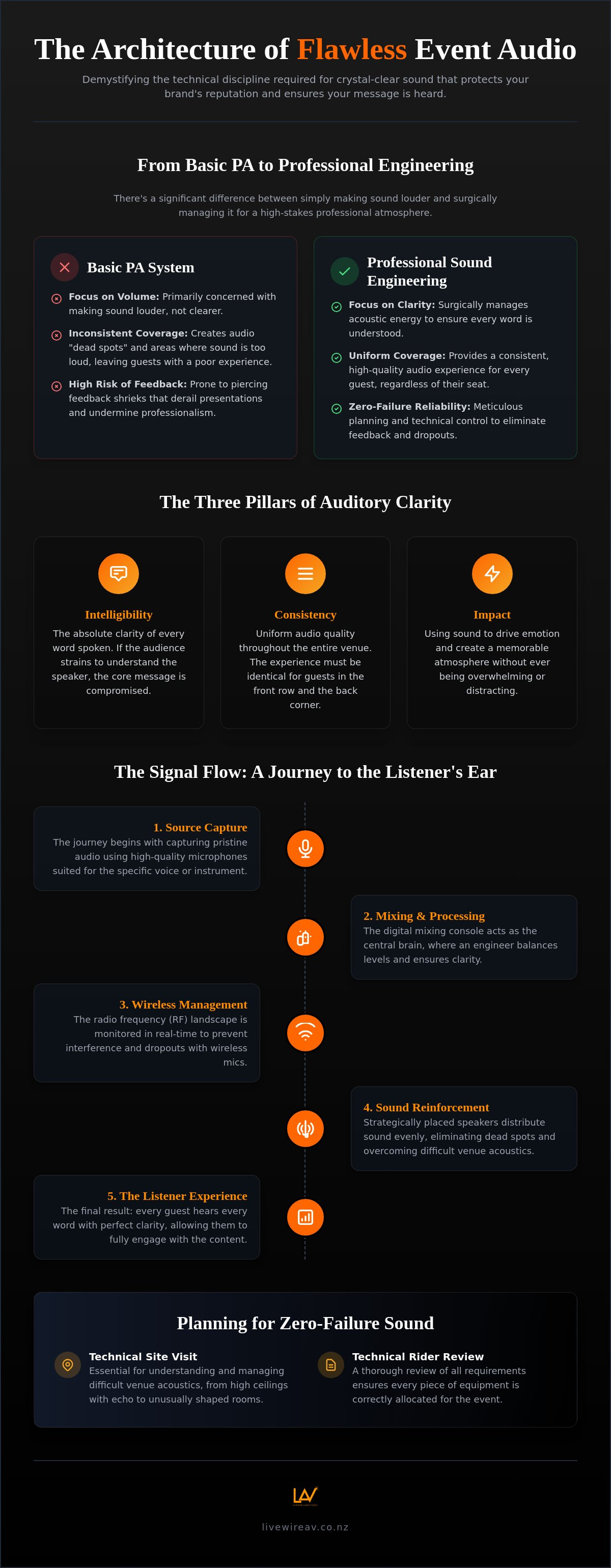
Professional event sound engineering is the technical discipline of capturing, mixing, and reinforcing sound for live environments. It is a precise science. It involves managing acoustic energy to ensure every guest, whether in a front-row VIP seat or at the back of a large outdoor production, receives the same high-quality experience. There is a significant distinction between simply operating a PA system and true sound engineering. While basic setups focus on volume, professional engineering focuses on the surgical management of energy and space to protect your brand's reputation.
For high-stakes outcomes, the engineer acts as the invisible guardian of the event’s communication. They ensure that every word spoken on stage is delivered with absolute clarity. At its core, live sound mixing requires a deep understanding of signal flow and electronic reinforcement. For national-scale conferences or complex outdoor events, this technical oversight is vital. It prevents the common anxieties of audio feedback or dead spots that can derail a professional atmosphere and leave speakers unheard during vital presentations.
The role requires more than just technical knowledge. It demands a composed, pragmatic approach to problem-solving. In the middle of a live show, there is no room for ambiguity. The engineer must maintain total technical control while remaining invisible enough to let the client’s work take centre stage. This steady, matter-of-fact delivery of service suggests that excellence is the baseline, not an extra feature. It is about providing a seamless experience where every detail has been accounted for long before the first guest arrives.
The Core Pillars of Auditory Clarity
Professional event sound engineering relies on three essential outcomes to transform a basic gathering into an immersive experience:
Intelligibility: This is the most basic requirement. Every syllable must be distinct. If your audience cannot understand the speaker, your message is lost.
Consistency: The audio quality should be uniform. Whether a guest is standing near the stage or at the very back of a boomy hall, the volume and clarity must remain identical.
Impact: Sound drives emotion. During key moments like award reveals or product launches, the audio must have the right weight and presence to create a memorable atmosphere without overwhelming the room.
The Sound Engineer as a Technical Director
A professional sound engineer is a key collaborator. They work alongside lighting and vision teams to ensure the entire production feels like a single, cohesive unit. In the bio box, composure is everything. The engineer’s quiet confidence allows them to handle the complexity of a live show without showing the pressure. You don’t want a bold innovator shouting for attention; you want a disciplined specialist who earns trust through consistent execution. When the audio is flawless, the audience never thinks about it. That is the ultimate sign of technical success.
The Technical Architecture of Crystal Clear Audio
Flawless audio is built on a foundation of logical, uninterrupted signal flow. It is a journey. The process begins at the source, travels through complex processing, and ends with the guest's ear. In professional event sound engineering, every link in this chain must be robust. A single weak connection can compromise the entire experience. By employing advanced audio production techniques, engineers ensure that the signal remains pure, strong, and free from interference from start to finish.
Digital mixing consoles act as the central brain of this architecture. They provide the precision required for high-stakes environments. These consoles allow for recallable audio cues, meaning every transition is frame-accurate and consistent. Alongside this processing power, wireless frequency management is a critical priority. The RF landscape is increasingly crowded. A dedicated engineer monitors these frequencies in real-time to prevent dropouts, ensuring that a CEO's keynote or a performer's solo is never interrupted by static. This level of meticulousness is what separates a standard setup from large scale event sound systems designed for reliability.
Precision. Composure. Control. These values are reflected in the hardware choices made for every production. We don't rely on guesswork. Instead, we use calculated deployments that account for the specific dimensions and materials of your venue. This technical rigour ensures that your message is delivered without distraction.
Why We Use Audio Line Array Systems
Line arrays are the standard for national conferences and major sporting events for a specific reason: physics. Traditional speakers often suffer from a rapid volume drop-off as you move away from the stage. In contrast, line source theory allows sound to travel further with less loss of energy. This ensures the back row hears the same clarity as the front row. Vertical directivity is another key benefit. By focusing sound directly onto the audience and away from reflective ceilings, we eliminate the muddiness often found in large halls. It is about precision, coverage, and control.
Microphone Selection and Placement
Choosing the right tool for the speaker is a matter of both comfort and technical necessity. Lapel mics offer freedom of movement, while lectern mics provide a stable, high-fidelity pickup for formal addresses. Handhelds remain the gold standard for Q&A sessions where reliability is paramount. Managing gain before feedback is an essential skill in difficult acoustic environments. High-quality capsules are non-negotiable, especially when the audio is being routed to broadcast or livestreaming feeds. If you are looking for a partner who understands these nuances, exploring our full technical production services is a logical next step. Every microphone placement is a deliberate choice made to protect the speaker's voice and the brand's message.
Tackling the Challenges of NZ Venue Acoustics
Venue acoustics are rarely perfect. In New Zealand, we often find ourselves working in spaces that were never designed for high-end audio. Repurposed industrial sheds. Historic town halls. Glass-heavy modern atriums. These environments are often hostile to clear sound. They contain the primary acoustic enemies: hard surfaces, high ceilings, and parallel walls. These elements cause sound to bounce, creating a "boomy" effect that makes speech difficult to understand. Professional event sound engineering is the process of identifying these obstacles early and applying technical solutions to neutralise them.
The goal is always total technical control. When we encounter a room with excessive reverb, we don't just turn up the volume. That only makes the problem worse. Instead, we use directional speaker placement and acoustic modelling to ensure sound is focused on the audience rather than the walls. This pragmatic approach ensures that your message remains the priority, regardless of the venue's architectural flaws. Whether it's an indoor conference or a multi-zone exhibition, managing sound bleed is essential to keep different areas from distracting one another.
Acoustic Treatment and Digital Compensation
We rely on Digital Signal Processing (DSP) to "tune" the sound system to the specific room. By analysing how a venue responds to different frequencies, we can apply surgical filters to remove the "muddiness" caused by the building's structure. In deeper venues, we deploy delay speakers. These are time-aligned so the audio from the stage and the secondary speakers hit the guest's ear at the exact same moment. This prevents the disorienting echo effect often found in large halls. When organising your room layout, placing the stage away from large glass surfaces can also significantly improve the natural audio quality.
Outdoor Production Variables
Outdoor events introduce environmental variables that indoor venues don't face. Wind and temperature gradients can physically bend sound waves, often causing high-frequency loss over long distances. Composure and preparation are key here. We use weather-protected equipment to ensure reliability during national tours, regardless of the conditions. Professional engineering also ensures your event stays within local council noise limits, such as the specific time and volume restrictions found in district plans across New Zealand. For a deeper look at managing these environmental factors, see our guide on outdoor event production NZ. It's about maintaining a seamless experience while respecting the surrounding environment.
The Pre-Production Journey: Planning for Zero-Failure Sound
Flawless audio is never an accident. It is the result of a disciplined pre-production process that begins weeks before the first guest arrives. In professional event sound engineering, the technical site visit is a non-negotiable requirement. We don't rely on floor plans alone. A physical inspection allows us to identify power constraints, rigging points, and potential acoustic obstacles that a CAD drawing might miss. This stage is also where we review the technical rider. This document outlines the specific requirements of your guest speakers or performers, ensuring we have the exact microphone capsules and monitoring systems they need to feel comfortable on stage.
Modern planning relies on precision software. We use sound mapping tools to build a virtual model of your venue. This allows us to predict exactly how the audio will behave before a single speaker is hung. By simulating the "throw" of our line arrays, we can identify and eliminate dead spots in the room layout. Once on-site, the focus shifts to the distinction between a line check and a sound check. A line check is a pragmatic process of ensuring every input is sending a pristine signal to the console. The sound check is the final rehearsal, where we balance these signals to match the room's energy and the presenter's vocal characteristics.
Preparation leads to composure. When every detail is accounted for in the planning phase, the technical team can manage the live show with a sense of total control. If you are ready to start the planning process for your next high-stakes event, our team provides professional technical production services tailored to your specific venue.
The Importance of Technical Management
A dedicated technical manager acts as the steady hand between your creative vision and the physical hardware. They ensure that audio cues are perfectly coordinated with live event lighting design to create a cohesive, professional atmosphere. This collaboration is essential for high-impact moments like award reveals or CEO entrances. Technical management is the strategic oversight of all show-critical systems. It ensures that every department is working in unison to protect the brand's reputation.
Redundancy and Contingency Planning
In high-pressure environments, a "Plan B" is a standard requirement. We operate with a redundancy mindset. This means having backup microphones on standby and secondary signal paths ready to take over instantly if a primary cable fails. Power management is another critical focus. We ensure the audio system has clean, dedicated power to avoid the hums and buzzes often caused by shared circuits. Our engineers always carry a survival kit of adapters, spare cables, and testing tools. This meticulousness ensures that even the most unexpected technical challenge is resolved before the audience ever notices a problem.
Partnering with LivewireAV for National Event Success
Partnering with LivewireAV means choosing a steady hand. We understand that in high-stakes environments, precision and composure are your most valuable commodities. Our approach to professional event sound engineering is defined by the "Calm Professional" identity. We act as the disciplined specialists behind the scenes. This allows your work to take centre stage while we manage the technical complexity with quiet confidence. Stability. Reliability. Focus. These are the standards we bring to every production, ensuring that excellence is a baseline requirement rather than an occasional achievement.
We provide bespoke audio solutions tailored to your specific goals and venue constraints. No two events are identical. Whether you are planning gala dinner AV production NZ or a large-scale stadium activation, our team prioritises meticulous preparation. We bridge the gap between technical capabilities and your peace of mind. By focusing on the outcomes of the technology rather than just the specifications, we ensure every guest hears every word with absolute clarity.
Seamless Integration Across NZ
Our team has the capability to deploy consistent technical quality at any venue across the country. This national reach provides a significant advantage for organisers running multi-city tours or annual conferences. By acting as a single partner for your audio, video, and lighting requirements, we eliminate the friction of managing multiple vendors. Our modern inventory of audio line array systems and digital mixing desks ensures a premium result every time. This integration creates a seamless, professional atmosphere that reflects the high quality of your brand.
Get a Tailored Technical Proposal
We work collaboratively with you to design an audio system that fits your audience size and budget. There is no guesswork involved. Our proposals are methodical and direct, mirroring the logical flow of event planning. This thorough approach reinforces our zero-failure technical philosophy. We take the time to account for every detail long before the first guest arrives, providing the total peace of mind you need to lead your event with confidence. Ready to elevate your event? Contact LivewireAV for a professional technical proposal.
Securing the Auditory Future of Your Event
Flawless sound is the result of surgical precision and technical discipline. You now understand that professional event sound engineering is about more than just volume; it is the strategic management of energy to ensure total clarity. By prioritising meticulous site visits and deploying modern line array systems, you can eliminate the dead spots and feedback that threaten high-stakes presentations. Every guest deserves to hear every word, regardless of the venue's acoustic challenges.
With 10+ years of technical event experience, LivewireAV provides the stability required for complex productions. Our modern inventory of digital audio tools and expert on-site technicians ensure a seamless experience for national deployments across New Zealand. We take total technical control so that your brand's quality remains the focus. Your next gathering represents a significant investment, and it deserves the reliability of a seasoned partner. Enquire about professional sound engineering for your next NZ event to begin the planning process. We look forward to delivering a clear, immersive experience for your audience.
Frequently Asked Questions
What is the difference between a sound technician and a sound engineer?
A sound technician typically handles the physical assembly and basic operation of equipment. In contrast, a sound engineer focuses on the complex scientific management of acoustic energy and signal processing. Engineering involves a deeper level of pre-production planning and real-time problem-solving to ensure total auditory clarity. It is the difference between simply operating a PA and professionally tuning a room for high-stakes outcomes.
Do I really need a line array system for my corporate event?
You need a line array system if your audience is large or the venue is deep. These systems throw sound further with less volume drop-off compared to traditional point-source speakers. For a high-stakes corporate event, a line array ensures the back row hears with the same crispness as the front row. This provides a consistent experience without deafening the guests seated nearest to the stage.
How much time should I allow for a professional sound check?
Allow at least 60 to 90 minutes for a professional sound check, depending on the number of presenters. This time is separate from the technical setup and line checks. It allows the engineer to calibrate microphones to each speaker's unique voice and ensures the audio levels are balanced for the room's specific acoustics. Meticulous preparation during this window is essential for a stress-free event.
Can professional sound engineering help with a room that has a lot of echo?
Yes, professional event sound engineering uses directional speaker placement and digital signal processing to neutralise room echo. By focusing sound directly at the audience and away from reflective surfaces like glass or high ceilings, we minimise the boomy effect. This technical control is essential for ensuring speech remains intelligible and professional in challenging New Zealand venues like industrial sheds or glass atriums.
What happens if a wireless microphone fails during a presentation?
We operate with a redundancy mindset that includes immediate backup solutions. If a primary wireless microphone fails, a secondary hot backup is always ready at the lectern or in the engineer's survival kit. This seamless transition happens in seconds. Our engineers maintain total technical control to ensure the speaker remains heard and the professional atmosphere of the event is never compromised by technical hitches.
Why is a technical site visit necessary if I have the venue floor plans?
A technical site visit is necessary because floor plans don't show acoustic properties, power constraints, or rigging obstacles. Seeing the space in person allows an engineer to identify hard surfaces that cause reflections and confirm that the proposed equipment will physically function as intended. It is a non-negotiable step for zero-failure planning. This visit ensures every detail is accounted for long before the first guest arrives.
How does sound engineering for a livestream differ from in-person audio?
Livestream audio requires a dedicated broadcast mix that is separate from what the audience hears in the room. While in-person audio accounts for venue acoustics, a livestream feed must be levelled for clarity on laptop speakers or headphones. Professional event sound engineering ensures both audiences receive a crystal-clear experience. We manage these dual feeds simultaneously to maintain the integrity of your message across all platforms.
What technical information do I need to provide to my sound engineer before the event?
Provide a detailed run sheet, a list of all presenters, and any technical riders from guest performers. We also need to know the expected audience size and the venue's dimensions. Sharing your specific goals, such as the need for high-impact audio during an award reveal, allows us to design a bespoke system. Clear communication during the pre-production phase is the foundation of a successful, reliable technical delivery.


Comments