Live Event Video Production NZ: Strategic Trends and Technical Standards for 2026
Updated: Jul 30
A single flickering screen or a three-second audio delay can instantly dismantle the credibility of a high-stakes corporate event. In the current landscape, the distinction between simple videography and professional live event video production NZ is no longer just about camera quality; it is about total technical control. You've likely felt the pressure of managing a room full of delegates while worrying if the remote audience can actually see the slides or hear the keynote. It's a stressful, high-pressure environment where there are no second takes.
This article outlines the strategic trends and technical standards required for 2026 to ensure your broadcast is seamless, stable, and sophisticated. We will examine how broadcast-grade video, intelligent lighting, and audio line arrays work in unison to create a unified experience. From the latest Screen Auckland protocols to the removal of "Above-the-Line" cost caps in production grants, you'll discover how to lead a project with absolute technical confidence. We move from the broad logistics of planning to the meticulous execution of a zero-failure event.
Table of Contents
The Evolution of Live Event Video Production in New Zealand
The landscape of live event video production NZ has undergone a fundamental shift. It is no longer a peripheral service used to archive a keynote; it is now the primary medium through which an event is experienced. By 2026, the baseline for corporate engagement has moved to 4K HDR. This isn't just about pixels. It's about clarity, colour depth, and the ability to maintain visual integrity on massive LED walls. Ultra-low latency is equally vital. If the audio and vision are out of sync by even a few frames, the human connection is lost. Modern production is a multi-layered technical discipline that demands precision at every stage of the signal chain, a standard also championed by video production specialists like REVI.
From Videography to Technical Production
Distinguishing between these two roles is essential for any event organiser. A videographer is typically a single operator focused on capturing footage for later use. In contrast, technical event production involves a coordinated team managing a complex, real-time vision. They handle multiple camera angles, live switching, and signal distribution across various platforms. The "single camera at the back of the room" approach no longer meets professional expectations because it lacks perspective and fails to engage. A modern production requires a unified direction where vision, lighting, and audio are treated as a single, cohesive output. This ensures the technical team has total control over the environment.
New Zealand’s Growing Demand for Broadcast Quality
As the standards for digital engagement continue to climb, it is worth considering how your broader marketing strategy aligns with these changes; for further reading, check out Make It Loud to see what a full-service digital marketing agency should deliver in 2026.
The 2026 Technical Stack: Beyond the Standard Camera Package
The hardware driving live event video production NZ has evolved into a highly specialised ecosystem. Excellence requires more than just high-end cameras; it demands an integrated suite where vision, light, and display technology communicate flawlessly. This setup ensures that every visual element, from the presenter's face to the digital background, is rendered with absolute precision. Relying on technical reliability standards is the only way to guarantee a broadcast that remains stable under the pressure of a live audience. When these systems are synchronised, the technical team maintains total control, allowing the speakers to remain the focal point without distraction.
Multi-Camera Vision Switching
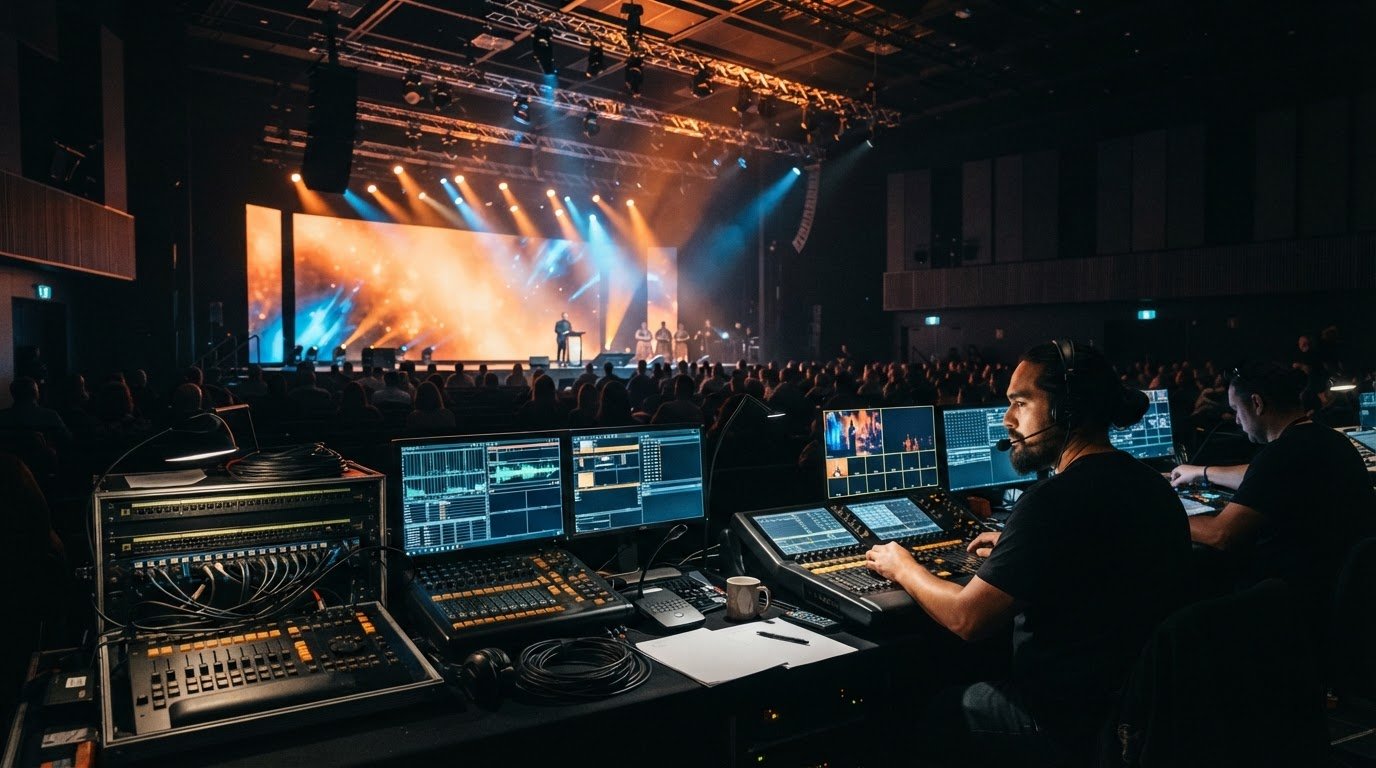
A vision mixer, or switcher, acts as the central hub of any professional broadcast. It allows a director to cut between multiple camera angles in real-time, creating a narrative that keeps remote and in-person viewers engaged. During a long conference session, switching to a wide shot of the crowd or a tight profile of the speaker prevents visual fatigue and maintains a professional rhythm. This process relies heavily on robust intercom systems, or "comms," which allow the director to guide camera operators silently. Precise. Methodical. Controlled. This internal communication is what separates a basic recording from a high-stakes production.
LED Walls and Visual Display Integration
Traditional projection often struggles in venues with high ambient light or large windows. Modern productions now favour LED wall rental for events NZ to ensure high-contrast, vibrant visuals that cut through any environment. However, filming these screens requires technical finesse to avoid the moiré effect, which refers to those distracting wavy patterns that appear when camera sensors and LED pixels misalign. Professional technicians manage refresh rates and shutter speeds to eliminate this issue before the first frame is captured. This level of preparation ensures that your digital backdrops look as sharp on the live stream as they do in the room.
Intelligent lighting design is the final, critical piece of the stack. It isn't just for atmosphere; it's essential for ensuring natural skin tones and vibrant colours on camera. Without dedicated stage lighting, speakers can appear washed out or shadowed on the live stream, regardless of camera quality. A well-prepared team will coordinate these elements long before the doors open to ensure a broadcast-quality result. If you are planning a high-stakes gathering, you might consider how a partner providing full technical production can unify these disparate systems into a single, reliable broadcast.
Hybrid Integration: Bridging In-Person and Remote Audiences
By 2026, hybrid events have moved from being a contingency plan to a core strategic requirement. Modern live event video production NZ now focuses on creating a singular experience that serves two distinct audiences simultaneously. Achieving this requires a sophisticated broadcast ecosystem that treats the remote viewer with the same priority as the guest in the room. This integration is not merely about sending a video feed to the web; it is about managing a complex, two-way exchange of data, vision, and sound. Stable. Redundant. Secure. These are the pillars of a successful national event broadcast.
Broadcast-Grade Livestreaming Infrastructure
There is a significant technical gap between a standard web-conferencing call and a professional hardware-encoded broadcast. Relying on consumer software often leads to variable bitrates, dropped frames, and distracting lag. Professional infrastructure uses dedicated hardware encoders to ensure a consistent, high-definition signal regardless of local network fluctuations. Managing return feeds is equally critical for remote presenters. These feeds allow speakers in different locations to interact with the on-stage host with zero perceptible delay, maintaining the natural rhythm of conversation. A professional stream requires a dedicated technician for the "digital venue" just as much as the physical one.
Engaging the Remote Participant
To prevent "screen fatigue," the digital experience must be visually dynamic. Using lower-third graphics to identify speakers, picture-in-picture (PiP) layouts for slide presentations, and real-time social media overlays keeps the remote audience focused. Technical requirements for 2026 also include integrated Q&A platforms that allow remote questions to appear instantly on the stage monitors for the moderator. This creates a genuine sense of presence for those off-site. Maintaining a consistent brand aesthetic across every feed ensures the event feels like a cohesive production rather than a series of disconnected videos. Precision in these small details builds the trust required for high-stakes corporate communication.
Professional audio remains the most critical, yet frequently overlooked, component of hybrid video production. A remote viewer will tolerate a slight dip in video resolution, but they will instantly disconnect if the audio is thin, echoey, or inconsistent. This is why we prioritise audio line array systems and meticulous mic placement. To ensure a zero-drop environment, we employ multiple internet backhauls, often combining hardwired fibre with 4G or 5G satellite uplinks. This redundancy provides the peace of mind that the broadcast will continue even if a primary connection fails. It's about having total technical control long before the first guest logs in.

Planning for Zero-Failure: Meticulous Technical Management
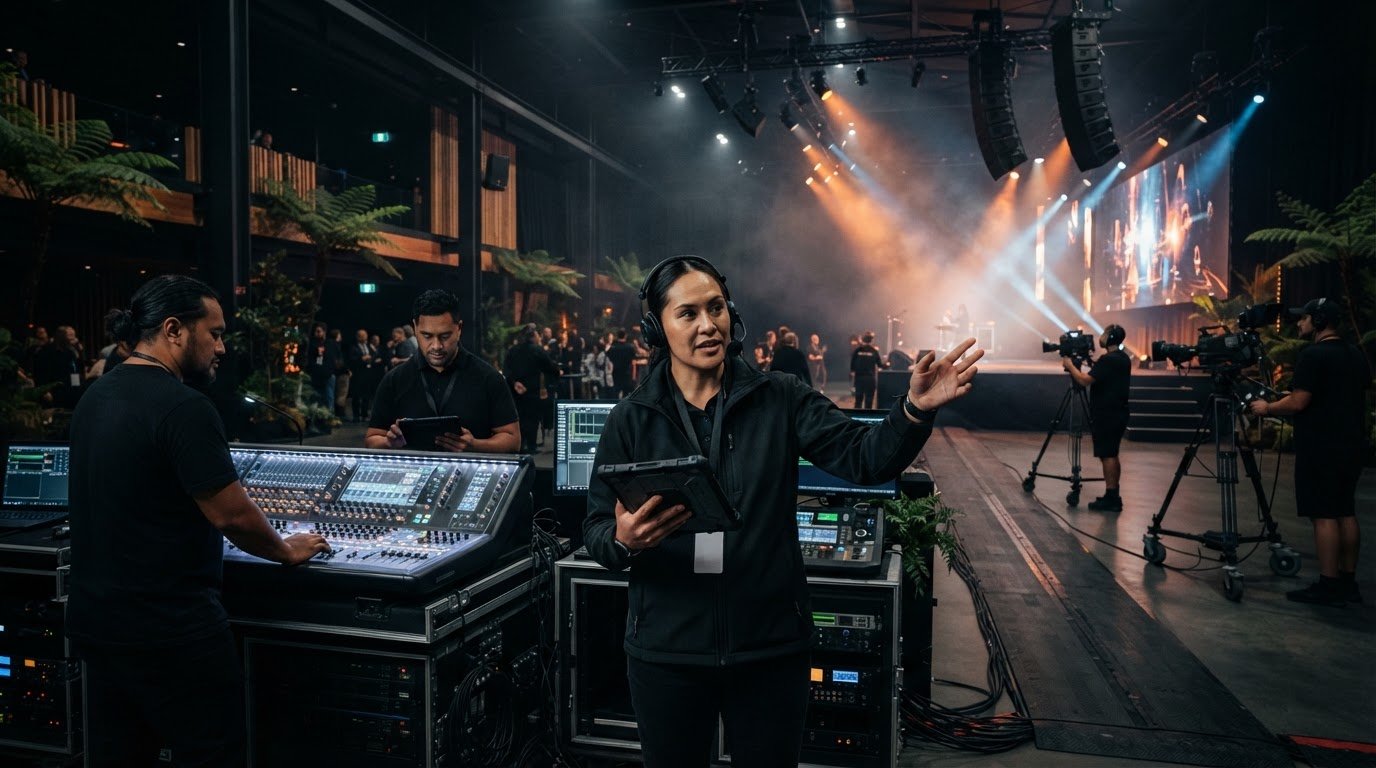
High-stakes environments leave no room for guesswork. For a successful outcome, the transition from a technical concept to a live execution must be managed with absolute composure. This is where the "Calm Professional" approach becomes the most valuable asset on site. It is not enough to simply have the right gear; the team must possess the foresight to anticipate challenges before they manifest. Meticulous. Disciplined. Composed. These are the traits that define high-tier live event video production NZ. Our focus remains on alleviating the client's stress by projecting a sense of total technical control throughout the entire project lifecycle.
A comprehensive "Run of Show" serves as the backbone of the entire operation. This technical cue sheet synchronises every department, ensuring that vision, sound, and lighting move in perfect alignment. The Technical Director acts as the conductor of this ecosystem, calling cues with precision and maintaining a steady hand when the pressure of a live broadcast intensifies. This methodical rhythm ensures that every transition is intentional and every visual element is purposeful. By following a structured programme, we eliminate the ambiguity that often leads to errors in fast-moving live environments.
The Value of the Technical Site Visit
A technical site visit is a non-negotiable step in the planning phase of any major event. We use this time to assess venue power requirements, map out secure cable paths, and determine the optimal camera positions for the best visual coverage. Overlooking a single acoustic challenge or a potential source of signal interference can compromise the entire production if not addressed early. For more complex environments, such as those discussed in our guide to outdoor event production NZ, these visits allow us to account for environmental variables that simply cannot be managed from a desk. We look for the logistical "why" behind every venue choice to ensure the technology supports the space perfectly.
Risk Mitigation and Redundancy
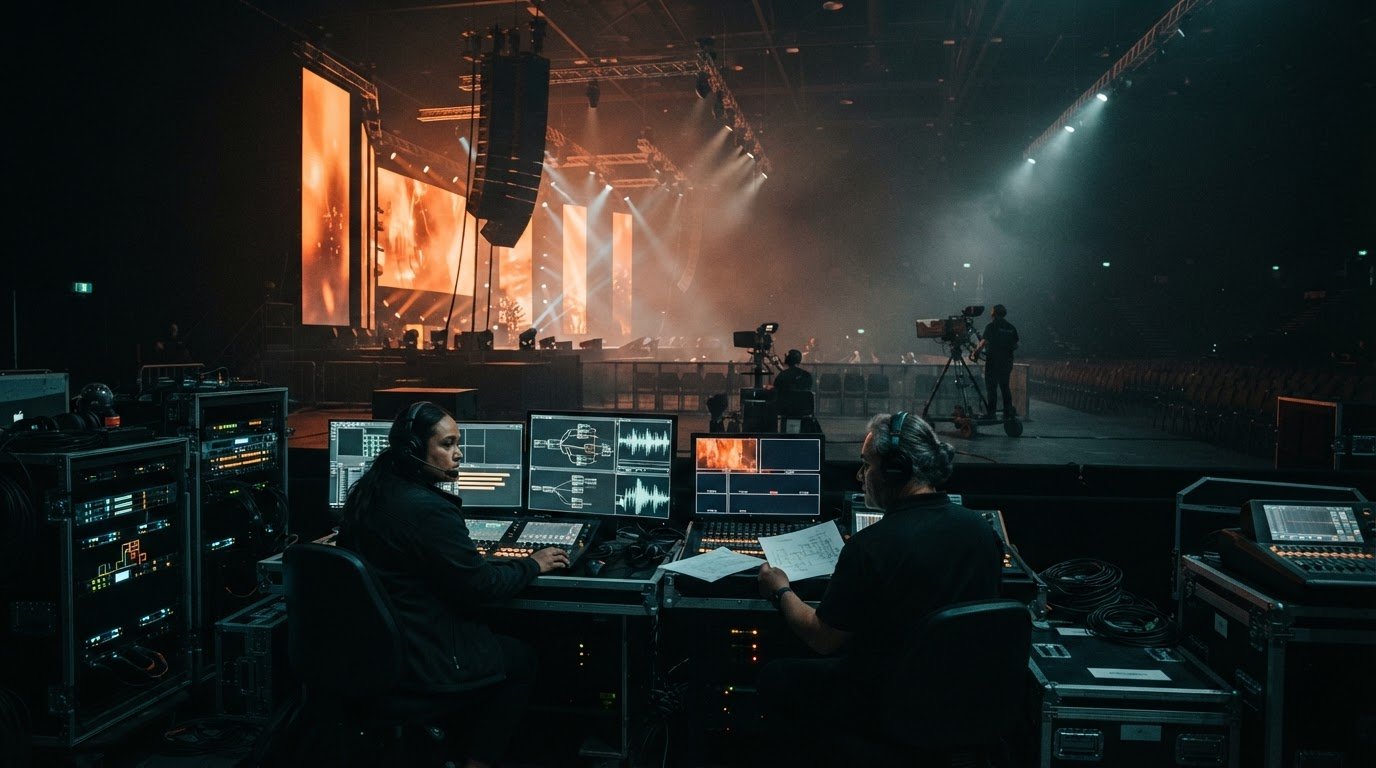
Zero-failure execution relies on the principle of redundant systems. We implement "Hot Swaps" for critical components, ensuring that backup video switchers and audio consoles are ready to take over instantly if a primary unit falters. This level of preparation is what allows our team to remain invisible, letting your work take centre stage without technical distraction. Trust is built through clear, honest communication and the knowledge that every possible point of failure has been accounted for long before the first guest arrives. If you are ready to secure a partner who prioritises reliability and precision, explore our approach to full technical production.
Selecting a Production Partner for High-Stakes NZ Events
Selecting a partner for live event video production NZ is a decision that directly affects the reputation of your organisation. While high-end hardware is a prerequisite, the true value of a production company lies in its ability to maintain composure under the scrutiny of a live audience. A partner must be more than a vendor; they must be a disciplined specialist who understands the nuance of venue-aware execution. This means having technicians who are familiar with the specific power grids, acoustic profiles, and logistical constraints of New Zealand’s major conference centres and event spaces. Precision. Composure. Reliability. These are the standards that ensure a high-stakes broadcast remains flawless from start to finish.
Fragmented AV hire often leads to communication gaps and technical friction. When video, audio, and lighting are managed by separate entities, the risk of a signal failure or a cue being missed increases significantly. Choosing end-to-end technical management provides a single point of accountability and ensures that every system is designed to work in harmony. This integrated approach allows for a more efficient bump-in and a more stable broadcast environment. It replaces the stress of managing multiple contractors with the confidence that a single, expert team has total control over the technical ecosystem.
Beyond the Equipment: The Human Element
The experience of a vision mixer is just as critical as the resolution of the cameras they control. A seasoned operator doesn't just cut between feeds; they anticipate the speaker’s movements and the audience’s reactions to tell a cohesive story. This human element is what ensures the "why" behind your event goals is translated accurately to the screen. LivewireAV organises these complex technical layers behind the scenes, allowing you to focus entirely on your guests. We act as the steady hand, ensuring that the technology remains invisible while your message takes centre stage. Our team thrives under the pressure of live cues, maintaining a methodical rhythm that keeps the production on track.
Integrating Vision with the Full Production Suite
Visual clarity on camera depends heavily on the surrounding environment. There is a direct synergy between live event lighting design and the quality of your video feed. Without precise illumination, even the most advanced 4K cameras will struggle to produce a professional image. By unifying these services under one production suite, you eliminate the risk of conflicting technical priorities. One team. One vision. Total control. This level of coordination leads to better event outcomes and a significantly lower stress level for organisers. If you are planning a high-stakes gathering and require a partner who prioritises precision and reliability, contact LivewireAV for a tailored production proposal.
Secure Technical Excellence for Your 2026 Events
The shift toward broadcast-grade standards in 2026 requires more than just high-end gear; it demands a disciplined approach to technical management. Successful events now rely on the seamless integration of vision switching, intelligent lighting, and redundant livestreaming infrastructure to bridge the gap between in-person and remote audiences. By prioritising meticulous site visits and a unified "Run of Show," you ensure that the technical environment remains stable. Meticulous. Disciplined. Composed. These are the traits that allow your message to take centre stage without distraction.
Achieving this level of precision in live event video production NZ is a matter of preparation and composure. With over 10 years of technical event management experience, LivewireAV provides the steady hand required for national-scale productions. Our modern camera packages and vision switching hardware are operated by experienced technicians who thrive under live pressure. We focus on the logistical "why" behind every technical choice so you can focus entirely on your guests.
Partner with LivewireAV for your next high-stakes production and experience the peace of mind that comes with total technical control. We look forward to ensuring your next event is a seamless, broadcast-quality success.
Frequently Asked Questions
What is the difference between event videography and live event video production?
Event videography typically focuses on a single operator recording footage for post-event editing and future use. In contrast, live event video production NZ involves managing a real-time broadcast ecosystem where vision, sound, and lighting are mixed live. This approach ensures a polished, multi-camera experience for both in-person guests and remote audiences as the event unfolds.
Can you provide multi-camera video production for events outside of the main centres?
We provide full technical services across New Zealand, including regional locations outside of Auckland, Wellington, and Christchurch. Our team is venue-aware and carries mobile infrastructure designed to maintain broadcast standards in any environment. We conduct thorough site visits to ensure local power and connectivity can support a high-definition production.
How do you ensure a livestream doesn’t fail if the venue internet goes down?
We ensure stream stability by implementing multiple internet backhauls for every broadcast. This involves a primary hardwired connection supplemented by secondary 4G or 5G cellular uplinks. If the venue's main line drops, our hardware encoders automatically switch to the backup signal. This redundancy provides the zero-failure execution required for high-stakes corporate communication.
What technical equipment is needed for a high-quality hybrid event?
A professional hybrid event requires a 2026-standard technical stack including 4K camera packages, audio line array systems, and hardware encoders. You also need intelligent lighting to ensure visual clarity on screen and a dedicated vision switcher to manage multiple feeds. These components work together to bridge the experience between physical and digital attendees seamlessly.
Do you provide vision switching for large LED walls and projection screens?
We provide professional vision switching for large-scale LED walls and projection screens. This allows for dynamic transitions between presenter cameras, slide decks, and video playback during a live session. Our technicians manage the specific refresh rates and resolutions required to ensure that digital displays look sharp for both in-person guests and camera sensors.
How much lead time is required to organise full-service video production in NZ?
While we can sometimes accommodate shorter timeframes, a lead time of six to eight weeks is ideal for complex productions. This allows for meticulous planning, including venue assessments, script reviews, and the development of a comprehensive "Run of Show." Early engagement ensures every technical detail is accounted for well before the first guest arrives.
Can you integrate remote speakers into a live stage presentation seamlessly?
Integrating remote speakers is a core competency of modern live event video production NZ. We use low-latency return feeds that allow off-site presenters to see and hear the stage in real-time. This eliminates the awkward delays often found in consumer software, allowing for natural, two-way conversations between the physical venue and the digital world.
What are the benefits of hiring a Technical Director for my event?
A Technical Director provides a single point of accountability for vision, sound, and lighting departments. They coordinate every live cue and manage the technical team with the composure required for high-pressure environments. This role ensures that the production follows the planned rhythm, allowing the client to focus on their guests rather than the technology.
Comments