In-house vs external AV: Which is right for your event?
The most convenient AV option isn’t always the right one for your event. In-house venue AV can suit a straightforward presentation, while a conference with multiple rooms, custom visuals or a livestream may need a more coordinated production approach. Choosing between in-house venue AV vs external provider starts with the event programme, not the equipment list.
A venue package may make planning simpler, but inclusions, crew responsibilities and technical support can vary. To compare proposals fairly, clarify who handles planning, setup, operation and troubleshooting, as well as what equipment is supplied.
This guide compares venue-provided AV with an external production team by fit, control, responsibilities and event complexity. You’ll learn what to consider when your needs are standard, when bespoke delivery calls for a dedicated production approach, and where a combination of venue and external support may work. From audio and projection to LED walls, camera packages and hybrid production, the aim is to make a clear choice and plan dependable delivery.
Table of Contents
In-house venue AV vs external provider: what is the real difference?
Choosing event AV often comes down to a practical distinction: venue services may be convenient and familiar, while an external team can shape technical delivery around your brief. Neither model is automatically better. For a straightforward presentation, the venue’s provision may be suitable. A more involved programme may need a tailored production plan.
Both approaches can cover audiovisual requirements, from sound and screens to lighting and video. The broad meaning of Audiovisual (AV) covers the use of sound and visual elements together. For an event, the important questions are how those elements support the programme and who is responsible for delivering them.
What does in-house venue AV usually mean?
In-house venue AV refers to technical services and equipment supplied through the venue. This may include installed room systems, optional equipment, technical support or operating crew. What’s available, what’s included and who operates it can vary between venues.
Separate the venue’s existing infrastructure from any additional technical services in the proposed scope. A room may have installed screens or sound equipment, for example, but that doesn’t tell you whether an operator, setup, testing or support during the event is included. The written scope sets out what your event team can rely on. It should identify the equipment and services provided, who is responsible for each task, and what falls outside the arrangement.
What does an external AV provider bring?
An external AV provider is a separate production team engaged to plan or deliver the event’s technical requirements. Instead of starting with the venue’s available package, the team can develop a solution around the event brief. Depending on the requirements, production may bring together equipment, technicians, operators and coordination across audio, video, lighting, cameras or livestreaming.
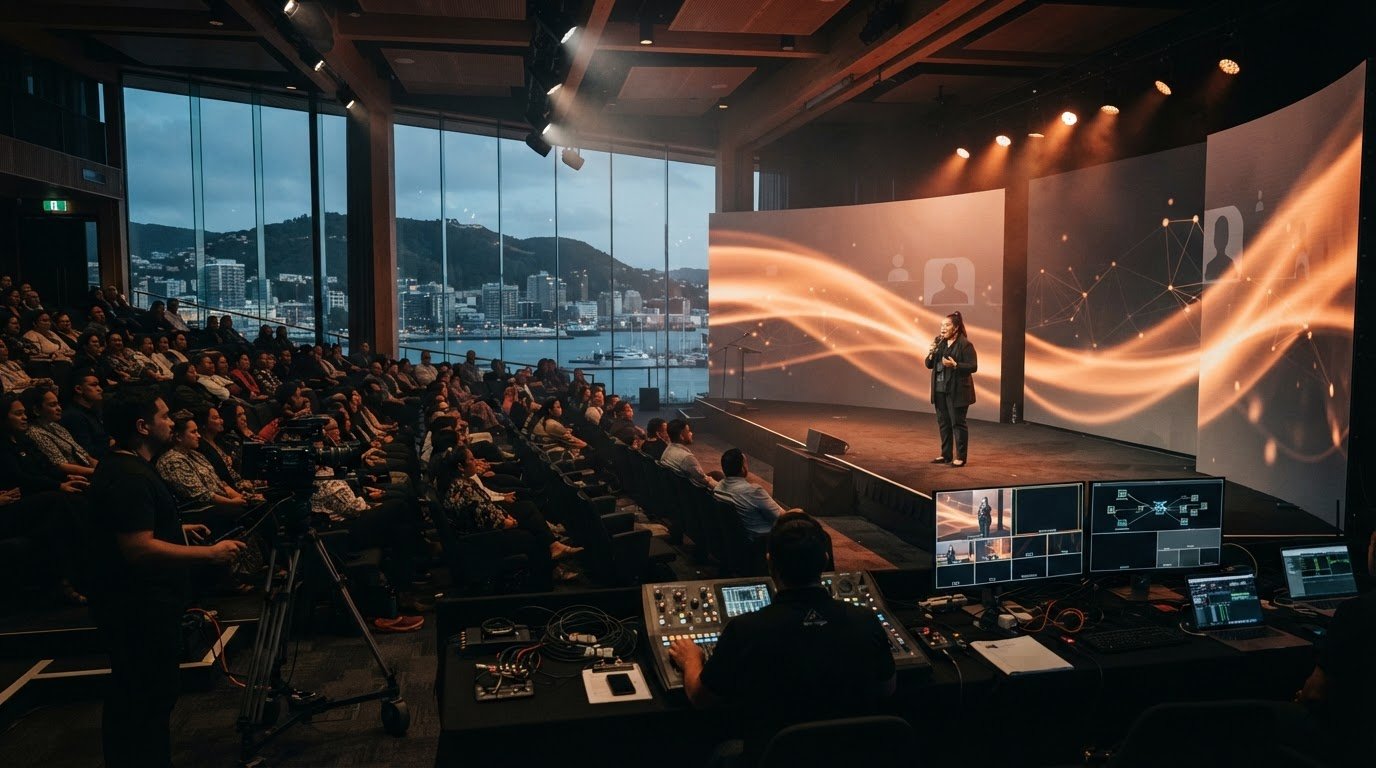
Joined-up planning matters when an event needs more than equipment in a room. A presentation with several speakers, custom visuals or remote attendees may require coordination between the programme, technical setup and live operation. Full technical production can align these elements under one plan, with on-site technicians and operators supporting delivery.
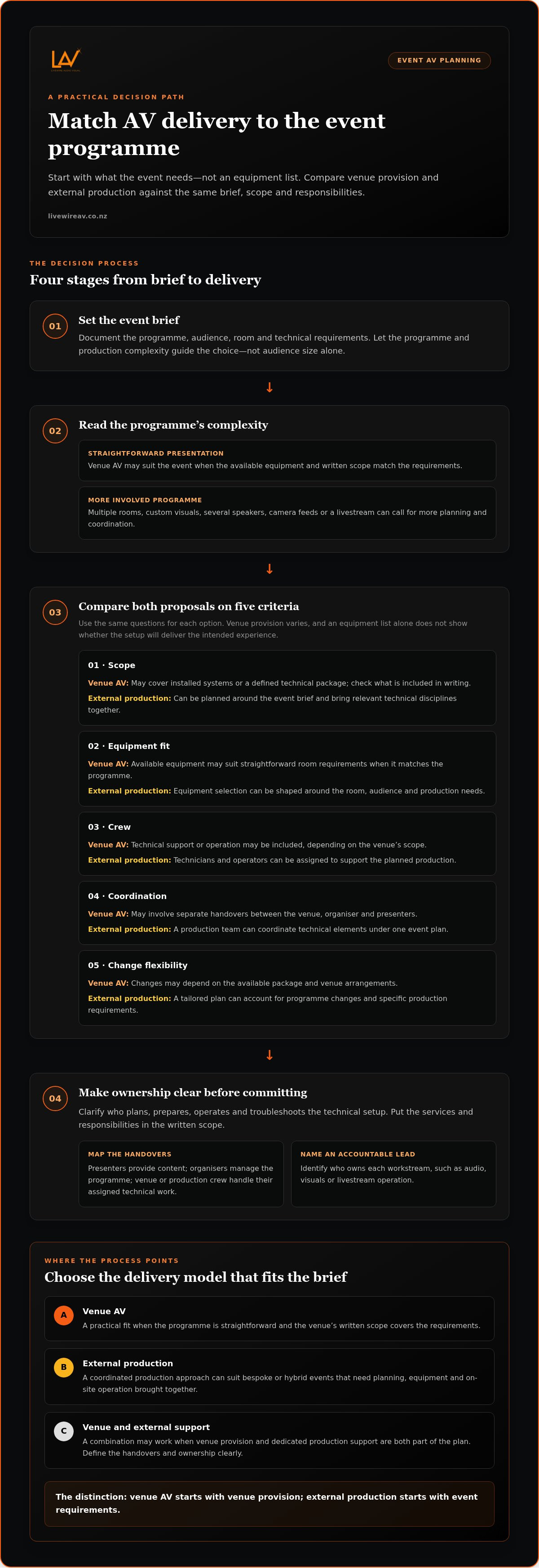
The distinction is simple: venue AV starts with venue provision; external production starts with event requirements. That doesn’t make one model right for every occasion. To make a sound in-house venue AV vs external provider decision, assess the event brief, written scope and responsibilities attached to each option, rather than relying on assumptions about either model.
Compare venue AV and external production across five practical criteria
A useful comparison looks beyond the equipment available. A system in the room still needs to suit the programme, be set up correctly and be operated at the right moments. Apply the same criteria to each option so differences in delivery and accountability are clear.
Who plans, operates and owns each technical responsibility?
Clarify who develops the technical plan, prepares the equipment, operates cues and responds to issues during the event. These tasks can sit with different people, even when equipment comes from one source. Map the handovers: presenters provide content, organisers manage the programme, and venue or production crew handle their assigned technical work. Name an accountable lead for each workstream, such as audio, visuals or livestream operation. Clear ownership reduces the risk of a task falling between teams.
How do equipment fit and flexibility affect the decision?
Compare the venue inventory with the actual brief: room layout, audience sightlines, audio needs, screens, lighting and staging. A single presentation screen may meet a simple programme; multiple screens, camera feeds or a bespoke layout can require more planning and coordination. An equipment list shows what may be available, not whether it will deliver the intended experience. The in-house venue AV vs external provider decision should reflect both equipment fit and the people needed to operate the setup.
Venue provision can be a practical match when its written scope covers the requirements. For a programme spanning several technical disciplines, an external team can coordinate planning, equipment and operation around one brief. Explore LivewireAV event production to see how a coordinated production approach can support your event requirements.
Does your event need venue AV or an external provider?
The right choice depends less on how many people attend than on what the programme asks the AV to do. A large audience may need only clear speech and a presentation screen. A smaller launch or private function could involve timed lighting cues, custom visuals and several camera feeds. For organisers considering sophisticated event spaces that require tailored technical staging, visit Serra On Vine to see examples of luxury boutique settings designed for high-end gatherings. Assess the technical workload, not the event’s headcount alone.
When can in-house venue AV be a practical fit?
A standard presentation with familiar formats, a single room and straightforward sound and screen needs may suit the venue’s provision. The arrangement can be simpler if the venue’s documented scope covers the required equipment, setup and operation. Keeping technical arrangements within established venue processes may also help align room access with the event schedule. If you are sourcing dedicated event and seminar venues, learn more about E11 SPACE to explore versatile floor spaces suitable for business functions. The fit depends on the brief, not on the assumption that every venue package is alike.
When can an external production team add value?
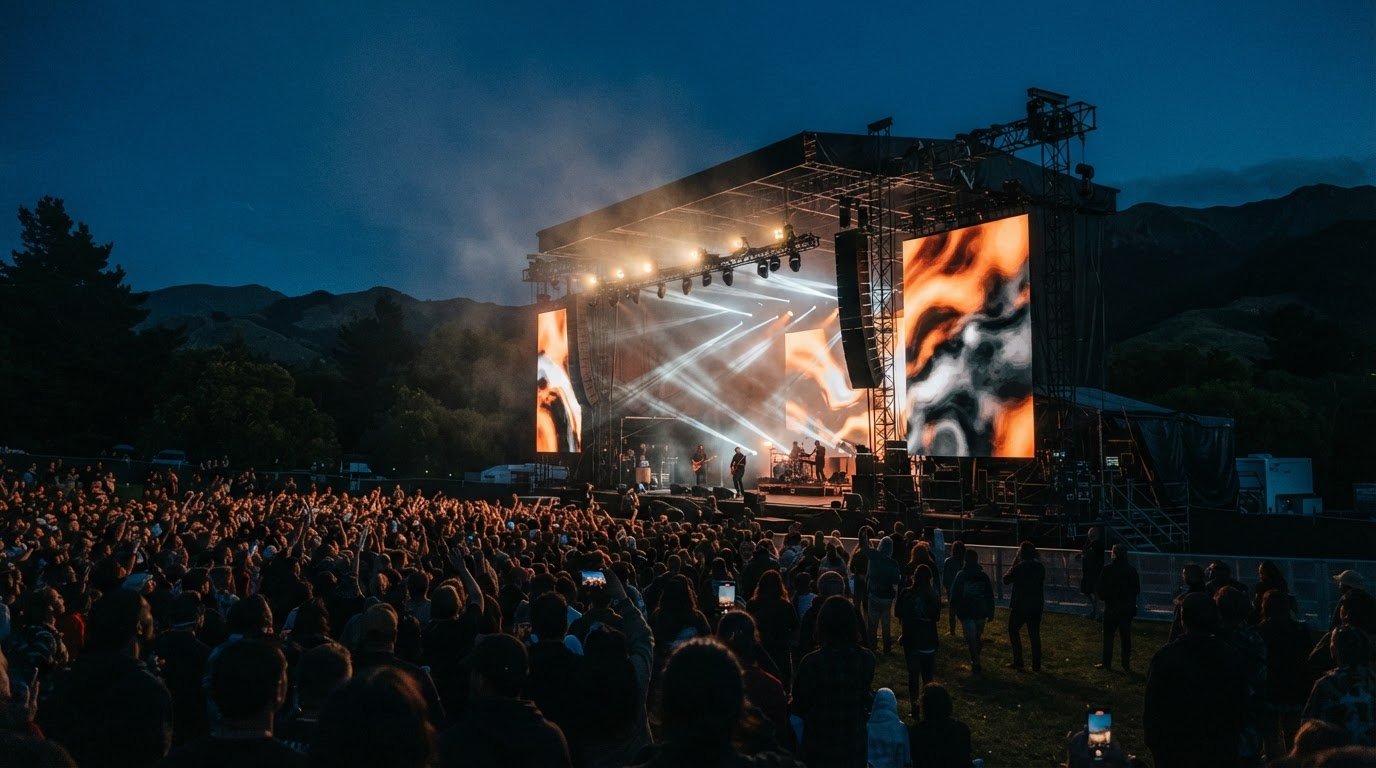
External production may suit a launch with bespoke staging, a multi-session conference with different room needs, or a hybrid event serving in-person and online audiences. These programmes can call for several technical disciplines to work together. A production plan can connect audio, video, lighting, cameras and operators to the run sheet, so cues and transitions are considered as part of one delivery approach.
For conference planning, audio visual for large conferences offers further guidance on coordinating technical delivery across a larger programme.
Bringing in an external team adds another relationship to manage, so define the handover between the organiser, venue team, presenters and production crew. Assign a clear lead for each technical workstream, and make sure everyone knows who owns decisions and event-day operation. That structure helps close coordination gaps before the programme is live.
Use the in-house venue AV vs external provider comparison to identify where the demands sit. If the event is one presentation with familiar requirements, venue AV may be a sensible fit when the scope aligns. If the brief combines multiple rooms, changing cues, custom visuals or remote participation, a coordinated external production plan can provide clearer technical ownership.
The more complex the production, the more important clear technical ownership becomes. Complexity isn’t a reason to add layers for their own sake. It’s a prompt to organise the people, equipment and responsibilities around the programme.
How to make the AV decision before you commit
Start with one clear brief, then compare both options against it. This keeps the in-house venue AV vs external provider decision focused on what the event needs and who will deliver it, rather than on equipment lists presented in different ways.
Build a brief that makes both options comparable
Record the practical details first. Include the event format and schedule, audience needs, room layout and presenter requirements. Note any sound, screens, lighting, cameras, livestreaming or cueing needs, then separate setup, rehearsal, show operation and pack-down responsibilities. A consistent brief gives each option the same delivery target.
Compare scope, accountability and delivery risks
Use these five steps to assess the proposals:
Document the programme. List sessions, transitions, speakers and any timed cues or content changes.
Describe the audience. Include attendance format, viewing needs and whether people will participate remotely.
Set out the room. Record the layout, staging and sightlines that may affect equipment placement and operation.
Specify technical needs. Match each requirement to a proposed inclusion, from sound and screens to cameras or livestreaming.
Name the decision owner. Identify who approves the technical plan and who makes show-day decisions for each workstream.
Apply the same responsibility checklist to each option. Check that every item in the brief maps to a stated inclusion, then note who coordinates venue access, rehearsals, technical changes and communication with presenters. Be specific: who updates the run sheet, who receives revised presentation files, and who decides how a late programme change is handled?
Include contingency and escalation arrangements in the comparison. A rehearsal can expose issues with content, cues or room setup before the event begins. A clear escalation path gives the team a way to resolve problems. Neither delivery model is risk-free; the useful comparison is how clearly each plan assigns responsibility and responds to change.
For broader context on shaping technical delivery around an event brief, consider how production planning can account for the programme, equipment and crew responsibilities.
Once the scope, responsibilities and delivery plan are clear, the decision is easier to make. Discuss your event production requirements with LivewireAV to plan coordinated technical delivery around your event.
How LivewireAV supports a well-coordinated event AV plan
For events with technical requirements across several areas, an external production partner can bring planning, equipment and on-site operation together under one approach. LivewireAV plans technical production around the event brief, supporting the programme and audience rather than treating each piece of equipment as a separate decision.
From event brief to coordinated technical production
A clear brief gives the production team a practical starting point. It shows how the event is expected to run, what the audience needs to see and hear, and where technical cues fit the programme. Audio must support speakers and transitions; video and LED walls must suit the content and room; lighting can complement key moments. Where the event includes remote attendees, hybrid or livestream production brings additional technical requirements into the plan.
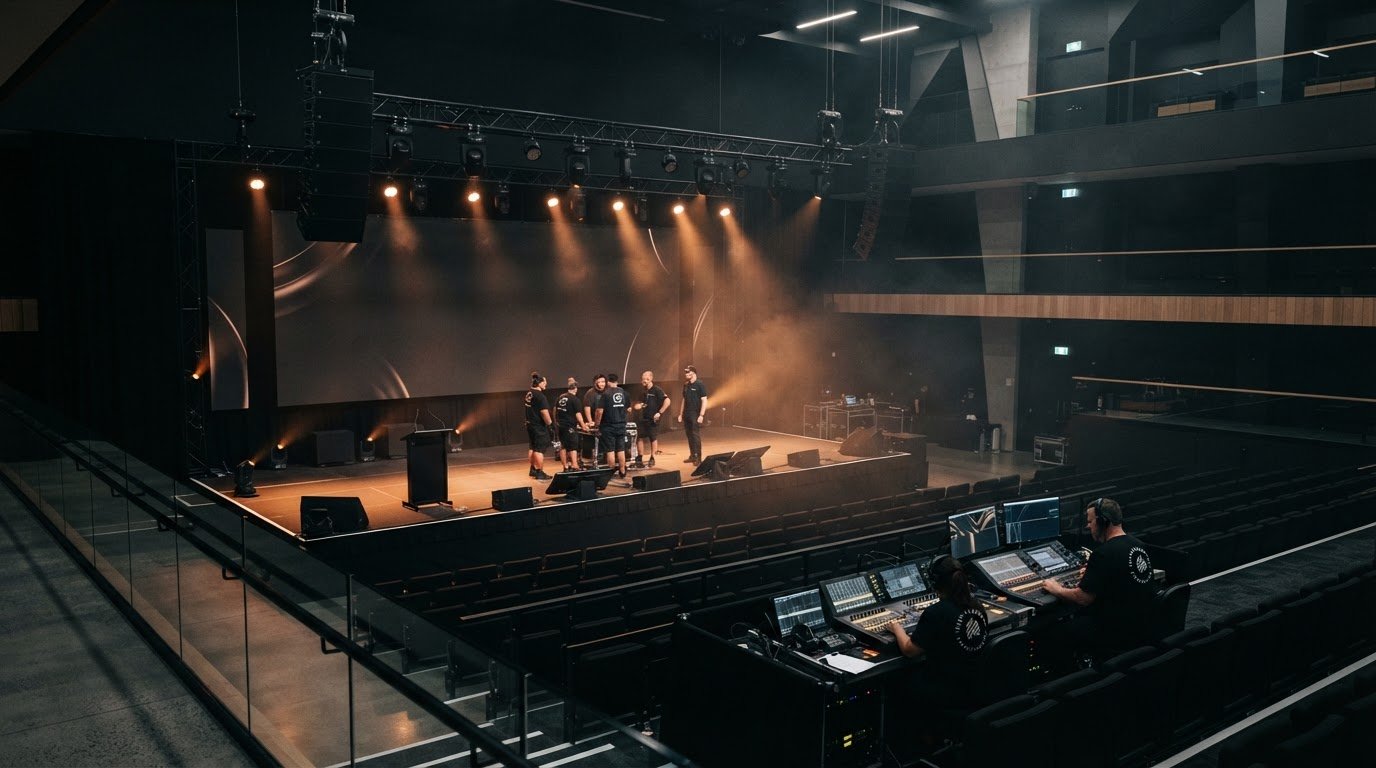
LivewireAV provides full technical production, with equipment, technicians, operators and on-site technical management tailored to event requirements. Depending on the brief, this may involve professional audio and lighting, LED walls or projection, camera packages, vision switching, or hybrid production. Preparation and clear communication help coordinate these elements, with show-day responsibilities defined before the event begins.
What to include when planning your next step
To make the in-house venue AV vs external provider decision more useful, share the information that affects technical planning:
Event format, dates and programme, including sessions, speakers and key cues.
Audience details and whether attendance is in person, online or hybrid.
Venue information, including room layout and any known technical constraints.
Current venue AV details, such as installed systems and services already arranged.
Production requirements, including audio, screens, lighting, cameras or livestreaming where relevant.
Include what’s already decided as well as what may change. A clear picture of venue provision helps identify where the production plan needs to coordinate with existing arrangements. LivewireAV tailors proposals to project requirements, connecting event objectives with practical technical planning and delivery.
Share your event brief to discuss a tailored production proposal. Talk with LivewireAV about your event.
Choose the AV approach that fits your event
The best in-house venue AV vs external provider decision comes down to fit. Venue AV can work well when its written scope covers a straightforward programme. For bespoke staging, multiple technical disciplines or hybrid delivery, an external team can bring planning, equipment and operation together around the event brief.
Compare more than equipment lists. Check who owns planning, setup, rehearsal, live operation and troubleshooting, then make sure each responsibility has a clear lead. That clarity helps keep the technical plan aligned with the programme and gives your event team a practical basis for choosing.
LivewireAV provides full technical production across audio, video and lighting, supported by experienced technicians and operators for live event delivery. The team works with conferences, exhibitions, corporate gatherings and other event formats across New Zealand, tailoring production to project requirements.
Share your event brief and discuss the technical approach that suits your programme. Talk with LivewireAV about your event. With clear planning and defined responsibilities, you can move forward with confidence.
Frequently Asked Questions
Is in-house venue AV always cheaper than using an external provider?
No, in-house venue AV isn’t always cheaper once you compare what each option includes. A venue package and an external production proposal may cover different equipment, crew, setup, operation and coordination. Compare both against the same event brief, including any venue-related charges and who is responsible for each task. Overall value depends on the scope and delivery your event needs, not the headline equipment list alone.
Can an external AV provider work with a venue’s in-house team?
Yes, an external production team can work alongside a venue’s in-house team when responsibilities and handovers are clearly planned. For example, the venue team may manage installed systems or venue infrastructure while the external crew coordinates the event’s production elements. Set out who handles access, setup, operation, changes and troubleshooting. A shared plan helps both teams work to the same schedule and reduces uncertainty on event day.
What does an external event AV provider do?
An external event AV provider plans and delivers technical production around an event’s requirements. Depending on the brief, this can include selecting and setting up equipment, coordinating audio, video and lighting, and supplying technicians or operators to manage the production. For a hybrid event, the plan may also include cameras and livestream delivery. The scope should make clear who is responsible for preparation, live operation and technical decisions.
When should an event use external AV production instead of venue equipment?
Consider external production when the event calls for bespoke staging, multiple technical disciplines, complex cues, camera coverage or hybrid delivery. These requirements may need more coordination than a standard venue package provides. Venue AV can still suit a straightforward presentation if its documented scope matches the programme. In the in-house venue AV vs external provider decision, focus on the technical workload and accountability rather than event size alone.
What should an AV comparison include before we choose?
Compare both options against the same brief and responsibility checklist. Include the programme, audience, room layout, presenter needs, audio, screens, lighting, cameras and any livestream requirements. Then compare equipment fit, crew, coordination, setup, rehearsal, live operation and pack-down. Record who manages changes, communicates with presenters and makes show-day decisions. This makes differences in scope and delivery visible, rather than leaving the choice to equipment lists.
How do we decide if our event needs a hybrid AV setup?
Choose a hybrid setup if people need to participate remotely, watch a livestream or access event content online as it happens. Consider how remote attendees will hear speakers, see presentations and follow the programme, as well as how questions or contributions will be managed. These needs affect audio, cameras, vision switching and operation. If the event is entirely in person, a hybrid component may not be necessary.
Who manages AV on the day of an event?
The event-day AV lead should be named in the production plan, along with responsibility for each technical workstream. Venue technicians may operate venue systems, while external production operators manage their assigned equipment and cues. The organiser typically oversees the event programme and presenter communication. Agree who makes technical decisions, handles changes and escalates issues before the event, so responsibilities remain clear during live delivery.
Comments