How to Evaluate an Event AV Proposal: The 2026 Technical Blueprint
What if the most expensive line item in your event AV proposal isn't the gear, but the cost of a failure during your CEO's keynote? It's a scenario that keeps even the most seasoned organisers awake at night. We understand that comparing multiple quotes often feels like deciphering a foreign language, filled with confusing jargon and hidden costs that only surface on the final invoice. You deserve a partner who values precision, composure, and total technical control. This guide provides a professional framework for how to evaluate an event AV proposal with absolute confidence.
Precision. Composure. Reliability. You'll learn how to scrutinise technical specifications, account for venue-specific logistics, and eliminate the risk of unexpected venue surcharges after the doors close. We'll move through the essential components of modern production, including line array audio, vision switching, and LED walls. This blueprint ensures your next national event is defined by its seamless execution, not its technical hurdles. Let's build a plan that prioritises reliability over flashiness and ensures every detail has been accounted for long before the first guest arrives.
Table of Contents
Beyond the Quote: Why Your Event AV Proposal is a Technical Blueprint
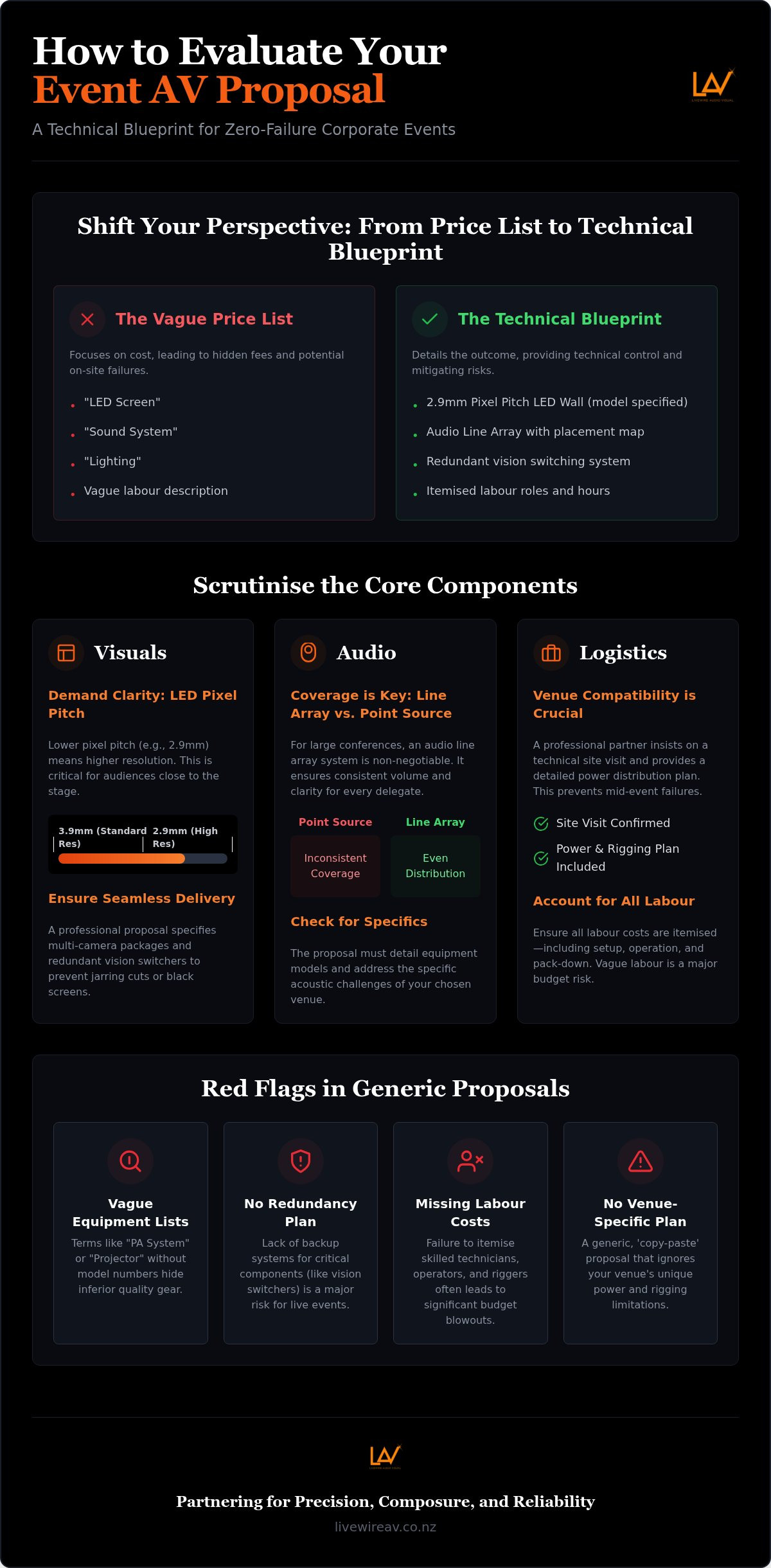
A standard quote lists equipment. A technical blueprint describes an outcome. When you're learning how to evaluate an event AV proposal, the first step is recognising that a professional document should solve problems before they happen. Corporate events aren't standard functions; they are high-pressure environments where a single microphone pop or a flickering LED wall can derail a year's worth of meticulous planning. A comprehensive proposal provides the psychological benefit of total technical control, allowing you to focus on your delegates rather than the hardware.
Precision. Composure. Reliability. These qualities define the shift from simple AV hire to a true technical production partnership. For national events, you need more than a supplier who drops off gear. You require a partner who understands the logistical complexities of diverse venues and the nuanced requirements of your brand. A detailed proposal is the first evidence of that expertise.
The High Stakes of Live Production
Live events offer no second takes. There's no "undo" button for a keynote delivery or a product launch. Consequently, a robust proposal acts as your primary risk management document. It should outline the specific technical components of live events, including signal redundancy and backup vision switching. Establishing a zero-failure mindset from the very first draft is essential. If a proposal lacks detail regarding backup systems or technician roles, it's a signal that the provider hasn't fully accounted for the risks inherent in live environments.
Standardising Your Evaluation Framework
Inconsistent proposal formats frequently lead to budget blowouts and missed gear. One provider might list a generic "Sound System", while another specifies an audio line array system with exact model numbers and placement maps. To avoid hidden costs, you must compare apples with apples. Knowing how to evaluate an event AV proposal requires establishing a baseline for technical expectations across various national venues. This framework ensures that every quote you receive is held to the same standard of meticulousness, covering everything from power draw to labour hours. Without a standardised approach, you risk choosing a partner based on price alone, only to find the technical plan is insufficient for the venue's logistical demands.
The Essential Components of a Professional AV Proposal Template
A professional proposal organises technical complexity into manageable categories. When determining how to evaluate an event AV proposal, you should look for a logical flow that starts with a clear project overview. This foundation must define the scope, expected audience size, and specific venue constraints. If a provider hasn't accounted for ceiling heights, rigging points, or the number of delegates in the back row, the proposal is likely based on guesswork rather than technical reality. Meticulous planning at this stage prevents logistical friction during the build.
Visuals and Vision Switching
The visual impact of your event depends on more than just screen size. You must scrutinise the specified LED wall pixel pitch. A 2.9mm pitch offers significantly higher resolution than 3.9mm, which is critical for delegates sitting within five metres of the stage. For large-scale audience engagement, multi-camera packages and professional vision switching are non-negotiable. These tools allow for seamless transitions between slide decks, video content, and live presenter feeds. For a deeper look at hardware specifications, consult our conference LED screen hire NZ guide. Precision in vision switching ensures your brand's message is delivered without jarring cuts or technical lag.
Audio Engineering and Sound Clarity
Audio is often the most critical point of failure in live environments. Professional proposals should detail audio visual for large conferences by specifying audio line array systems. Unlike standard point-source speakers, line arrays provide consistent volume and clarity from the front row to the very back of the room. Your proposal should also address the specific acoustic challenges of the venue, such as high ceilings or hard surfaces, through meticulous speaker placement and tuning. If you're unsure about the audio requirements for your next national project, contact our technical team for a detailed assessment.
Lighting and Labour Management
Lighting design goes beyond simple visibility. It involves intelligent fixtures that create atmosphere and a consistent stage wash to ensure presenters look natural on camera and in person. Finally, scrutinise the labour allocation. A professional blueprint defines the roles of operators, vision directors, and audio engineers. Gear doesn't run itself. The presence of experienced technicians is what transforms a collection of hardware into a cohesive production. Understanding the labour-to-equipment ratio is a key part of how to evaluate an event AV proposal effectively, ensuring you have the expertise on-site to handle any high-pressure situation.
Logistics and Redundancy: The Hidden Sections That Matter
While equipment lists often take centre stage, the logistical framework determines the actual success of your event. Hardware is only as effective as the plan that supports it. When you're determining how to evaluate an event AV proposal, you must look beyond the gear to the operational strategy. A professional proposal should detail power distribution and venue-specific logistics with the same level of care as the audio-visual components. Precision. Methodical. Reliable. These are the markers of a partner who understands that high-stakes environments leave no room for guesswork.
Power requirements and distribution are frequently overlooked until the build begins. A robust blueprint specifies exactly how the venue's capacity will be managed to avoid overloaded circuits or technical interference. Similarly, bump-in and strike schedules must be precise. These timings ensure a seamless transition between venue hire periods and prevent the stress of rushed setups or costly overtime charges. Every logistical detail should be accounted for long before the first technician arrives on-site.
The Critical Role of Technical Site Visits
Technical site visits are often omitted from budget-focused quotes to keep the headline price low. However, they are essential for identifying audio "dead spots" and structural rigging points before the event day. By conducting a thorough walk-through, a production partner can anticipate venue-specific hurdles that would otherwise lead to day-of-show surprises and unbudgeted expenses. A technical site visit is the foundational requirement of any professional proposal that guarantees venue compatibility and technical control.
Redundancy and Zero-Failure Systems
Redundancy is the difference between a minor technical hiccup and a total production failure. High-stakes keynotes require backup consoles and secondary signal feeds to be clearly specified in the proposal. If a primary vision switcher fails, a secondary system must be ready to take over instantly without the audience noticing. For hybrid events, this extends to bonded internet connections or satellite failovers to maintain the broadcast if the venue's primary line drops. This layer of preparation is what allows organisers to project a sense of total composure. Understanding how to evaluate an event AV proposal means looking for these "Plan B" scenarios. When every critical signal path has a redundant backup, you can focus on your delivery with the quiet confidence of a seasoned professional.
Avoiding the AV Fail: Red Flags in Generic Proposal Templates
Generic templates often mask technical inadequacies with polished design. When you're learning how to evaluate an event AV proposal, you must look for ambiguity in the equipment lists. A vague line item like "Sound System" or "Projector" is a significant red flag. Professional proposals specify exact model numbers, lumen counts, and audio line array configurations. If a provider won't commit to specific hardware in the blueprint, they may be planning to sub-hire whatever equipment is available at the lowest rate, regardless of its suitability for your venue or audience size.
Missing labour costs represent another hidden danger. Some quotes appear competitive because they omit the specialised operators required to manage the gear, essentially offering a "dry hire" service under the guise of full production. Similarly, unrealistic setup times suggest a lack of venue awareness. If a proposal allows only two hours for a complex LED wall build and vision switching setup, the provider doesn't understand the logistical reality of the site. High-end gear requires expert management. Experience. Technicality. Execution.
The Trap of the Lowest Bid
Underquoting on labour is a common tactic that leads to on-site disasters and unnecessary stress for organisers. The true cost of an equipment failure during a major product launch far exceeds the initial savings of a cheap quote. You can spot a "cowboy" quote by its lack of detail regarding technician roles, rehearsal time, and signal redundancy. A professional blueprint prioritises reliability over the lowest possible price, ensuring that the team on-site has the capacity to handle high-pressure scenarios without compromise.
Evaluating Technical Competency
Demand more than just a list of hardware. Ask for technical renders or signal flow diagrams during the proposal phase to see how the different components will integrate within the venue. These documents demonstrate that the provider has actually mapped out the technical requirements of your event. Verify the experience level of the proposed Technical Director to ensure they have handled similar national-scale projects. This level of scrutiny ensures the proposal reflects premium event production New Zealand standards. If you've received a proposal and need a second opinion on its technical viability, request a technical review from our senior production team to ensure your plan is truly zero-failure.
Partnering for Precision: Customising Your Proposal with LivewireAV
At LivewireAV, we believe a proposal is more than a sales document. It is a technical contract that guarantees the success of your project. Our approach begins with a deep-dive consultation to understand your specific objectives. We don't rely on automated lists or generic AI generators. Instead, we provide a Technical Director who leads the design process, ensuring that every piece of hardware serves a specific purpose. Understanding how to evaluate an event AV proposal is easier when you see a plan that integrates audio, vision, and lighting into a single, cohesive workflow.
Meticulous. Methodical. Venue-aware. These are the standards we apply to every national event. We account for the logistical "why" behind every equipment choice, from signal redundancy to power distribution. This level of preparation takes the stress out of technical management, allowing you to focus on your audience while we maintain total control behind the scenes. By treating the proposal as a technical blueprint, we eliminate the ambiguity that leads to hidden costs and on-site failures.
Bespoke Technical Production
Large-scale events require tailored solutions that generic templates cannot provide. Whether you're planning a national roadshow or a high-stakes product launch, our team designs systems that scale with your needs. This includes managing complex signal paths for hybrid conference AV setup NZ requirements. We ensure that your remote audience receives the same broadcast-grade experience as those in the room. By customising every feed and vision switching path, we eliminate the friction often associated with complex technical environments.
The Calm Professional Advantage
Our technicians are the core of our precise execution. With over 10 years of experience in high-pressure environments, including sporting, outdoor, and corporate settings, they possess the composure required to handle any situation. We thrive under pressure. We value clear communication. We prioritise reliability. This expertise is why our proposals specifically include a Technical Director to oversee every detail of the build and show. When you're determining how to evaluate an event AV proposal, look for the presence of a steady hand behind the scenes. Contact LivewireAV today for a technical blueprint that guarantees peace of mind and total technical control for your next national event.
Securing Technical Excellence for Your Next National Event
Successful event production relies on the transition from a simple equipment list to a comprehensive technical blueprint. You've learned that understanding how to evaluate an event AV proposal requires looking beyond the hardware to the logistical framework and redundancy plans that support it. Precision. Composure. Reliability. These aren't just goals; they're the standard requirements for any high-stakes environment. By prioritising detailed labour allocations, technical site visits, and model-specific gear, you eliminate the risk of failure and ensure a seamless experience for your audience.
With over 10 years of high-stakes event experience across New Zealand, LivewireAV specialises in large-scale LED walls and audio line array systems. We provide the steady hand behind the scenes to ensure your vision takes centre stage. If you're ready to move beyond generic templates and secure total technical control, request a meticulous technical proposal from LivewireAV. We're here to help you deliver a zero-failure event with the quiet confidence of a seasoned partner.
Frequently Asked Questions
What are the most important technical details to include in an AV proposal?
A professional proposal must include model-specific hardware lists, vision switching configurations, and audio line array specs. It should also detail signal redundancy paths and power distribution plans. Without these specifics, you cannot verify if the gear is fit for purpose. This level of detail transforms a simple quote into a technical blueprint that prioritises reliability over flashiness and ensures every logistical "why" is clearly answered.
How do I compare AV quotes from different production companies?
You should compare quotes by using a standardised framework that focuses on technical outcomes rather than just the bottom line. Learning how to evaluate an event AV proposal means checking for "apples with apples" in hardware quality and labour hours. Ensure every quote includes technical management and on-site operators. A cheaper quote often hides costs by omitting essential technicians or using inferior point-source audio systems.
Should labour costs be included in the initial AV proposal?
Labour costs should always be included in the initial proposal to provide an accurate total cost of ownership. Professional production requires skilled operators, vision directors, and audio engineers to manage high-end gear. Quotes that only list equipment are essentially dry hire offers, which lack the technical control required for high-stakes environments. Meticulous labour planning ensures your event runs without technical friction or unexpected overtime fees.
What is a technical site visit and why is it necessary for a proposal?
A technical site visit is a non-negotiable inspection of the venue to identify rigging points, power capacity, and acoustic challenges. It is necessary because it prevents day-of-show surprises and unbudgeted venue surcharges. By conducting a walk-through before the proposal is finalised, a production partner can guarantee the equipment specified will actually work within the physical constraints of the room. Site visits are the foundation of any reliable production plan.
How can I ensure my event has adequate technical redundancy?
You can ensure adequate redundancy by specifying backup consoles, secondary signal feeds, and failover internet connections in your technical plan. Redundancy is the "Plan B" that keeps the show running if a primary component fails. For high-profile keynotes, this includes secondary vision switching and mirrored audio consoles. This level of preparation builds a zero-failure environment where every critical signal path is protected by a redundant backup for total technical control.
What is the difference between a dry hire and full technical production?
Dry hire involves renting equipment without technical support, whereas full technical production provides an end-to-end managed service. Full production includes technical design, logistics, and on-site operators who manage the entire show. At LivewireAV, we specialise in full production to ensure precision and composure. We don't offer dry hire because high-stakes corporate and sporting events require the expert management that only a dedicated technical team can provide.
Why is the pixel pitch of an LED wall important in a proposal?
Pixel pitch determines the resolution and minimum viewing distance of an LED wall, directly impacting audience clarity. A smaller pitch, such as 2.9mm, provides a sharper image for delegates sitting close to the stage compared to a 3.9mm pitch. Specifying the correct pitch in your proposal ensures that slide text and video content remain legible for every guest in the room, regardless of their seating position. It's a critical factor for visual engagement.
How far in advance should I request an AV proposal for a large conference?
You should ideally request an AV proposal at least 12 weeks before a large conference. Engaging a partner early allows for better venue negotiation and ensures the availability of specialised gear like audio line arrays. Industry data suggests that bringing in an AV partner 12 or more weeks in advance can save 20 to 25 per cent on total costs. Early engagement provides the time needed for meticulous planning and technical design.


Comments