Event lighting for atmosphere, tailored to your venue
The same lighting plan won’t suit every venue. Using lighting to create event atmosphere means matching colour, brightness and direction to the room, the programme and how guests use each space. This keeps key activities visible while shaping the mood.
It’s easy to focus on how a room looks and overlook practical constraints. Ceiling height, existing light, power access and the timing of each event segment all affect what will work. Account for these details to create a coherent experience without compromising function.
You’ll learn how lighting choices influence mood, how to adapt them to venue features, and what to consider when planning budget, energy use and scheduling. The article also explains how lighting can shift as an event moves from presentations to dining or socialising, and why coordination matters for a composed, well-lit result.
Table of Contents
How does lighting affect the atmosphere of an event?
Using lighting to create event atmosphere means shaping what guests notice and how a venue feels while keeping activities visible. At a wedding, a calm base level of light can suit dinner before brighter effects signal the move to dancing.
Ambient Light and Overall Illumination
Ambient lighting provides general illumination across a space. It sets the initial mood while keeping the room usable. A soft, low level can create a calm atmosphere for an evening gathering, while brighter ambient light can help participants stay alert during a seminar.
Balance matters. If the base light is too dim, guests may struggle to move around or see one another. If it is too bright, designed effects can lose impact. Existing venue lights also contribute to the overall level, so the lighting design needs to work with them.
Layering Light for Designed Effects
Layering combines ambient lighting with task lighting for activities and accent lighting for visual emphasis. For a dinner, ambient light can fill the room, task lighting can illuminate tables, and accent lighting can draw attention to a feature wall.
LED lighting offers a broad range of colours for different layers. A balanced combination keeps functional areas visible and gives the room a distinct look, rather than relying on one uniform wash.
Spotlights and Points of Focus
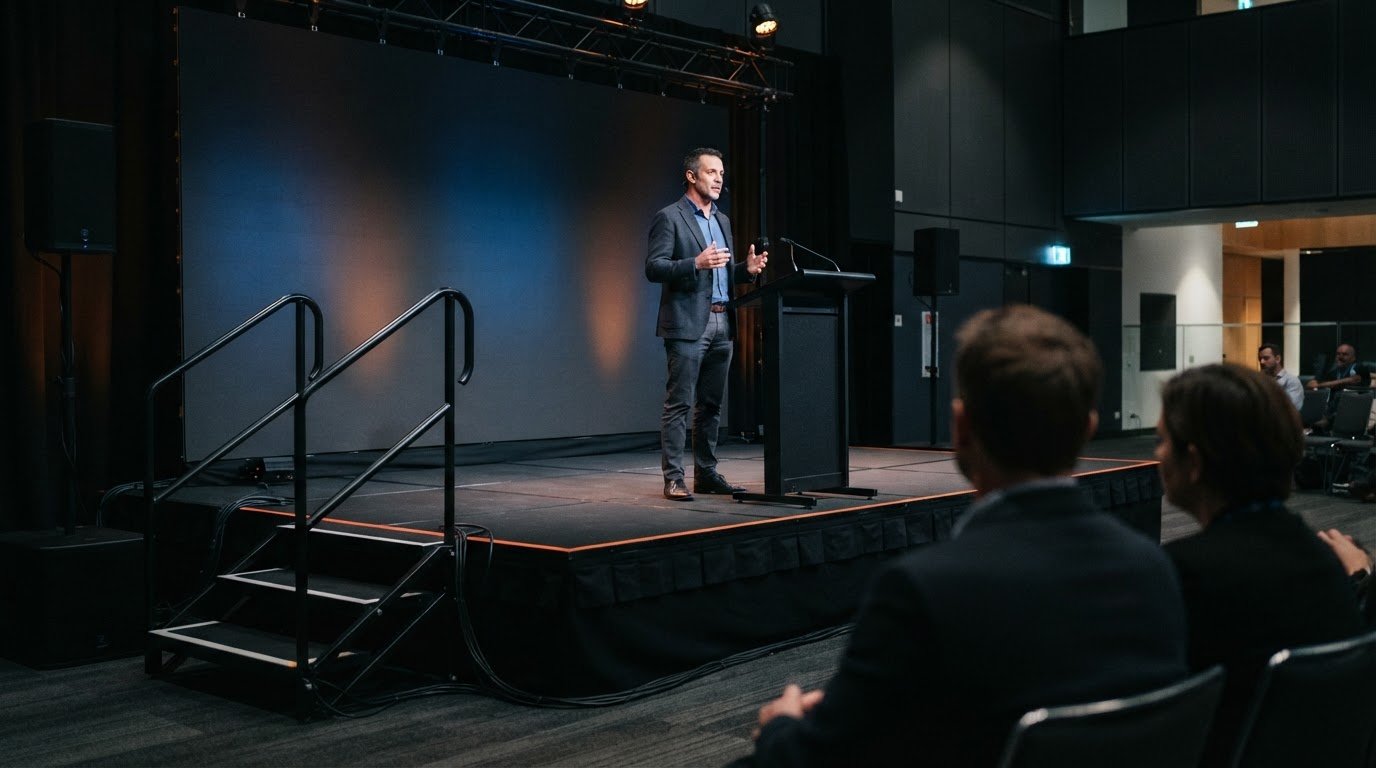
Spotlights direct attention to a speaker, performer or display. At a product launch, a focused beam can make the featured item stand out against softer room lighting. For a presentation, lighting the speaker clearly helps distinguish the stage from the audience area.
Accent lighting can also highlight artwork, architectural details or table centrepieces. A narrow pin spot creates a precise focal point, while lights at the base of walls can wash the surfaces with colour.
Projection and Changing Effects
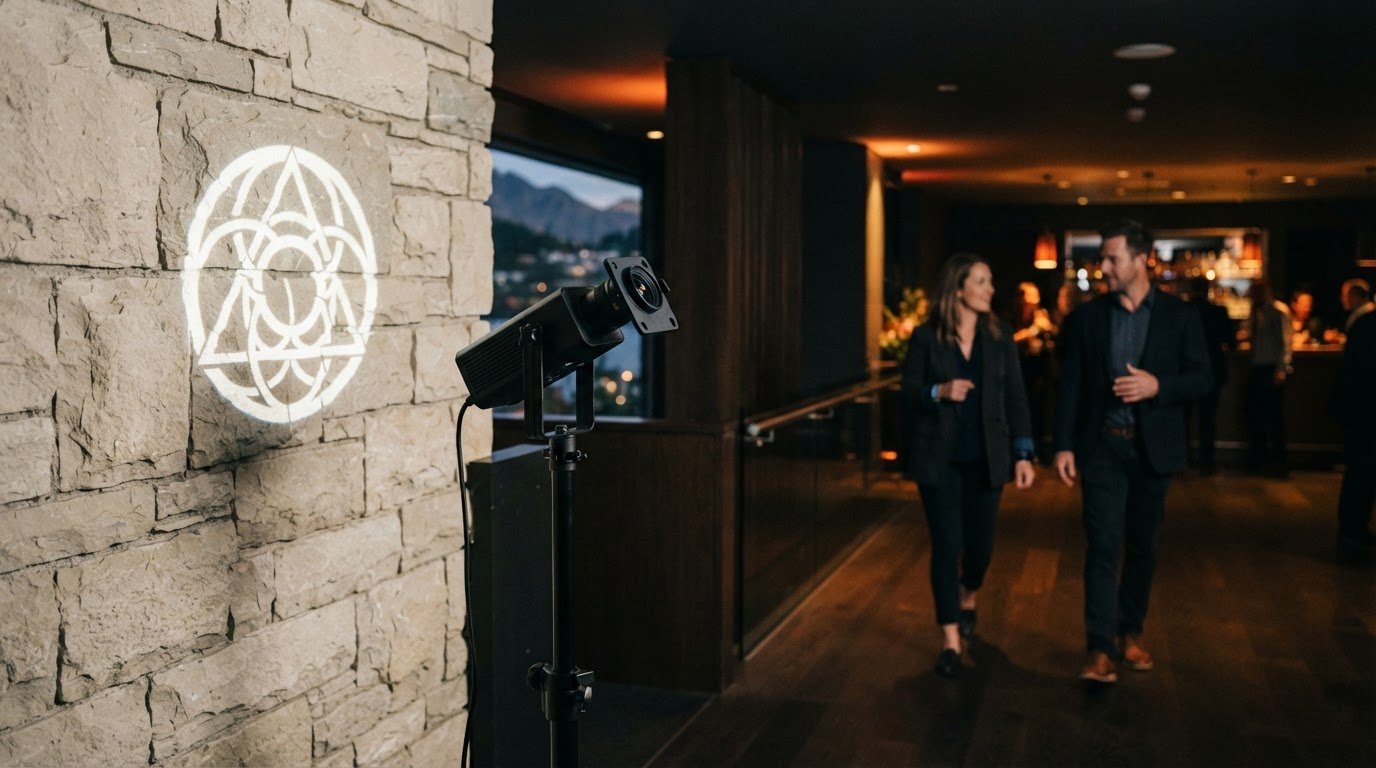
Projection adds visual detail to a venue. Gobo projection can cast a pattern, logo or decorative motif onto a wall, floor or ceiling. Projection mapping can fit imagery to architectural features.
Using lighting to create event atmosphere can also involve dynamic lighting that shifts with the programme. Restrained effects during a presentation can give way to a brighter dance-floor look, with smooth transitions making each change feel deliberate.
What should be considered when planning lighting for an event?
Colour and movement work best when they support the event’s purpose rather than compete with it. Plan lighting changes around the programme, from the opening presentation to relaxed conversation.
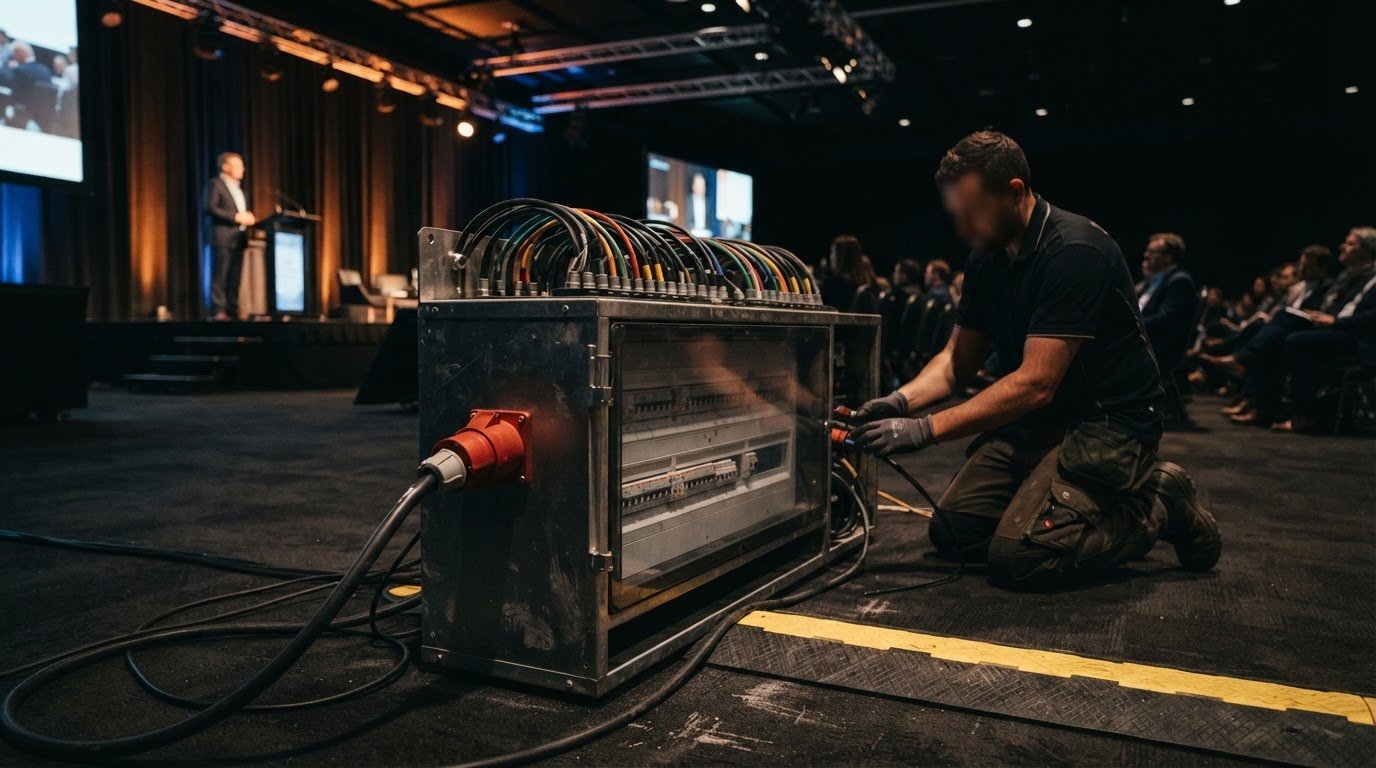
In New Zealand, plan power and cabling around the venue’s electrical access, equipment needs and cable routes. Secure and cover cables where people walk, and keep access paths clear.
Direct beams can dazzle guests, and high-powered strobes should not be used without warning. Haze can affect visibility. Lasers and temporary lighting rigs need controlled placement and operation.
Colour and Colour Temperature
Colour temperature and hue describe whether light feels warm, cool or tinted, shaping how a space is perceived. Warm orange and yellow tones can create an inviting setting for dinner or networking, while cool blue and purple can give a technology event a modern feel.
For relaxed interaction, use soft, warm colour around seating and dining areas. At a corporate presentation, keep the speaker and content clear, then use event colours to highlight a stage feature or branded backdrop.
Dynamic Lighting for Themes and Transitions
Dynamic lighting changes colour, pattern or intensity over time, helping the visual environment follow the event’s theme and programme. A planned shift from restrained presentation lighting to brighter colours for socialising can signal a change without interrupting the schedule.
For a product launch, a slow colour change can draw attention to the reveal. Faster movement may suit a dance floor. Keep each cue purposeful so patterns don’t distract from a speaker or make the room feel unsettled.
Build cues around the activities. Keep presenters clearly lit during a corporate presentation, then transition to warmer tones for conversation. Colour-changing LED fixtures can support these shifts, while consistent event colours help connect separate areas into one visual experience.
For a coordinated plan, intelligent lighting design can align colour, movement and timing with the event’s theme and programme.
How does lighting create different moods at events?
Venue scale, layout and existing light shape the fixtures and positions needed to create a distinct mood. Fixture requirements depend on the area, ceiling height, sight lines and desired brightness, not simply guest numbers.
Venue Size, Layout and Sight Lines
Venue size, layout and sight lines determine where light needs to reach and what the audience should see. In a large hall, fixtures need to cover separate areas, such as the stage, seating and entry points, without leaving dark gaps.
An intimate interior calls for restrained placement. Compact fixtures and indirect light can add depth without crowding the room. In a historic venue, existing architecture becomes part of the visual design, so uplighting can draw attention to mouldings while keeping beams out of guests’ eyes.
For a conference, position stage lighting so presenters are visible from side seating as well as from the centre. Columns, balconies and partitions can block beams, so the layout affects both coverage and mood.
Ceiling Height and Natural Light
Ceiling height affects fixture positioning and how light spreads across the audience. A high-ceilinged hall may need carefully aimed sources to reach the stage and seating. In a low-ceilinged room, indirect light can help avoid glare.
Daylight also changes the balance. In a venue with large windows, sunlight may brighten one side of the room while the stage remains less visible. Sheer drapes can soften direct sunlight, while planned artificial light helps maintain visibility during presentations.
As daylight fades, the lighting plan can shift gradually to maintain a consistent look. For a daytime wedding in a glass-walled venue, account for changing light around the ceremony area and guest seating.
Historic halls may restrict mounting points or call for discreet equipment placement. Wireless, battery-powered fixtures can suit spaces where access to power or attachment points is limited. Their positions still need to support clear sight lines and even coverage.
In a long, narrow room, lighting separate zones helps guests read the space. A softly lit arrival area, a clear presentation zone and a more intimate seating area create distinct moods without relying on one uniform brightness level.
Planning around venue characteristics, budget, energy efficiency and schedule
Using lighting to create event atmosphere starts with matching the design to the venue, programme and available resources. Ceiling height, natural light, power access and room layout influence fixture placement and operation. These details also help identify priority areas, such as a presentation stage, guest entrance or dining space.
For budget planning, prioritise the areas that most affect the event experience. A conference might focus resources on the stage and circulation areas, while a dinner may need more attention around tables. Reusing fixtures across zones can make the plan more efficient. Fixture type and quantity, setup requirements and event duration all influence the production scope.
Energy use depends on fixture choice, brightness and operating time. LED fixtures use little power compared with many traditional options, making them useful across several lighting zones. Match output to the task: a walkway needs clear visibility, while a decorative wall wash may need less intensity. Dimming lights when full output isn’t required can also reduce energy demand.
Let the schedule guide every lighting cue. For a corporate event, plan clear stage lighting during presentations, then transition smoothly to social lighting during networking. Include cue changes in the running order so the operator can time them around speakers, meals and performances. Gradual adjustments help prevent abrupt changes from distracting guests.
Using lighting to create event atmosphere outdoors means accounting for changing daylight and weather. As sunset reduces natural visibility, bring up functional light in high-traffic areas and keep the event space in focus. Weather-rated fixtures should suit site conditions. Stable, properly weighted bases and covered cable routes also help keep outdoor layouts practical.
For an event where venue limits, power access and timing shape the design, plan your event lighting around these practical requirements.
LivewireAV: Intelligent Lighting Design
LivewireAV’s Intelligent Lighting Design shapes lighting around your venue, event programme and desired atmosphere. It’s a natural next step when you need coordinated lighting for different spaces or planned changes between presentations, dining and social time.
The design can account for sight lines, existing light, power access and planned activities. Stage lighting can support clear presentations, while other areas are set up for guest movement and interaction. For events with screens or live audiences, lighting can also be considered alongside LED Walls & Projection, Hybrid & Livestream Events or Full Technical Production.
Share your venue and event plans with LivewireAV to discuss an approach that fits.
Shape the experience from the first cue
The strongest lighting plans begin with the experience you want guests to remember. Think beyond how the room looks: consider where attention should fall, how people will move between spaces, and what each part of the programme should feel like. That intent gives the technical plan a clear purpose.
Using lighting to create event atmosphere can also support the wider production. LivewireAV offers Full Technical Production, Hybrid & Livestream Events, and LED Walls & Projection, which can be planned alongside lighting where they suit the event. Coordinating these elements helps align the visual experience with the programme rather than treating each one separately.
Share your event goals, venue details and schedule with LivewireAV to start shaping a practical lighting approach. Contact LivewireAV to discuss event lighting, and take the next step towards a setting that feels considered, coherent and distinctly yours.
Frequently Asked Questions
How are the lighting challenges of different spaces solved?
Match each lighting approach to how people use the space. In an exhibition, for example, use focused light to distinguish featured displays while keeping circulation areas easy to navigate. In a low-ceilinged room, indirect light can reduce glare; outdoors, account for changing daylight and ambient light from nearby streets. The layout, power access and surfaces available for lighting effects all influence the plan.
What lighting options are available?
Event lighting can include general ambient light, functional task lighting and accent lighting for selected features. Other options include spotlights, wall washes, colour-changing LED fixtures and projected patterns or imagery. Outdoor events can use strand lights for a decorative effect or floodlights to illuminate a larger area. The choice depends on the event’s activities, venue features and desired visual effect.
What are the most common lighting solutions at corporate events?
Corporate events often need clear lighting for speakers, presentations and audience areas, with accents to reinforce the event’s visual identity. A conference might use front lighting for presenters and projection to display branded imagery. At an awards evening, focused light can distinguish the stage during announcements, ensuring key moments are clearly seen and captured by event coverage specialists such as Festival City Photography. Lighting cues can also mark a shift from formal proceedings to networking without changing the event’s overall setup.
Why is lighting an important part of a successful event?
Lighting helps guests see, understand where to focus and move through an event space. At a product launch, a carefully lit display can make the featured item easier to notice. At a conference, clear presenter lighting supports attention. Lighting also contributes to the event’s visual character, helping distinguish different activities or areas. The result is a setting that supports the programme and its intended feel.
How does lighting affect the atmosphere at an event?
Lighting influences how a space feels by changing its brightness, colour and visual focus. Soft, low-level light can suit quiet conversation, while brighter, more directional light can give a presentation or performance greater prominence. These choices also affect what guests notice first, such as a stage, artwork or table setting. Coordinating lighting with the event’s activities helps its atmosphere feel purposeful rather than arbitrary.
What lighting styles suit different event types and themes?
Choose lighting that supports the event’s character and activities. A garden celebration may use strand lights for a relaxed, festive look; a technology showcase can use cool colours and sharper visual patterns. A formal dinner may suit warm light around dining areas, while a corporate presentation needs clear visibility for speakers and screens. Projected motifs can reinforce a theme when they complement rather than distract from the programme.
Comments