Dynamic Lighting for Awards: A Practical Buying Guide
What makes an awards-night lighting cue feel polished rather than distracting? It isn’t more movement or brighter colour. With dynamic lighting for awards presentations, each change should serve a recognition moment while keeping the recipient clearly visible to guests and cameras.
That balance can be difficult to judge. Moving lights and colour changes can build anticipation, but if they compete with the person receiving an award, the moment loses focus. Cue timing matters too: presenters, walk-ups, handovers and photography all need room to work without making the programme feel interrupted.
This guide compares lighting approaches for different event tones and explains how to plan repeatable cues for entrances, announcements and award handovers. It also covers coordinating lighting with stage, audio and visual production, so each cue feels considered and the technical team can operate with confidence. The aim is a memorable presentation, with the attention where it belongs: on the recipients.
Table of Contents
What dynamic lighting adds to an awards presentation
Dynamic lighting is a sequence of programmed lighting changes designed to support planned moments across a presentation. For dynamic lighting for awards presentations, the distinction is between a consistent stage look that provides a stable visual backdrop and cues that adjust colour, intensity or movement as the programme unfolds. The purpose isn’t change for its own sake. Each cue should help guests follow the action while keeping the people and award clearly illuminated.
In an awards presentation, dynamic lighting is a visual cue that guides attention through recognition moments without taking focus away from the recipient. A shift in colour or brightness can distinguish a new category, while a carefully directed light can guide attention from the presenter to a nominee, recipient or award. Intelligent lighting can support programmed movement and changes, but dynamic lighting for awards presentations doesn’t need to rely on moving fixtures or dramatic effects.
Think of lighting as part of the programme’s visual language. A cue can give a transition a clear beginning and end, helping the audience understand what’s happening without competing with the presenter’s words. The right approach depends on the event’s formality, the stage and the pace of the evening.
Which awards moments can lighting support?
Start by identifying the moments where a visual change will help guests follow the ceremony. The cue should mark the action, then settle into a look that keeps the people involved easy to see.
Nominee announcements: Maintain a clear presenter look, then guide attention towards the screen or stage area where nominees are being recognised.
Recipient entrances: Use a measured change to acknowledge the recipient’s walk-up without making their entrance harder to follow.
Award handovers: Keep the presenter, recipient and award visible together. This gives the handover a clear visual focus, including for photographs.
Return-to-seat transitions: Ease back to the stage look as the recipient leaves, ready for the next announcement.
A deliberate shift between categories or programme segments can also signal that the ceremony has moved on. Keep the change connected to the action: the audience should notice the recognition, not have to work out why the lighting changed.
How does dynamic lighting differ from a static stage look?
A static stage wash holds a consistent appearance throughout a segment. Planned cues introduce changes in colour, intensity or movement at chosen points. The difference can be subtle: a gentle shift may be enough to distinguish an announcement from a handover. For a formal ceremony, restrained changes often suit the tone; a faster-paced programme may allow more variation. Neither approach replaces clear, even illumination of recipients.
In practice, build from a reliable base look, then add only the changes that help tell the story of the evening. If a cue distracts from a name being announced, obscures the award or pulls attention away from the recipient, simplify it. Clear, purposeful changes give the ceremony shape while keeping recognition at its centre.
How to design award-night lighting cues around the programme
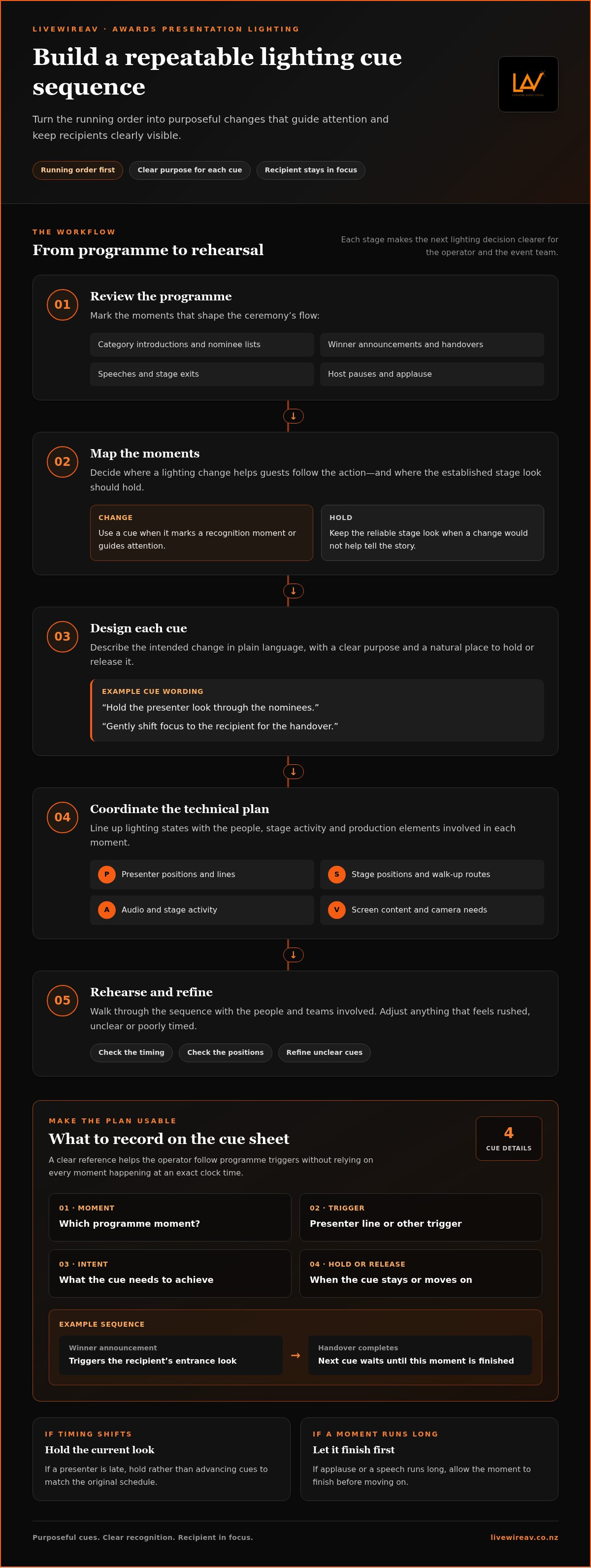
A reliable cue sequence starts with the running order, not the lighting desk. Map each change to a specific programme moment so the operator knows what should happen, what triggers it and what the cue needs to achieve. This keeps the lighting connected to the ceremony, even if the timing shifts on the night.
Build a cue sequence from the running order
Use this workflow to turn the event brief into a practical cue plan:
1. Review the programme. Mark category introductions, nominee lists, winner announcements, handovers, speeches and stage exits. Note where the host may pause or invite applause.
2. Map the moments. Identify which points need a lighting change and which should stay on the established stage look. Give each cue a clear purpose.
3. Design each cue. Describe the intended change in plain language, such as “hold the presenter look through the nominees” or “gently shift focus to the recipient for the handover”.
4. Coordinate the technical plan. Align the lighting states with presenter positions, walk-up routes, stage activity, audio and any screen content.
5. Rehearse and refine. Walk through the sequence with the people and teams involved, then adjust cues that feel rushed, unclear or poorly timed.
A cue sheet makes this sequence usable. For each change, record the programme moment, the presenter’s line or other trigger, the cue’s intent and any hold or release instruction. For example, a winner announcement can trigger the recipient’s entrance look, while the next cue waits until the handover is complete. This gives the operator a clear reference without requiring every moment to run to an exact clock time.
Build flexibility into the plan. If a presenter is late, hold the current look rather than advancing cues to match the original schedule. If applause or a speech runs long, let the moment finish before moving on. If the running order changes, the cue sheet should make it straightforward to identify which cues move with a category and which depend on stage position or a particular presenter line.
Coordinate lighting with presenters, stage and cameras
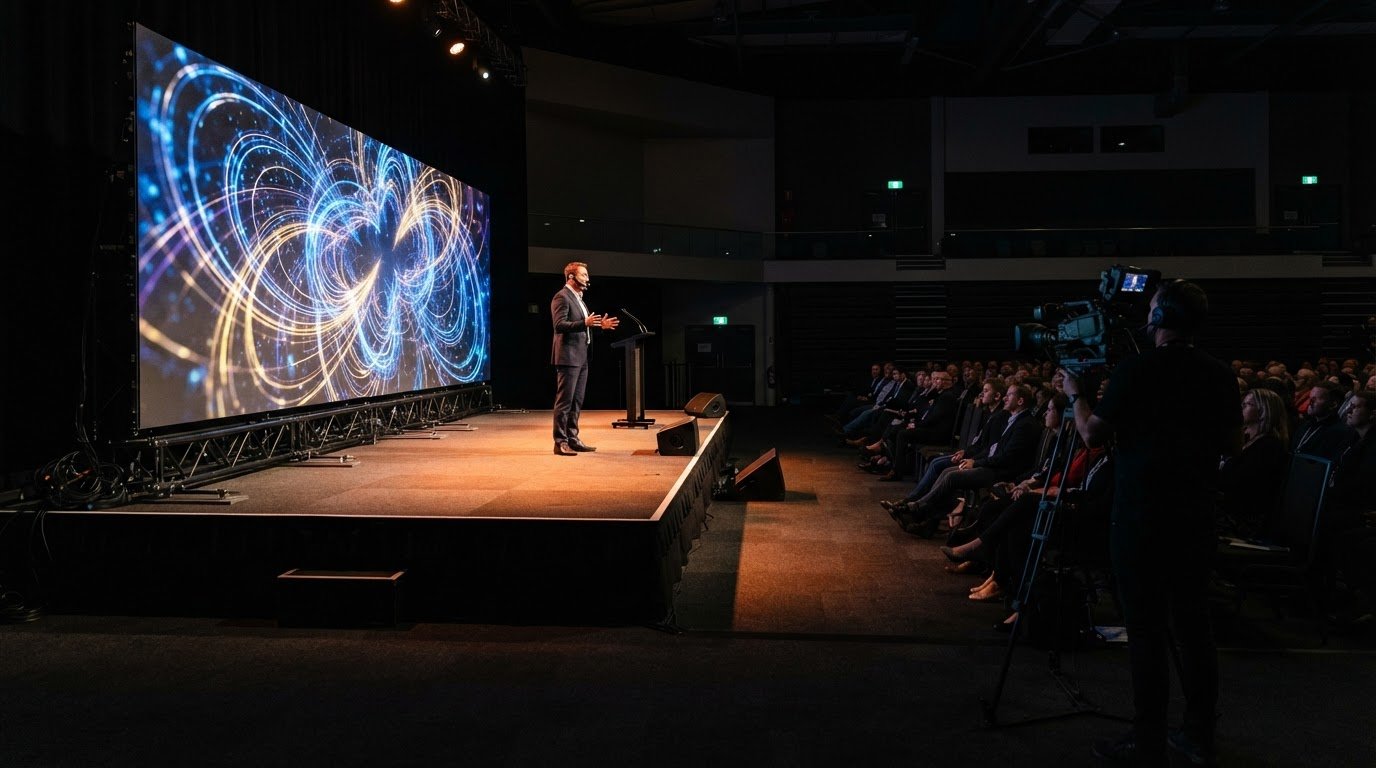
Check where presenters will stand, how recipients will reach the stage and where handovers will happen. Then align lighting changes with those positions so a cue doesn’t pull attention away just as someone begins speaking. For hybrid or livestreamed ceremonies, consider how each lighting state will appear within the camera frame and alongside screen content. Broadcast-ready lighting design helps maintain visibility for both in-person and remote audiences.
Rehearsed cues reduce uncertainty by giving presenters, operators and camera teams a shared sequence to follow. It’s a practical way to keep the programme composed when live timing changes. For a joined-up plan, explore live event lighting design as part of coordinated technical production.
Compare dynamic lighting approaches for awards presentations
The right approach depends on the event brief, venue and programme pace. A formal recognition dinner may need only subtle changes, while a large stage and energetic show may benefit from more movement. Compare the options by asking what guests should notice, how consistently recipients need to appear in photographs and how much live cue operation the programme calls for.
The approaches below describe a spectrum, not fixed packages. A design can combine elements, such as a stable base look with more animated transitions between segments.
For dynamic lighting for awards presentations, the useful question isn’t which approach looks most impressive in isolation. It’s whether the lighting supports the event’s tone and keeps the person being recognised easy to see. More layers or movement also mean more elements to coordinate with the running order and other stage activity.
When is a restrained lighting approach the better fit?
Subtle colour or intensity shifts suit formal, recognition-led programmes where speeches and award handovers are the focus. A stable front-light look helps keep faces and award details clear, while a modest change can still distinguish a new category or winner announcement. This approach can support photographic consistency, particularly when recipients are photographed in similar positions throughout the ceremony.
When should an awards show use more movement or colour?
Stronger colour changes or moving fixtures can suit an energetic format when they’re tied to specific transitions, such as opening a segment or introducing a performance. Gobos can add texture to the stage or backdrop, but effects should settle before an acceptance speech or handover. Constant motion can compete with the recognition moment; a clear contrast between transition and award presentation helps maintain focus.
Choose the level of change that serves the brief, not the level that fills every moment. A considered design balances visual energy with clear faces, readable award details and cues that can be operated reliably. That balance is the practical measure of success.
Plan visibility, colour and camera-ready lighting before event day
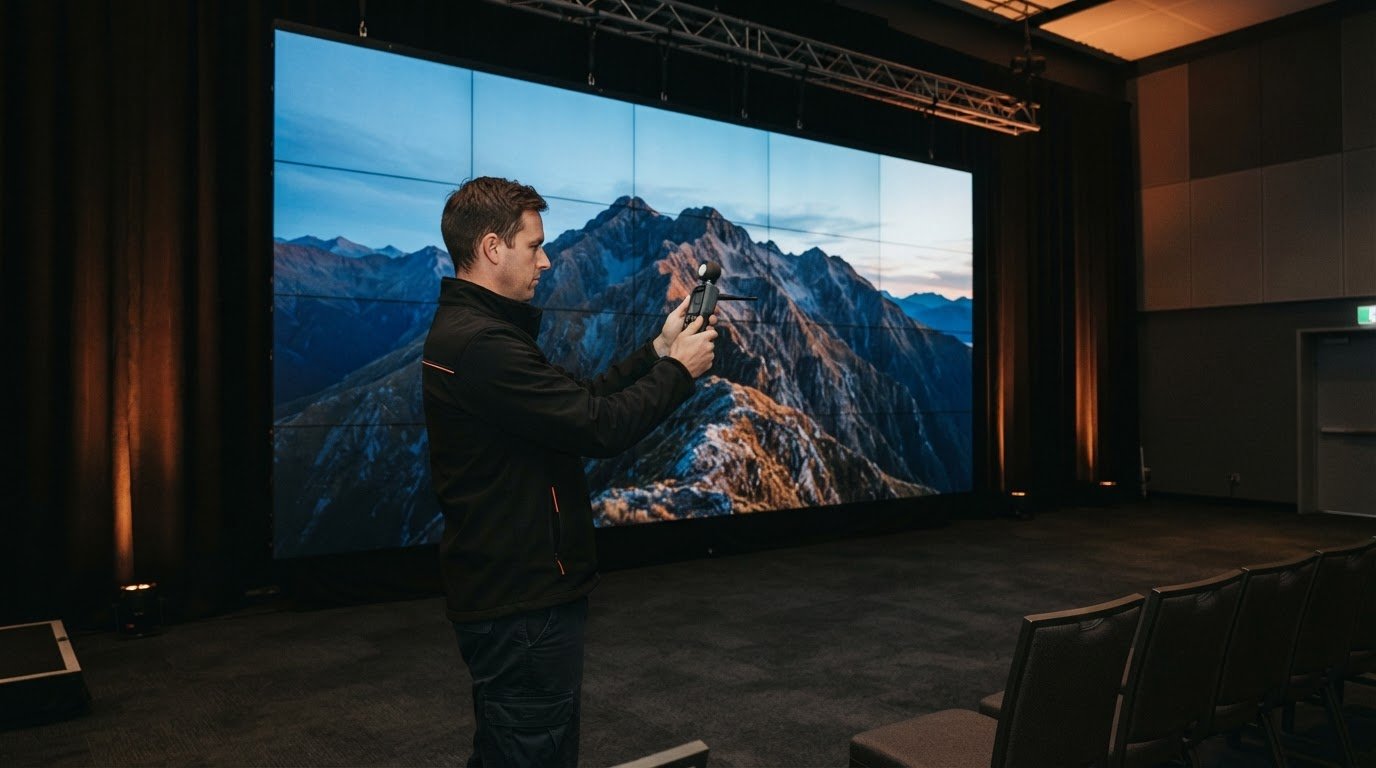
Good lighting needs to work from the seats and through the camera lens. Before event day, check where each recognition moment will happen, what the stage surfaces reflect and how the lighting changes will look on camera. These details help keep recipients visible while allowing the design to support the ceremony’s visual tone.
Use this pre-production checklist to make the plan practical:
Map positions: Mark where presenters stand, where nominees enter and where recipients pause for the handover and photographs.
Check sightlines: Consider views from different parts of the audience, stage depth and whether people or set pieces could cast shadows across key positions.
Review surfaces: Note reflective awards, clothing, stage finishes and screen content that may appear differently under changing colour or intensity.
Confirm camera needs: Identify the shots that matter, including the announcement, walk-up, handover and acceptance photograph. Check that each position is lit clearly within the frame.
Rehearse transitions: Test the change from announcement to entrance to acceptance with presenters and cameras in place, rather than assessing each lighting look on its own.
Check stage sightlines and recipient positions
Walk through the ceremony from the audience’s perspective. A recipient may enter from one side, stop beside the presenter and turn towards a camera for a photograph. Each position needs usable light. Consider the direction of the light as well as its brightness: light from an unsuitable angle can create facial shadows, while strong contrast between the person and the background can make details harder to read. Keep the award handover within a clearly lit area so the recipient’s expression and the award remain visible together.
Test colour and transitions for photography and video
Colour that looks balanced in the room may read differently on camera or against a particular surface. Test the planned colours on skin, clothing, the stage and the award itself. During rehearsal, capture the transition between the announcement, walk-up and acceptance states. Check whether faces remain clear as the recipient moves and whether the handover is easy to follow in the frame. Where screens are used, coordinate the lighting state with the displayed content so neither overwhelms the other.
Consistent face lighting gives award photography a dependable starting point, even as the stage look changes around it. That doesn’t mean every moment must look identical. It means changes should preserve enough clarity for photographs and video to capture the recipient and award naturally.
These checks bring lighting, stage positions and camera coverage into one plan. Plan camera-ready award lighting with LivewireAV as part of a coordinated production approach.
Deliver dynamic awards lighting with coordinated event production
Dynamic lighting works best as part of the production plan, not as a set of effects added around the edges. LivewireAV translates the event brief, venue and running order into a lighting design that supports each part of the ceremony. That means considering how lighting will work alongside stage activity, audio, screens and camera coverage, so changes feel connected rather than competing for attention.
What does a coordinated lighting production approach involve?
Planning begins with the intended audience experience and the practical conditions of the venue. The production team reviews the stage layout, programme and key recognition moments, then shapes a design around them. Intelligent lighting can create programmed changes to colour, intensity or direction; technicians prepare and operate cues so those changes happen in step with the event.
Coordination matters across departments. A lighting change may need to align with a presenter’s words, an audio sting, a screen transition or a recipient entering the stage. Clear cue notes and communication help operators understand what triggers each change, while presenters and stage personnel know what to expect. On-site technical operation then brings the plan into the room and responds calmly if live timing shifts.
The result is a joined-up approach: considered in advance, coordinated across the production and composed during the ceremony. Full technical production can connect lighting with audio and visual elements, rather than treating each as a separate part of the awards presentation.
How can event organisers prepare a useful production brief?
A practical brief gives the production team enough context to make informed design decisions. Include the running order and award sequence, stage layout, presenter and recipient positions, and any key moments that need a distinct treatment. Note the event’s tone, brand direction and audience, along with photography or livestream requirements.
It also helps to flag programme elements such as a performance, extended speeches or a presentation that uses screen content. These details allow the lighting and technical plan to reflect how the event will actually unfold, rather than relying on a generic stage look. For broader planning context, consider how premium event production in New Zealand brings the venue, programme and audience experience together.
With a clear brief, LivewireAV’s experienced technicians can shape an approach to suit the event and operate cues in coordination with the wider technical programme. LivewireAV provides intelligent lighting design and on-site technical operation to support preparation and live delivery. If you’re planning an awards presentation, discuss a tailored event production approach with the LivewireAV team.
Shape the lighting around the moments that matter
Your next step is to decide what the lighting should help the audience notice, and what should remain steady in the background. Start with the feeling you want the ceremony to leave: formal and composed, or energetic and celebratory. That direction gives the production team a clear basis for tailoring dynamic lighting for awards presentations to your programme and venue.
LivewireAV brings intelligent lighting design into a wider event production approach. Experienced technicians and operators manage live cues, coordinating lighting with audio, video and stage activity so each element supports the presentation. The result is a considered plan built around your event, not effects for their own sake.
Share your awards-night priorities and explore an approach that lets recipients take centre stage. Discuss dynamic lighting for your awards presentation with LivewireAV and take the next planning step with confidence.
Frequently Asked Questions
What is dynamic lighting for an awards presentation?
Dynamic lighting for awards presentations uses programmed changes to support the flow of the ceremony. A cue might respond to a presenter’s announcement, a musical transition or a planned stage entrance. The changes can be subtle, such as shifting intensity between programme segments, rather than constant movement or colour effects. Think of it as a set of visual signals that helps the audience follow the event.
Can dynamic lighting make an awards ceremony feel too theatrical?
Yes, if the changes are more prominent than the recognition moments or don’t suit the event’s tone. For a corporate awards dinner, frequent movement or dramatic colour shifts may feel out of place. A useful test is to ask whether each effect clarifies a transition or adds to the atmosphere. If it distracts from the presenter, recipient or award, simplify it or leave it out.
How should lighting change when an award winner is announced?
Keep the presenter easy to see as they announce the winner, then use a clear, measured transition as the recipient comes forward. Avoid changing the look so abruptly that guests lose track of the person entering the stage. Once the recipient reaches the handover position, settle the lighting so both people and the award can be seen clearly. The cue should support the announcement, not interrupt it.
What lighting is best for award presentation photos?
For award photos, use even, clear light on the faces and the award, and avoid strong shadows or glare on reflective surfaces. Check the planned handover position and the spot where recipients will pause for a picture. A brief, steady lighting hold during the photo gives the photographer time to capture the moment without a colour or intensity change altering the image.
Do awards presentation lighting cues need to be rehearsed?
Yes. Rehearsal lets the operator see how cues work with real presenter movement, pauses and stage positions, rather than relying on a plan alone. Walk through a category from its introduction to the recipient’s exit, and include a pause for applause. This helps identify cues that fire too early or leave the next person waiting in an unsuitable look, so the team can adjust before guests arrive.
Can dynamic lighting work with a formal awards dinner?
Yes. A formal dinner can use restrained changes to mark category transitions or recognise a recipient without turning the ceremony into a theatrical show. The lighting plan should also account for the room’s dining setup, so the stage remains legible while guests can comfortably follow the programme. A steady presentation look, paired with occasional subtle changes, can add definition while respecting the event’s composed atmosphere.
What information should an event organiser provide for an awards lighting plan?
Share the running order, award categories, stage layout, presenter and recipient entrances, and any planned performances or screen content. Add the event’s tone and brand direction, plus photography, video or livestream needs. Flag likely timing changes, such as speeches that may run long, and identify key photo moments. These details help the production team plan around the actual event, not just an idealised schedule.
Comments