Corporate Event Technical Management: 2026 Guide
What if the sound, visuals, lighting and presenter cues all followed the same plan? That’s the purpose of corporate event technical management: connecting the event brief and production systems to what happens on site, so each element supports the live programme.
It can be difficult to know where technical production responsibilities begin and end. Organisers already have plenty to manage, and a mismatch between audio, screens, lighting or show cues can add pressure at the worst moment. Clear planning and experienced on-site operators help coordinate those moving parts, so presenters and organisers can focus on the event itself.
This 2026 guide explains what a technical management plan should cover, how the production team works with organisers and presenters, and what to discuss as your event takes shape. From sound and LED walls to camera switching, lighting and cue management, you’ll get a practical view of how integrated production supports a well-run event.
Table of Contents
What corporate event technical management covers, beyond equipment hire
Corporate event technical management is the planning, coordination and operation of the technology and crew that support an event programme. It turns the brief into practical production decisions: what the audience needs to hear and see, how presenters will use the stage, and which technical cues must happen at each point.
In plain language, technical management makes sure an event’s sound, visuals, lighting and crew are planned and operated as one production.
That role is distinct from event strategy, venue management and equipment-only provision. Organisers set the event’s purpose, audience priorities and programme. Venue teams manage venue operations and share relevant site information. The technical lead translates the programme into a workable production plan, coordinating systems and crew around those needs. Clear communication defines the hand-offs, and the technical team supports rather than replaces the organiser. The broad discipline of Event management also includes creative, technical and logistical elements, while technical production focuses on the systems and operation behind the event experience.
Where technical management fits in the event team
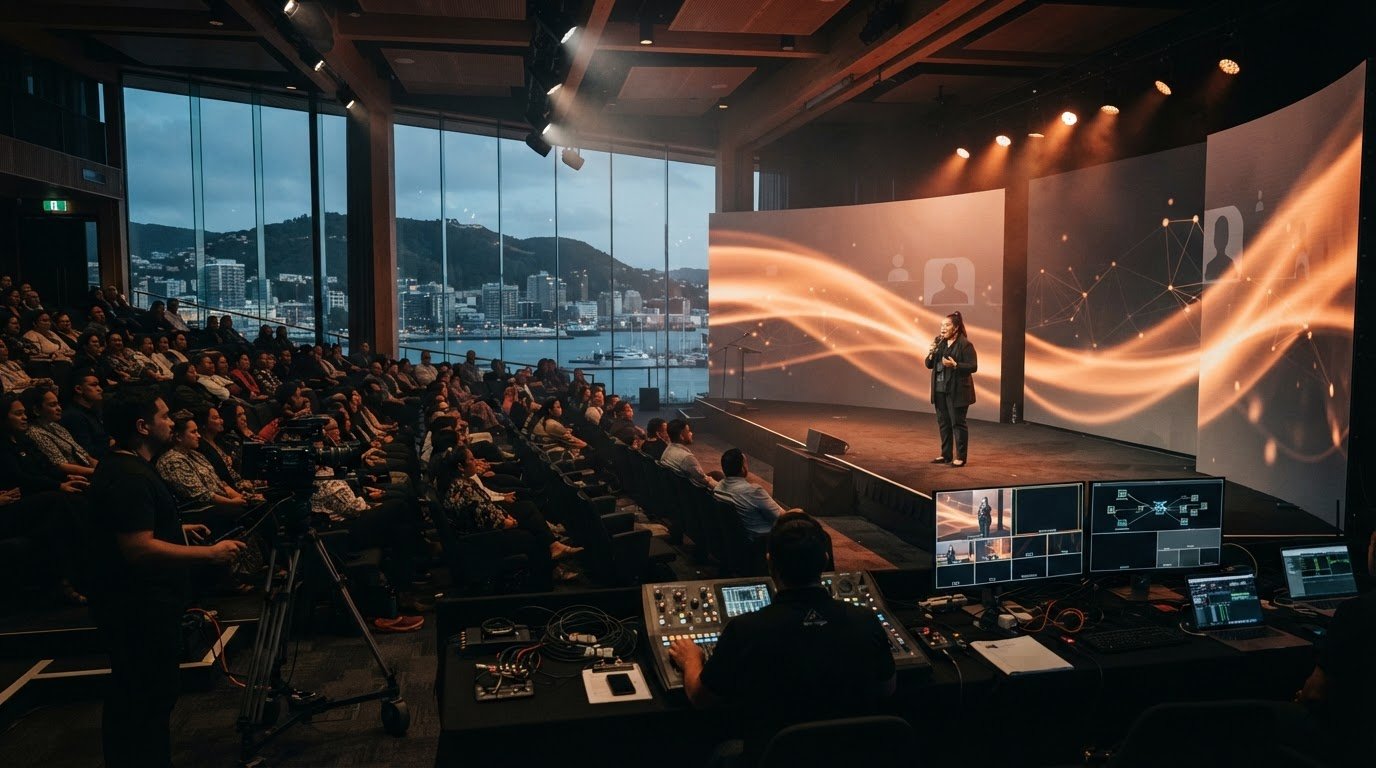
For a conference, the organiser might confirm the running order and introduce each speaker, while presenters supply their slides and follow agreed stage arrangements. The technical lead coordinates sound, screen content, lighting states and cue timing with the production crew. Venue staff provide information about the room and its systems. During a session, operators follow the agreed cues so the microphone, presentation and stage lighting are ready for each transition. Discussing these responsibilities in advance helps each role support the same programme.
Why equipment alone does not manage a live event
Equipment is only one part of delivery. A microphone, screen or lighting fixture needs to suit its intended use, be incorporated into a system, and be set up and tested. During the event, an operator manages the equipment and responds to the cue sequence. Without that coordination, the organiser may need to oversee technical details while also keeping the programme moving.
Operator roles make the plan practical for presenters and crew. A microphone can be ready as a speaker takes the stage, slides can advance at the right point, and lighting can change as the programme moves from a presentation to a panel. Those actions depend on clear cues and communication, not simply having equipment in the room.
LivewireAV’s full technical production brings planning, equipment and on-site operation together across audio, video and lighting. The organiser remains responsible for the event’s purpose and programme, while the technical team manages the production details that support it. This gives everyone a clear role from preparation through live delivery.
How corporate event technical management moves from brief to show
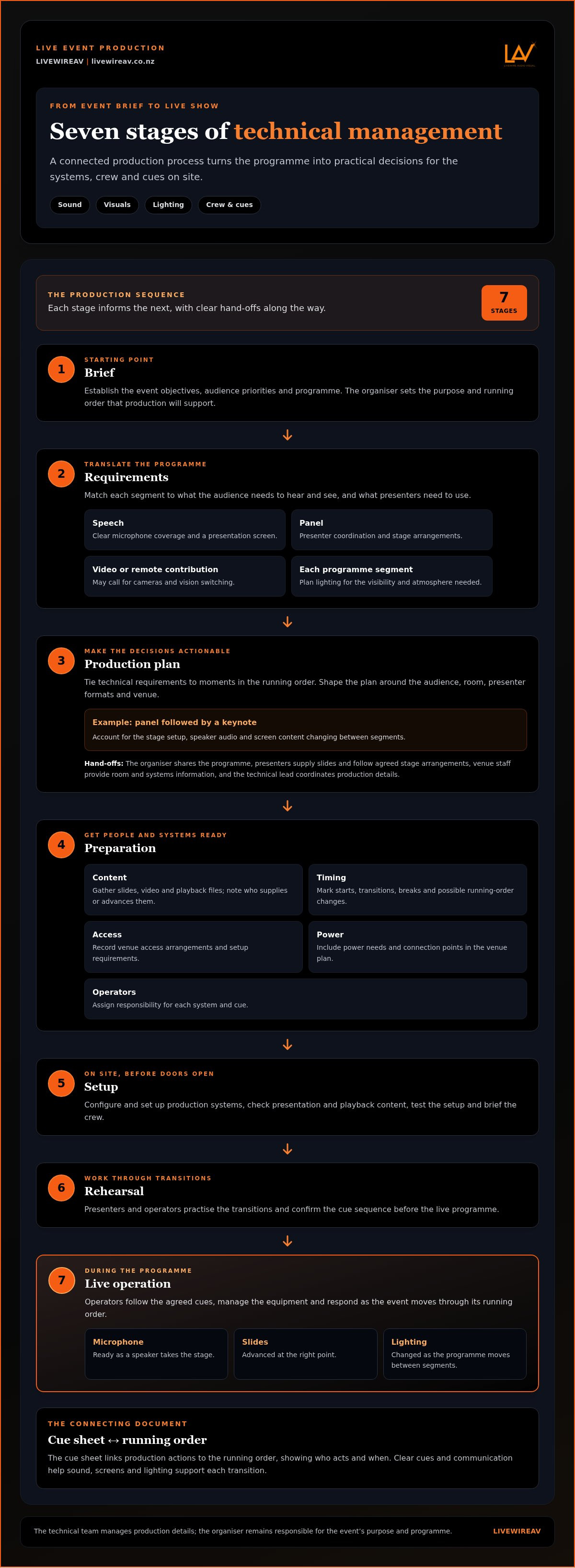
A clear production process turns the event brief into decisions the crew can act on. Corporate event technical management usually moves through seven stages: brief, requirements, production plan, preparation, setup, rehearsal and live operation. Starting coordination early helps avoid leaving technical decisions to the last minute.
The programme sets the rhythm. Audience size and room layout influence how sound and visuals need to reach attendees; presenter formats shape microphone and screen requirements; and the venue affects system positions and connections. For a panel followed by a keynote, for example, the plan needs to account for changes to the stage setup, speaker audio and screen content between segments.
This sequence also creates clear hand-offs between the organiser, presenters, venue team and operators. The International Live Events Association (ILEA) provides a broader industry reference for live event professionals; the production plan sets out the technical detail for the specific event.
Turning the event brief into production requirements
Start with the event objectives and agenda, then translate each programme element into a practical requirement. A speech may call for clear microphone coverage and a presentation screen. A panel adds presenter coordination, while video playback or a remote contribution may require cameras and vision switching. Lighting can be planned around the visibility and atmosphere needed for each segment.
Tie each requirement to a moment in the running order. This helps equipment and crew decisions respond to the audience experience, rather than becoming a separate technical list.
Preparing systems, people and show cues
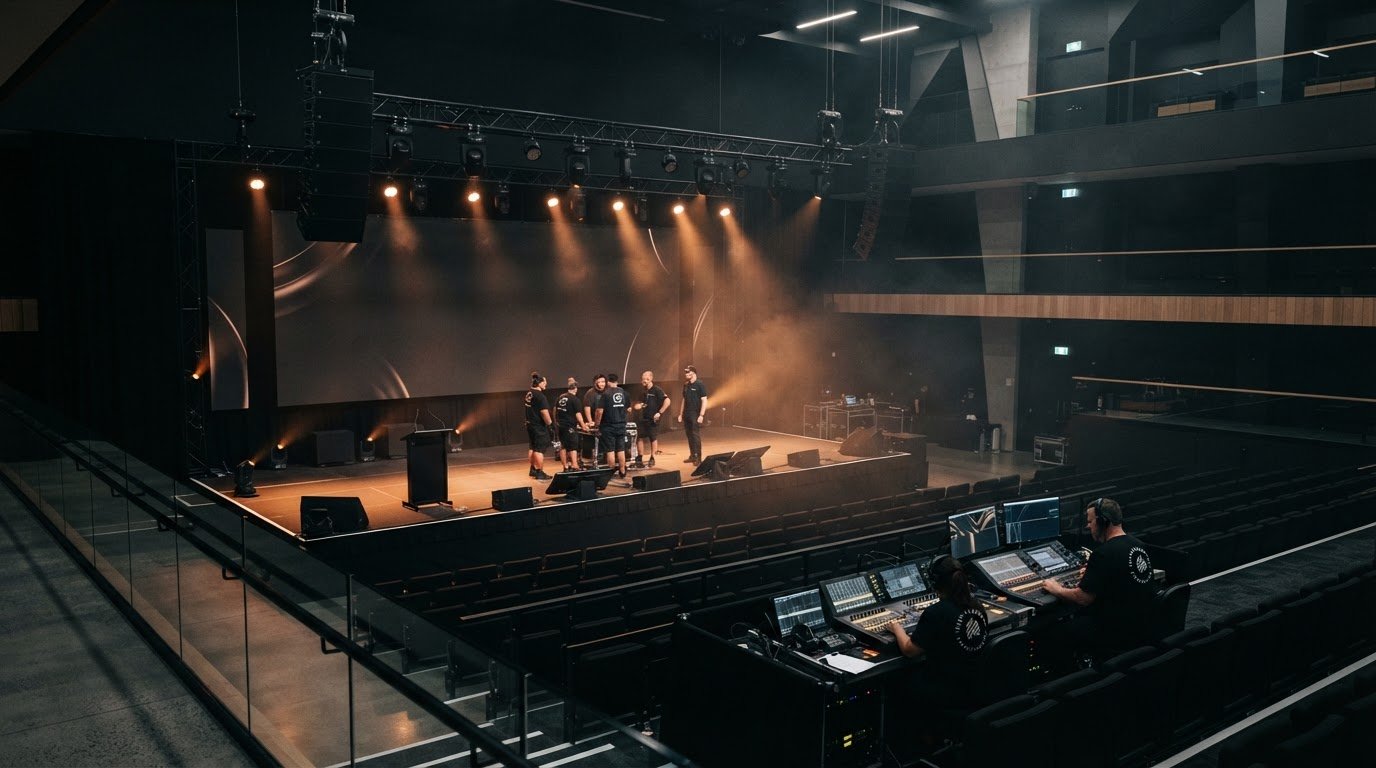
Before doors open, the production team configures and sets up the systems, checks presentation and playback content, tests the setup and briefs the crew. Rehearsal gives presenters and operators a chance to work through transitions and confirm the cue sequence. A cue sheet links those actions to the running order, showing who acts and when.
For more conference-specific production considerations, see this audio-visual guide for large conferences.
Content: Gather slides, video and playback files, and note who supplies or advances them.
Timing: Mark start times, transitions, breaks and possible changes to the running order.
Access: Record venue access arrangements and setup requirements.
Power: Include power needs and connection points in the venue plan.
Operators: Assign responsibility for each system and cue.
LivewireAV’s production planning connects these details to on-site operation. Explore full technical production for corporate events as you shape a plan around your programme.
How to assess corporate event technical management, not just the gear
An equipment list tells you what will be in the room, but not how it will serve the event. Assess how technical choices connect to the agenda, venue conditions and audience experience, and who is responsible for putting the plan into practice.
Use this framework to understand the level of support being planned:
For example, plan a screen around the content it needs to display and the audience’s view of it. Microphones should suit the presenter format, while lighting and camera positions should support the stage activity. These decisions work best when considered together, not as separate equipment requests.
LivewireAV’s full technical production brings production decisions together with live delivery.
What an integrated technical plan should make clear
A clear plan records technical requirements, who is responsible for each system, and the cues linked to key moments in the running order. It should also set out how organisers and technical crew will share updates to timing or content. Coordinating audio, video and lighting helps each element support the programme rather than compete for attention.
How equipment and operators work as one service
At a presentation, an operator may manage microphones, advance slides and follow lighting cues as speakers take their turns. For a panel, camera packages and vision switching can support what the audience sees on screen, while sound operators manage microphones as the discussion moves between panellists.
Equipment provides the tools; experienced technicians and on-site operators manage them in context. LivewireAV combines production equipment with technical planning and operation across sound, video and lighting. That joined-up approach is the difference between having equipment on site and having a technical plan organised around the event.
How technical management adapts to corporate event formats and risks
The production plan should fit the format, not just the equipment list. A conference may move between plenary sessions and breakouts, while a presentation centres on a speaker and their content. An exhibition needs sound and visuals suited to its layout and attendee movement; a corporate gathering may rely on speeches, background visuals and short transitions. Corporate event technical management accounts for these differences alongside the venue layout, access and available infrastructure.
Matching production choices to the event format
Microphone and sound requirements depend on who is speaking, how the room is arranged and whether attendees will ask questions. Screen placement and size should support content visibility across the space, while camera positions and vision switching can help show speakers or presentation material. For hybrid events, the plan also needs to coordinate camera feeds, presenter audio, vision switching and the livestream, so remote participants can follow the programme. See the hybrid conference AV setup guide for more on these production considerations.
Managing changes and technical dependencies calmly
Changes are easier to manage when the production team understands what depends on what. A revised running order may shift cues; updated slides or video can affect content checks; and a presenter handover may require a microphone or camera change. A current run sheet helps the organiser and operators see how an adjustment affects the sequence.
Agree who can approve a change, who needs to be told and which communication channel the team will use. Identify key dependencies, such as the content needed for a screen cue, and assign an escalation role for decisions that affect the wider programme. Contingency planning prepares the team for possible disruption, but does not promise that disruption cannot occur. Clear roles and updates help the team respond in an orderly way.
For a production plan tailored to your event format, explore LivewireAV’s technical production for corporate events across New Zealand.
Plan corporate event technical management with LivewireAV
A connected production plan brings sound, visuals, lighting, crew and show cues together around the event programme. It gives organisers a clear view of what’s being prepared, who is managing each technical element and how production supports presenters and attendees.
LivewireAV provides full technical production for corporate events across New Zealand, including production planning, equipment, experienced technicians and on-site operation. The team coordinates audio, video and lighting to fit the brief, then operators manage equipment and cues during the event. This division of work helps keep technical responsibilities clear while the organiser focuses on the wider event.
What to prepare before discussing your event
You don’t need every detail finalised before a planning conversation. A draft brief can outline the event and identify decisions still to be made. Gather the information you have, then separate confirmed requirements from open questions.
Format and dates: Note whether it’s a conference, presentation, exhibition, corporate gathering or hybrid event, along with the event dates.
Programme: Share the draft agenda, session sequence and key transitions.
Audience: Describe the intended audience and whether people will participate remotely.
Venue: Include known room details, access information and available technical information.
Technical priorities: List presentation content, speaker needs, staging preferences and the sound, screen, lighting or camera requirements you already know.
Mark anything that’s undecided. For example, you might know a keynote needs presentation slides, while the final content or cue timing is still to come. Separating confirmed details from open questions keeps early planning focused and gives the production team a clear basis for developing the technical requirements.
What working with an integrated production team looks like
Planning connects the brief to the production approach. Equipment is prepared for the event, technical systems are set up, and the crew coordinates with organisers and presenters around the programme. On site, experienced operators manage equipment and cues, keeping the technical plan connected to the live running order. Sound, visuals and lighting are considered as parts of one production, not isolated items.
The organiser remains in charge of event objectives and decisions, while technical production is managed as a defined part of delivery. A shared plan also gives the team a reference point for updates to content, timing or presenter arrangements.
Ready to map out your production requirements? Discuss your event with LivewireAV and request a tailored proposal for your corporate event technical management needs.
Bring your event plan together with confidence
Strong corporate event technical management connects the event brief to the production plan and live show. Equipment choices should fit the programme, venue and audience, with responsibilities and cues clear to the organiser, presenters and technical crew. Planning for the event format, including any hybrid requirements, helps the team prepare for changes without leaving every decision until the day.
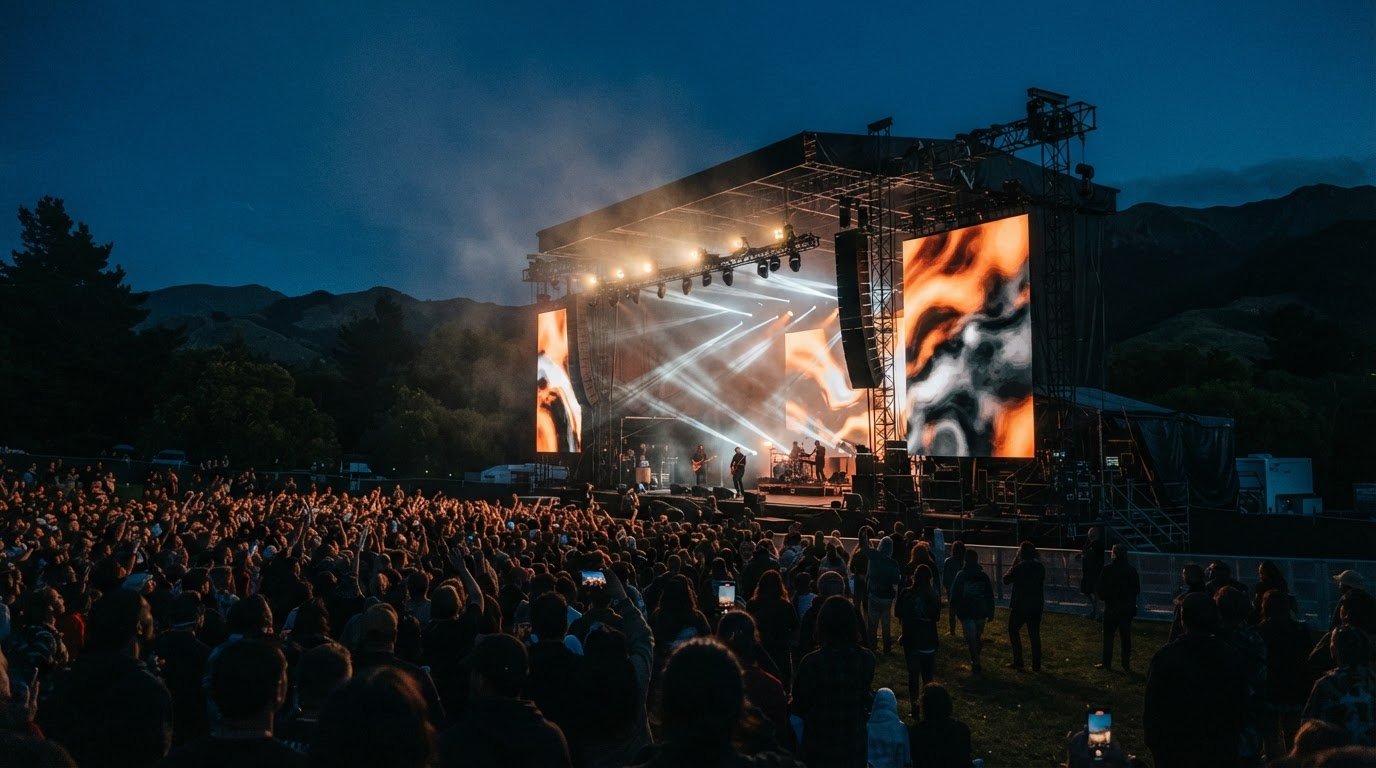
LivewireAV provides full technical production across New Zealand, with audio, video, lighting, LED walls and camera packages. Experienced technicians and operators manage equipment and cues on site, coordinating production around the event’s running order. This joined-up approach helps organisers keep their focus on the wider event.
Start with your format, draft programme, venue details and technical priorities. Open questions can be part of the planning conversation. Discuss your corporate event technical requirements with LivewireAV and request a tailored proposal. With a clear brief and a coordinated production team, you can move into planning with greater confidence.
Frequently Asked Questions
What does corporate event technical management include?
Corporate event technical management includes planning, coordinating and operating the technology and crew that support an event. It can cover production requirements, sound, video, lighting, equipment preparation, setup, testing and on-site cue operation. The plan connects those elements to the agenda, presenters and venue. The organiser remains responsible for the event’s objectives and programme, while the technical team manages the production details that help deliver them.
What is the difference between event management and technical event management?
Event management covers the wider event, including its objectives, audience, programme and logistics. Technical event management focuses on the production systems and crew that support that programme. For example, an organiser may set the agenda and coordinate speakers, while the technical lead plans microphones, screens, lighting and show cues. The roles work together, with agreed responsibilities and communication connecting the event plan to its technical delivery.
Can a corporate event run without a technical production manager?
Yes, an event can run without a dedicated technical production manager, particularly if its technical requirements are simple. Someone still needs to coordinate equipment, content, setup and cues, however. If those tasks fall to the organiser, they may need to divide their attention between production details and the wider event. For events with multiple presenters, complex transitions or hybrid elements, a technical lead can help clarify responsibilities and coordinate the production plan.
How does technical management support a hybrid corporate event?
Technical management coordinates the in-room production with what remote attendees see and hear. That can involve camera positions, presenter and audience audio, vision switching and livestream operation. The production plan should account for each part of the programme, including speaker handovers and presentation content, so operators know which feeds and cues are needed. This helps organisers plan for two audience experiences rather than treating the livestream as an add-on.
What happens if the event programme or technical requirements change?
The team checks how a change affects equipment, content, crew responsibilities and show cues, then updates the run sheet and communicates the revision through the agreed channel. A new speaker, for instance, may affect microphone arrangements and the timing of a presentation cue. Clear escalation roles help the right people make decisions. Contingency planning prepares the team to respond; it can’t promise that changes or disruptions won’t occur.
When should technical planning begin for a corporate event?
Begin technical planning as soon as the event format, draft programme and venue information start to take shape. Early discussion gives the team time to translate the agenda into production requirements and identify questions about content, access, power or presenter needs. The plan can develop as details are confirmed. Waiting until the programme is final may leave less room to coordinate technical choices with the venue and event schedule.
Does technical event management include equipment and on-site operators?
Yes. Full technical production brings equipment and technical labour together, with operators managing systems and cues during the event. Depending on the programme, production may involve sound systems, LED walls, cameras, vision switching and lighting. The equipment is prepared and set up to support the event requirements; on site, technicians operate it in context. This differs from equipment-only provision, where live cue coordination isn’t the central focus.
Comments