Technical Production for Product Launches: The Professional Guide to High-Stakes Reveals
Updated: Aug 1
The success of a product reveal is rarely decided by the product itself, but by the technical infrastructure supporting it. When the house lights dim and the countdown begins, you shouldn't be worrying about signal failure or audio feedback. Professional technical production for product launches is about more than just hiring gear; it's about engineering a zero-failure environment where your brand vision is protected. Precision. Stability. Control. These are the foundations of a reveal that resonates.
You understand that a single technical glitch can overshadow months of development and marketing effort. It's a high-stakes moment that demands absolute composure from every department involved. This guide will help you master the technical complexities of your next launch, providing expert insights into the audio, visual, and lighting systems required for a seamless execution. We will examine high-end AV infrastructure, how to manage technical vendors with confidence, and the logistics of delivering a broadcast-quality event reveal that leaves nothing to chance.
Table of Contents
What is Technical Production for Product Launches?
Technical production for product launches is the disciplined integration of sound, vision, and light to execute a singular, high-stakes moment. It is the synchronised management of complex systems designed to facilitate a high-impact reveal. While standard corporate AV focuses on basic visibility and audibility, specialised launch production is engineered for the "reveal." This involves more than just equipment. It requires a meticulous translation of brand values into physical infrastructure. Precision. Stability. Control. These are the standards by which a debut is measured.
In a standard meeting, a flickering screen is a nuisance. In a product launch, it is a failure of brand promise. This is why a zero-failure mindset is essential for any debut. Every component, from the Essential AV Infrastructure to the backup power systems, must be redundant and rigorously tested. Professional technical production for product launches ensures that the marketing team's vision is delivered without compromise, protecting the reputation of the brand during its most vulnerable moment.
The Core Pillars of Launch Production
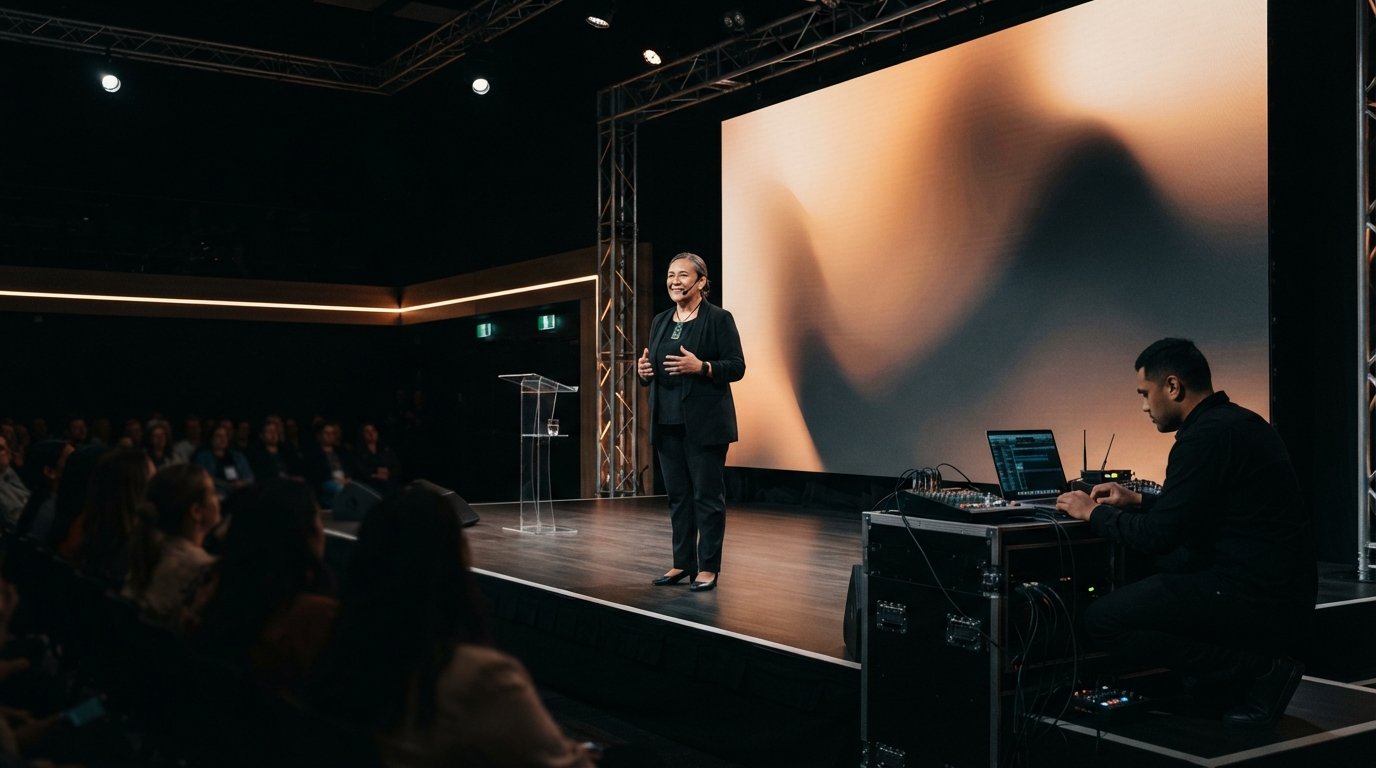
Success relies on three foundational elements. Audio engineering provides the clarity needed for keynotes and the immersive depth for cinematic transitions. It ensures every word is heard with perfect intonation across the entire venue. Visual technology, such as high-resolution LED walls and precision projection mapping, creates a backdrop that remains vibrant even under intense stage lighting. When paired with high-end 3D rendering and CGI from
, these systems can transform a simple presentation into a truly immersive brand experience. Finally, intelligent lighting design directs the audience's gaze. It builds anticipation through shadow and highlight, ensuring the product remains the undisputed hero of the room.
Why Professional Production is a Strategic Investment
Essential AV Infrastructure for High-Impact Reveals
High-stakes reveals require a level of technical sophistication that standard equipment simply cannot provide. The infrastructure behind a successful launch is a complex network of integrated systems designed to work in absolute harmony. This is where technical production for product launches moves beyond simple equipment hire and into the territory of precision engineering. Stability. Clarity. Impact. These are the non-negotiable standards for any hardware deployed in a high-pressure environment.
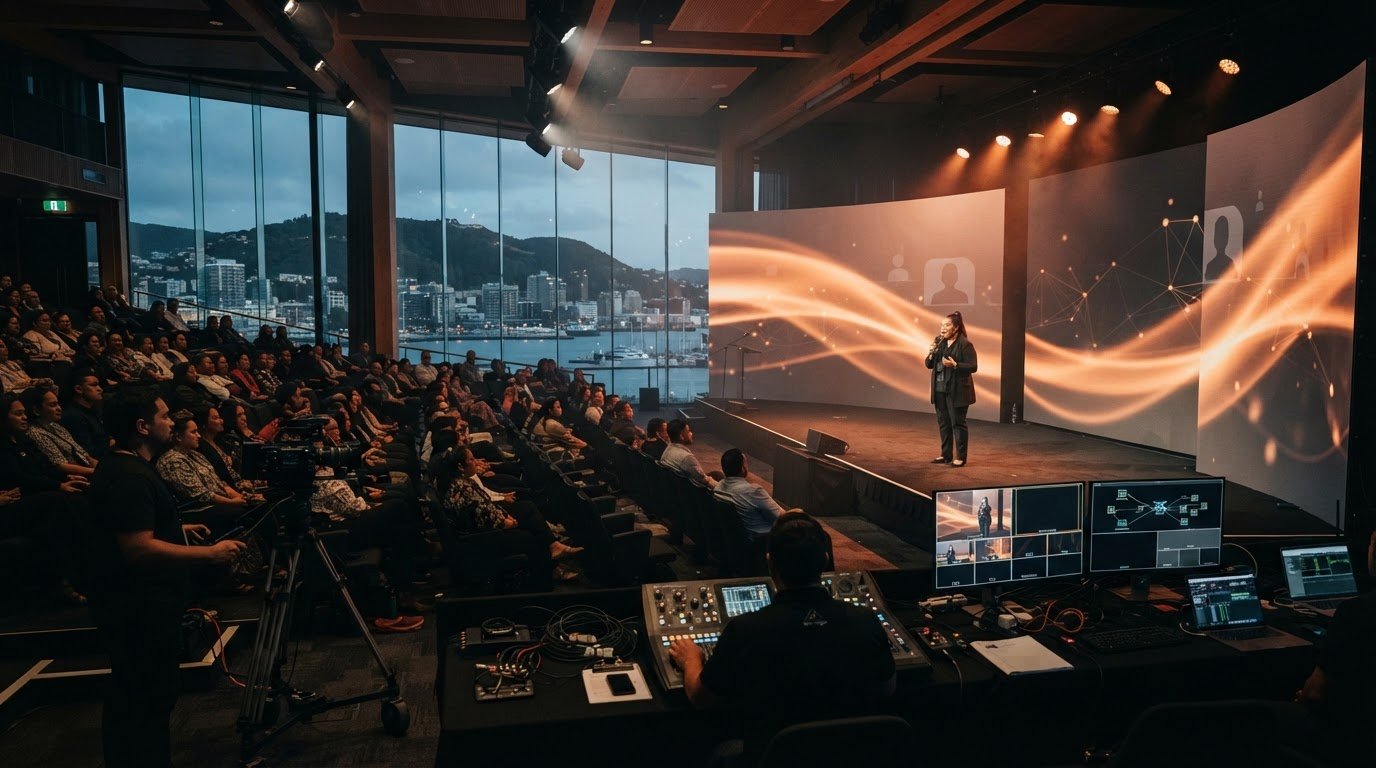
The "brain" of this entire operation is the vision gallery. Here, vision switching technology allows a technical director to cut between multi-camera feeds, pre-recorded brand content, and live presentation slides with millisecond accuracy. This central control ensures that every transition is intentional and every visual cue is hit with broadcast-quality finesse. Without this level of centralised control, the risk of a disjointed audience experience increases significantly.
Visual Excellence with LED Walls and Projection
Modern product storytelling relies heavily on the quality of the display. While traditional projection has its place, high-resolution LED walls and projection mapping offer a level of brightness and contrast that standard systems cannot match. When selecting an LED solution, the pixel pitch is critical. A finer pitch ensures that the image remains crisp for guests in the front row and prevents moiré patterns when the event is filmed for social media. Integrating wide-format content across these displays creates a cinematic atmosphere that makes the brand feel larger than life.
Audio Engineering for Immersive Brand Sound
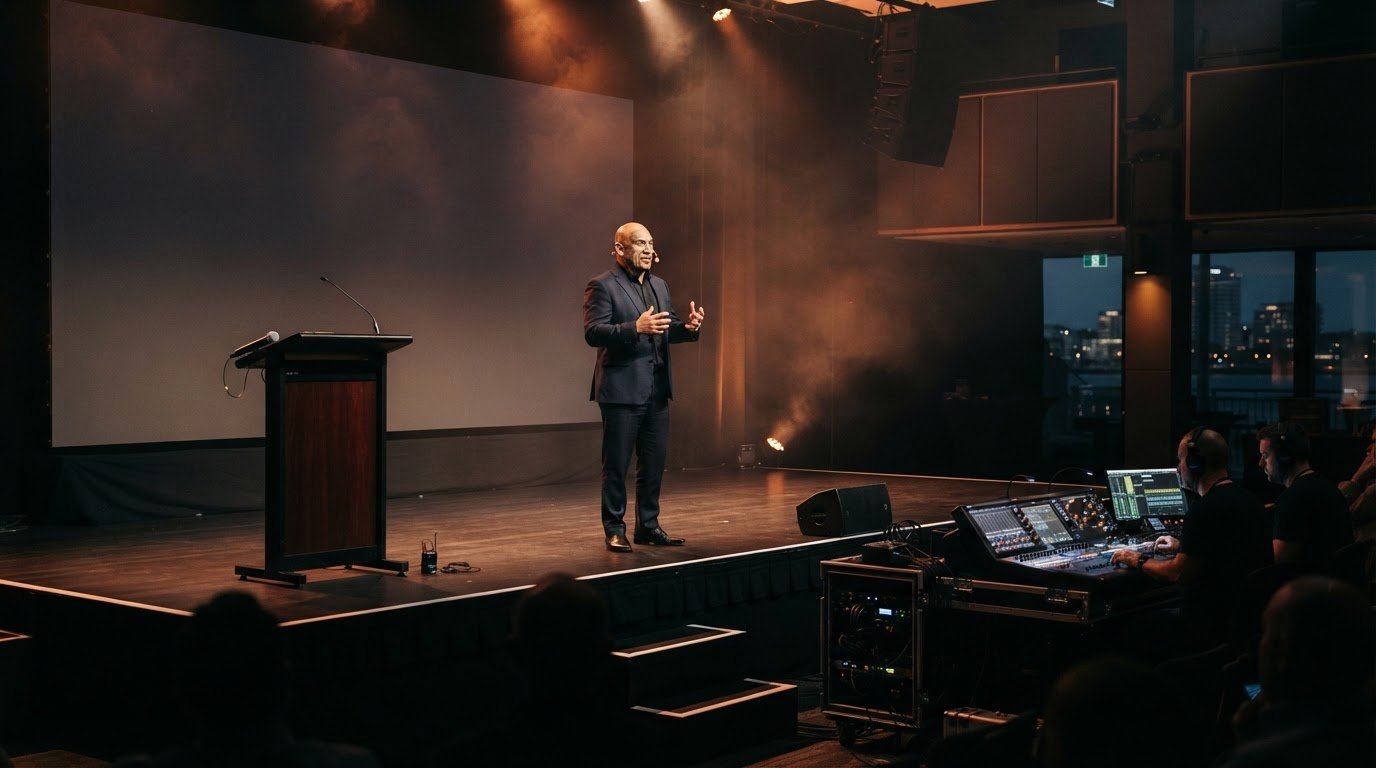
Audio is often the most undervalued component of a launch, yet it is the primary driver of emotional impact. For large-scale conference spaces, audio line array systems are essential. Unlike standard point-source speakers, line arrays deliver uniform sound pressure levels from the front of the room to the very back. This ensures that every guest experiences the same audio fidelity. In tech-heavy environments, managing wireless microphone frequencies is equally vital to prevent interference from other devices. By using spatial audio, we can direct the audience's attention to specific areas of the stage, enhancing the tension before the final reveal.
Achieving this level of integration requires meticulous planning long before the first case is loaded onto the truck. If you are beginning to map out your event requirements, engaging a partner for full technical production early in the process will ensure your infrastructure is venue-aware and fit for purpose. This proactive approach eliminates the logistical friction that often occurs when managing multiple technical departments in isolation.
Behind the scenes, the invisible architecture of staging and rigging provides the foundation for safety and sightlines. Every LED panel and lighting fixture must be secured with calculated weight loads and certified rigging points. This disciplined focus on the "unseen" elements of production is what allows the creative elements to take centre stage without distraction.
The Reveal Moment: Precision Cues and Vision Switching
The reveal is the pivot point of the entire event. It's the moment where months of strategic planning and marketing effort culminate in a single, high-stakes sequence. Technical production for product launches is ultimately judged by these few seconds. A Technical Director (TD) sits at the centre of this operation, calling every cue with absolute composure. They coordinate the audio stings, the lighting shifts, and the video playback in a single, synchronised action. This level of technical live event support ensures that the transition from darkness to the product debut is sharp, deliberate, and impactful. Timing. Coordination. Execution. These are the markers of a professional reveal.
Vision Switching and Multi-Camera Production
Vision switching acts as the visual choreographer for the launch. By using professional vision switchers, the technical team manages complex routing between live camera feeds, presentation slides, and pre-recorded brand films. Integrating multiple camera angles is essential for a dynamic experience; it allows the audience to see the product’s fine details while maintaining a sense of the room's energy. These visual shifts must be coordinated with live event lighting design to ensure that as the vision cuts to the product, the lighting immediately draws the eye to the same physical point. This integration prevents the "visual lag" that often occurs in less sophisticated setups.
Reliability is built on redundancy. Every primary system has a secondary backup running in parallel. If a media server pauses or a signal drops, the vision switcher can instantly failover to a redundant source without the audience ever noticing a flicker. This "hot-standby" approach is a standard requirement for high-stakes reveals where there are no second chances.
Rehearsals and Technical Run-Throughs
A flawless reveal is never an accident. It's the result of rigorous "cue-to-cue" rehearsals. During these sessions, every second of the launch sequence is practiced repeatedly until the timing is instinctive. The focus is on fine-tuning the synchronisation between audio stings and lighting transitions to create a cohesive sensory experience. We test the limits of the equipment and the environment to ensure that every variable is accounted for before the doors open to guests.
Technical control also extends to the presenters on stage. Managing their comfort is vital for a polished delivery. We use confidence monitors to display notes or timers and clear talkback systems to provide discreet instructions from the gallery. When a presenter feels supported by the technical environment, their performance becomes more natural and authoritative. This collaborative approach ensures that the human element of the launch is just as precise as the technology supporting it.

Expanding Reach through Hybrid and Livestreaming Integration
A modern product rollout is no longer confined to the four walls of a venue. To maximise impact, technical production for product launches must now account for a global audience through high-end hybrid and livestreaming integration. This is not a simple "webinar" with a static camera at the back of the room. It is a professional event broadcast. The distinction lies in the quality of the encoding, the complexity of the vision switching, and the way the "second audience" is managed. Stability. Consistency. Reach. These are the markers of a successful digital extension.
Managing a hybrid event requires a dual-focused approach. While the in-person guests experience the room's energy, the remote viewers require a dedicated audio mix and specific camera cuts to remain engaged. We treat the livestream as a separate production stream, ensuring that the digital viewer feels like a participant rather than an observer. Low-latency feeds are essential here, particularly for real-time engagement and Q&A sessions where a delay can break the momentum of the presentation.
The Infrastructure of a Professional Livestream
Reliability in a broadcast environment is built on hardware-based encoders and redundant internet connections. We often use bonded cellular or dedicated fibre lines to ensure the stream remains live even if a primary connection fails. For national or international rollouts, professional broadcast bridges allow us to integrate remote presenters from different time zones with high-fidelity audio and video. To maintain brand authority on screen, we use customised graphics and lower-thirds that match the physical event's aesthetic. This level of detail ensures that your brand looks as professional on a smartphone as it does on a 10-metre LED wall.
Hybrid Event Engagement Strategies
Bridging the gap between physical and digital attendees requires specific technical platforms. We integrate live polling and interactive product demos that allow remote viewers to participate in the reveal moment. Beyond the live stream, the technical environment is designed to capture high-quality recordings. These files are not just archives; they are valuable assets for post-event marketing and social media content. If you are planning a national rollout, engaging a partner for hybrid and livestream events early in the planning phase will ensure your digital infrastructure is as robust as your physical stage.
Every element of the hybrid setup is tested during the same rigorous cue-to-cue rehearsals used for the live reveal. We verify the signal path from the camera to the encoder and finally to the end-user's device. This methodical approach ensures that when the "Go Live" command is given, the transition is seamless for every viewer, regardless of their location. By centralising control of both the room and the stream, we eliminate the risk of a disjointed brand experience.
Selecting a Technical Production Partner in New Zealand
Selecting the right partner is the final safeguard for your brand. Technical production for product launches requires more than just an equipment list; it requires a specialist who understands the logistical "why" behind every cable run. You need to evaluate a partner’s inventory to ensure they own and maintain modern LED walls and audio line array systems. Ownership suggests a deeper level of technical literacy and reliability. It means the technicians on-site are intimately familiar with the gear they are operating, which is vital when every second counts. Precision. Reliability. Composure. These are the traits that define a successful partnership.
Beyond the hardware, look for the "Calm Professional." In high-stakes environments, technical knowledge must be paired with composure. A seasoned partner remains the steady hand behind the scenes, possessing the discipline required to handle complexity while letting your work take centre stage. Specialised technical production for product launches is a discipline of rigour and precision. The value of a partner who offers end-to-end technical management cannot be overstated. They act as the single point of accountability, bridging the gap between your marketing vision and the physical event infrastructure.
Technical Site Visits and Planning
A technical site visit is the foundation of a zero-failure plan. It's during these walkthroughs that we identify potential venue constraints before they become show-day problems. Meticulous planning at this stage prevents logistical friction during load-in. During a site visit, your partner should assess:
Power distribution and circuit capacity to handle high-draw LED walls.
Ceiling load limits and certified rigging points for safe equipment suspension.
The acoustic profile of the room to ensure uniform sound coverage.
Access routes and lift dimensions for efficient load-in and pack-down.
By collaborating directly with venue managers, your production partner ensures that the technical setup integrates seamlessly with the venue's existing facilities. This proactive approach is what distinguishes a standard hire company from a professional production partner who is truly venue-aware.
Defining Your Technical Brief
A successful launch starts with a clear brief. Rather than focusing solely on technical specifications, communicate your brand vision and the emotional impact you want to achieve. This allows your production partner to propose the most effective audio, visual, and lighting solutions. When evaluating proposals, ask specific questions about backup and redundancy. You need to know exactly how the team will respond if a primary signal path fails. Clear communication channels between your marketing team and the technical lead are essential. This alignment ensures that every technical decision supports the overarching goals of the launch, resulting in a seamless, professional experience from the first guest's arrival to the final pack-down.
Securing Your Brand's Next Major Debut
Mastering the reveal requires more than high-end hardware. It demands the synchronised integration of vision, sound, and light under the guidance of a composed technical lead. We have examined how high-resolution LED walls and precise vision switching create a cinematic environment, while meticulous site visits eliminate venue-specific risks before they can impact your event. These elements provide the stability needed to protect your brand's reputation during its most critical moment.
Professional technical production for product launches is a strategic investment in excellence. It ensures the transition from anticipation to reality is seamless, allowing your marketing vision to remain the undisputed focus. With over 10 years of technical production experience, LivewireAV provides nationwide service for corporate and sporting events, prioritising meticulous planning and zero-failure execution. Our team understands that in high-stakes environments, composure is just as important as the equipment itself.
When you are ready to remove the technical stress from your planning process, partner with LivewireAV for your next high-stakes product launch. Let us manage the technical complexity while you focus on the impact of your new release. Your next reveal deserves the precision of a seasoned partner who values reliability above all else.
Frequently Asked Questions
What is the difference between AV hire and full technical production for a launch?
Full technical production involves the synchronised management of all systems, whereas AV hire is simply the provision of equipment. For a launch, you need a partner who engineers the entire environment to support the reveal moment. This includes pre-event planning, technical site visits, and live cue management to ensure the hardware performs as a cohesive system rather than isolated components.
How early should I engage a technical production company for my product launch?
Engaging a partner at least three to six months in advance is ideal. Early involvement allows the technical team to assess potential venues for power and rigging constraints before you sign a contract. This proactive approach ensures the infrastructure is fit for purpose and prevents costly last-minute adjustments. It also provides ample time for custom content testing and system design.
Do I need a separate livestreaming team if I already have an AV company?
It's more efficient to use a single partner who provides integrated livestreaming alongside the room AV. Technical production for product launches requires absolute synchronisation between the in-person experience and the digital feed. Using one team ensures that vision switching and audio mixes are managed from a central gallery, reducing the risk of signal lag or disjointed cues.
What are the most common technical failures during product reveals and how are they avoided?
Signal failure, audio feedback, and mistimed cues are the most frequent issues. These are avoided through primary and secondary system redundancy and rigorous cue-to-cue rehearsals. We use "hot-standby" media servers that can take over instantly if a primary source pauses. This disciplined approach ensures the audience never sees a flicker or hears a drop in audio quality.
Is an LED wall better than projection for a high-stakes product reveal?
High-resolution LED walls are generally superior for high-stakes reveals due to their brightness and contrast. Unlike projection, LED displays aren't affected by ambient stage lighting and provide a much crisper image for guests and cameras. This ensures your product looks vibrant in every social media photo shared from the room, maintaining brand authority across all channels.
How many technicians are typically required for a professional product launch?
A standard professional launch typically requires a team of four to eight specialists. This includes a Technical Director to call cues, plus dedicated operators for vision switching, audio engineering, and intelligent lighting. Larger events with complex rigging or multi-camera packages will require additional crew to maintain safety and control throughout the pack-in and live show.
What technical information does my production partner need from the venue?
Your partner needs detailed information on power capacity, rigging point locations, and venue dimensions. They also require details on loading dock access and lift sizes to plan the logistics of the pack-in. Providing this information early allows for a more accurate technical proposal and ensures that the equipment selected is venue-aware and logistically feasible.
Can you integrate my brand's specific lighting colours into the show design?
Yes, we use intelligent lighting fixtures to precisely match your brand's specific colour palette. By using CMY colour mixing or specific HEX codes, we ensure the atmosphere of the room aligns perfectly with your marketing assets. This creates a cohesive visual identity that reinforces your brand's presence from the moment guests enter the room until the final reveal.
Comments