Professional Mic Systems for Events: 2026 Technical Guide
What if reliable event audio depends less on the microphone than on the planning behind it? Choosing professional microphone systems for events can feel like a choice between lapel, headset or handheld, but even the right microphone can falter if wireless frequencies aren’t coordinated with the venue and other equipment. At a keynote, a brief dropout is more than a technical glitch.
You already know clear speech matters to every person in the room, and to everyone watching online or listening to the recording. This guide explains how microphone types, RF coordination and system setup work together to reduce interference and keep presentations sounding consistent, without leaving you to decode technical jargon on your own.
We’ll cover how to match microphones to speakers and event formats, what to consider when planning wireless frequencies, and how audio can feed smoothly into livestreams and recordings. With more than 10 years of experience in high-pressure environments, LivewireAV manages technical production from design to execution, so you can focus on the event while the details are handled behind the scenes.
Table of Contents
The Critical Role of Professional Microphone Systems in Event Success
Understanding Wireless RF Coordination and Digital Signal Paths
Evaluating Microphone Form Factors: Handheld, Lavalier, and Headset Systems
Integrating Microphones into Large-Scale Venue Audio Engineering
Zero-Failure Audio: Why Managed Technical Production Outperforms Dry Hire
The Critical Role of Professional Microphone Systems in Event Success
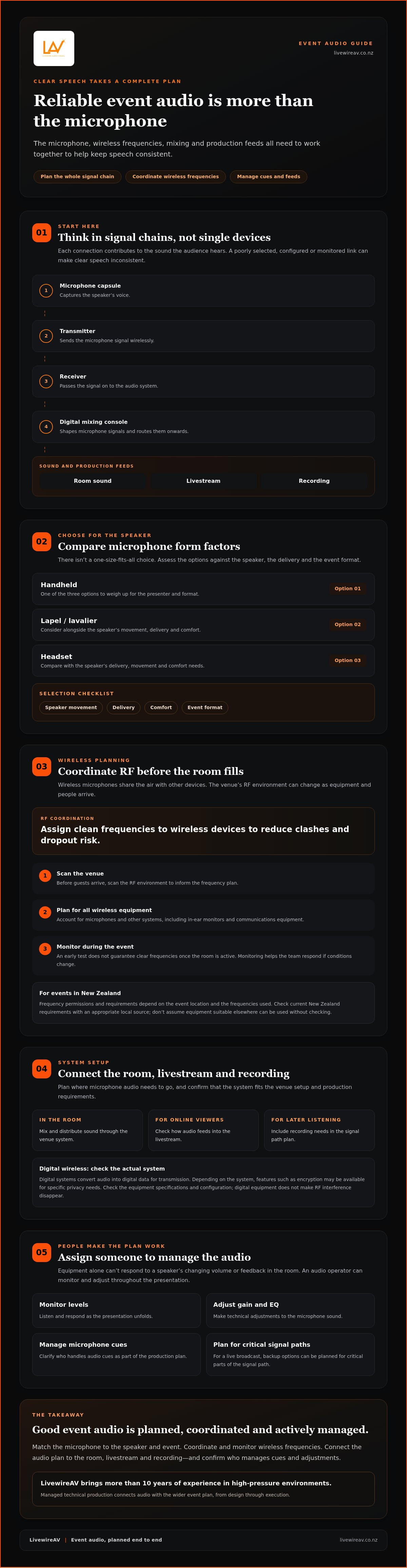
A microphone is only one part of the sound system. A professional wireless setup is a managed chain of components: the capsule captures the speaker’s voice, the transmitter sends its signal, and a receiver passes it to the audio system for mixing and distribution. Each connection matters. If one link is poorly selected, configured or monitored, clear speech can become inconsistent before it reaches the audience.
This is the signal chain. It continues from the microphone through receivers, digital mixing consoles and the venue’s sound system, and may also feed livestream and recording equipment. Wireless microphone technology uses radio frequencies to carry audio from a transmitter to a receiver, but dependable event performance takes more than switching the equipment on. Professional microphone systems for events are selected and configured around the venue, speakers and production requirements.
Why High-Stakes Events Demand Professional Audio
People may not notice well-managed sound, but they will notice when speech is hard to follow. Uneven volume, noise or dropouts can interrupt attention and make a carefully prepared presentation feel less polished. In venues with dense electronic equipment, wireless signals also need to be planned and monitored to reduce the risk of interference.
For a live broadcast, production planning can include backup options for critical parts of the signal path. The right approach depends on the event and its technical setup; redundancy is planned, not assumed. Clear, consistent audio supports both the people in the room and those watching remotely.
The Difference Between Hire and Managed Production
Equipment alone can’t assess a speaker’s changing volume or respond to feedback in the room. An audio operator monitors levels, adjusts gain and EQ, and manages microphone cues during the presentation. Much of this work is deliberately unobtrusive: the presenter stays in focus while the technician listens and responds from the production position.
LivewireAV provides managed technical production rather than dry hire, integrating audio with the wider event plan. Its full service event production approach connects sound with the other technical elements, from planning through execution. With more than 10 years of experience in high-pressure environments, LivewireAV acts as the steady hand behind the scenes. The aim is straightforward: intelligible speech, well-managed cues and fewer technical distractions for your audience.
Understanding Wireless RF Coordination and Digital Signal Paths
Wireless microphones share the air with other devices, and a venue’s RF environment can change as equipment and people arrive. RF coordination is traffic control for invisible waves: it helps keep each wireless system on a frequency that can operate without clashing with others. A system that works during an early test isn’t automatically clear once the room is active, so planning needs to account for the venue and the full production setup.
RF coordination is the process of assigning clean frequencies to every wireless device to prevent dropouts.
Frequency Management in New Zealand Venues
Before guests arrive, technicians can scan the venue’s RF environment and use the results to plan frequencies for wireless microphones and other systems, such as in-ear monitors and communications equipment. This is especially important where multiple devices need to operate together. The scan informs the plan; monitoring during the event helps the team respond if conditions change.
Frequency permissions and requirements depend on where the event is held and which frequencies the equipment uses. Don’t assume that a device suitable for another country can be used in New Zealand without checking. Confirm current New Zealand requirements for the intended equipment and frequencies with an appropriate local source, then include that information in the technical plan.
Digital vs Analogue Wireless Systems
Digital wireless systems convert audio into digital data for transmission. Depending on the system, they can provide clear sound and features such as encryption, which may be useful when a production has specific privacy needs. Check the equipment’s specifications and configuration rather than assuming every digital system offers the same protections.
Digital equipment doesn’t make RF interference disappear. If a signal is disrupted, the audible result can differ from the noise or degradation associated with analogue systems, but the wireless link still needs suitable frequency planning, placement and monitoring. Range and battery life also vary by equipment and operating conditions, so they should be assessed against the venue layout and event schedule rather than treated as automatic benefits of digital technology.
This engineering matters because wireless performance is only one part of the path from speaker to audience. The receiver must feed the mixing and sound system correctly, with signal levels managed so speech remains clear. For a grounding in the wider fundamentals of live sound engineering, Berklee College of Music discusses core concepts such as connections and mixing. For complex productions, an experienced technical team can coordinate those signal paths alongside the RF plan. Explore LivewireAV’s technical production to see how managed production can bring these elements together.
Evaluating Microphone Form Factors: Handheld, Lavalier, and Headset Systems
The right microphone should suit the speaker, the room and the way the presentation is delivered. A handheld gives the speaker control over mic distance; a lavalier, or lapel mic, clips to clothing; a headset keeps its capsule close to the mouth while leaving both hands free. Choosing professional microphone systems for events means balancing movement, comfort, visibility and consistent vocal level.
The Headset vs Lapel Debate
A headset keeps the capsule close to the speaker’s mouth, even as they turn or move. This consistent distance can help achieve more gain before feedback, which is useful when clear amplification is needed in a large room. The trade-off is visibility and comfort, so speakers should try the fit before the event, particularly if they’ll wear it for an extended presentation.
A lavalier is more discreet and can suit a seated speaker or presenter who wants an unobtrusive look. Placement matters: clothing movement can create unwanted noise, and turning away or moving around changes the capsule’s distance from the mouth. In a loud room, speech may be harder to distinguish. As a starting point, consider a headset for an active presenter and a lavalier for a relatively stationary speaker, then test the choice in the room.
Handheld Microphones for Impact and Versatility
A handheld is a flexible option for an opening address, panel discussion or audience Q&A. The speaker can keep the capsule close to their mouth, and a moderator can pass the microphone between panellists or audience members. That control can help maintain a consistent level, provided users know how to hold and position it.
For a high-pressure opening or lively Q&A, choose a professional vocal capsule suited to the speaker and sound system. Models in the class of an SM58 or Beta 87 are examples of established handheld designs, not a recommendation for every venue. Capsule choice, handling technique and room acoustics all affect the result. A sound check with the actual speaker helps the operator set levels before the audience arrives.
Integrating Microphones into Large-Scale Venue Audio Engineering
A microphone can capture a clear voice, but the audience only hears that clarity if the rest of the system is designed to carry it. In a large venue, the signal passes through processing, mixing and sound reinforcement before reaching each seat. That’s why audio visual for large conferences needs to be planned as an integrated system, not a microphone plugged into a speaker.
A digital mixing console lets an operator control each microphone signal, balance voices and apply processing such as equalisation. It can also route audio to different destinations. The front-of-house (FOH) mix is shaped for people in the room; a livestream or recording feed may need its own balance so remote listeners can hear speech clearly without relying on the venue’s loudspeakers.
Sound System Engineering for Clarity
In a large event space, line array systems can be configured to direct sound across the audience area. Coverage depends on the room, system design and placement, so a line array alone doesn’t guarantee even sound. Engineers assess the space and tune the system to support clear speech from the front rows through to the back.
Before doors open, the sound engineer can “ring out” the room by identifying frequencies prone to feedback and making careful adjustments. In a long room, delay speakers may help reinforce sound further back. They’re timed so the sound from those speakers reaches listeners in step with the main system. This time-alignment helps avoid distracting echoes and supports intelligibility across different seating areas.
Audio for Hybrid and Livestream Feeds
A room mix and a livestream mix have different jobs. People in the venue hear the speaker through the PA, while remote attendees rely on the audio feed sent to the streaming system. Sending only the room’s loudspeaker mix online can produce an unbalanced result, so production may use a separate feed, with levels set for listeners at home.
Hybrid events also need a clear path for remote presenters. Their audio must reach the room, while local speakers and questions need to be included in the online feed. Planning these routes in advance helps prevent missed speech, feedback and confusing audio hand-offs. For more on connecting in-room and online elements, see this guide to hybrid conference AV setup NZ.
LivewireAV provides full technical production, including audio line array systems and hybrid and livestream events. If your event needs coordinated sound for both the room and remote audiences, explore LivewireAV’s technical production.
Zero-Failure Audio: Why Managed Technical Production Outperforms Dry Hire
Reliable event audio takes more than capable equipment. Think of the system as only half the solution; the other half is the technician who plans, tests and operates it. Professional microphone systems for events need someone monitoring levels, managing speaker cues and responding calmly if a signal or device behaves unexpectedly. That steady presence lets organisers focus on guests and presenters rather than troubleshooting from the wings.
No live production can honestly promise that nothing will ever go wrong. A zero-failure mindset means identifying risks early and planning practical responses. Depending on the event, that might include a tested spare microphone, a backup signal path or a clear procedure for switching equipment if a fault occurs.
The Value of Meticulous Preparation
Venue assessment helps the technical team understand the room, audience layout and available infrastructure before the event. A site visit, where appropriate, can reveal issues such as challenging speaker positions, noisy surroundings or awkward cable routes. The team can then plan equipment placement, test the signal path and organise the audio layout to keep stands, cables and operator positions as unobtrusive as the venue allows.
On the day, composure matters. An experienced technician can make measured adjustments and keep the programme moving, rather than letting a small issue become a distraction. LivewireAV brings more than 10 years of experience in high-pressure environments and manages technical production from design to execution.
Securing Your Event with Expert Support
Managed production connects the planning with the work on site: system design, setup, operation and the practical close-out after the event. With an operator present, microphones can be checked before use, cues can be coordinated with the run sheet and levels can be monitored as speakers change. This reduces the technical load on organisers, who shouldn’t have to manage unfamiliar equipment while also looking after attendees.
Dry hire can leave organisers responsible for choosing compatible equipment, setting it up and resolving problems without an operator. That can create friction, particularly when the venue, programme or speaker requirements are complex. LivewireAV provides managed technical production rather than dry hire, supporting corporate and large-scale events across New Zealand. For a dependable plan tailored to your event, partner with LivewireAV for your next national event.
Make Clear, Reliable Audio Part of the Plan
Successful event audio is built on more than microphone choice. The right form factor helps each speaker communicate comfortably, while careful frequency planning and system design support clear sound across the room and into livestream or recording feeds.
Professional microphone systems for events work best when experienced people manage them. Modern digital wireless systems are one part of the setup; venue-aware planning, on-site sound engineers and calm cue management help connect the equipment to the needs of your programme. That preparation gives you more room to focus on your speakers and guests.
LivewireAV provides full technical production across New Zealand, with audio planned as part of the wider event experience. Discuss your venue, presentation format and audio requirements with the team, then discuss your professional audio requirements with LivewireAV.
With the technical details considered early and managed on site, your presenters can be heard clearly and your event can take centre stage.
Frequently Asked Questions
What is the difference between a lavalier and a headset microphone?
A lavalier clips to clothing, while a headset microphone is worn around the head, keeping its capsule close to the speaker’s mouth. Lavalier microphones are discreet and can suit seated or relatively stationary presenters. Headsets are more visible, but their consistent position can help maintain vocal level when a presenter moves or turns. Choose based on the speaker’s movement, comfort and the room’s sound requirements, then check the fit and audio before the event.
Why do wireless microphones sometimes cut out during an event?
Wireless microphones can cut out when their signal is disrupted, the transmitter and receiver are poorly positioned, or the equipment has a power or connection issue. Other wireless devices and the venue’s RF environment can also affect performance. A system that works during an early test may need to be reassessed as the space fills with people and equipment. Scanning, frequency planning and monitoring help identify risks before they interrupt a presentation.
Do I need a sound engineer if I only have two microphones?
It depends on the event, not just the microphone count. Two microphones at a simple meeting may need less oversight than two microphones at a keynote with a livestream, walk-on cues and a large audience. An operator can check levels, balance voices and respond to feedback or changes during the programme. For professional microphone systems for events, consider the room, stakes and production feeds when deciding what technical support is appropriate.
How many wireless microphones can I use at once in a single venue?
There’s no universal number that applies to every venue. The usable channel count depends on the equipment, frequencies available at the location and other wireless devices operating nearby, including communications systems and in-ear monitors. A technician can inventory the equipment, assess the RF environment and coordinate compatible frequencies. Before confirming a microphone count, check current New Zealand requirements for the specific frequencies and equipment planned for your event.
What is RF coordination and why is it important for my conference?
RF coordination is the process of assigning suitable frequencies to wireless devices so they’re less likely to interfere with one another. It matters at conferences because microphones may share the venue’s airspace with other production and communications equipment. A technician can identify the wireless devices in use, scan the venue and plan frequencies before the programme starts. This preparation reduces the risk of dropouts, though no wireless setup can be assumed immune to changing conditions.
Can I use my own consumer wireless microphone for a corporate event?
You may be able to, but first check that the microphone is suitable for the venue, compatible with the audio system and appropriate for use on its operating frequencies in New Zealand. Also consider whether it can be monitored and coordinated alongside the event’s other wireless equipment. Test it in the production setup before the event rather than relying on a home or office test. For a high-stakes presentation, discuss the equipment with your technical team early.
How does LivewireAV ensure audio clarity for remote livestream viewers?
LivewireAV provides Hybrid & Livestream Events as part of its technical production. For a hybrid event, the audio plan needs to serve both the people in the room and remote viewers, whose listening experience depends on the feed sent to the livestream. The production team can coordinate microphones and audio routing with the event’s wider technical setup, including local and remote presenters. Share the programme and livestream requirements during planning so the audio needs are clear.
What happens if a microphone fails during a live presentation?
The response depends on the fault and the event’s contingency plan. An operator may switch to a prepared alternative, check the signal path or adjust the setup to restore audio while keeping the programme moving. Before the event, ask who will manage microphone cues, what backup options are planned and how a presenter should respond if sound drops out. LivewireAV provides full technical production with experienced technicians and operators for event delivery.


Comments