Event Technical Direction Services: A Clearer Path from Brief to Show
What if every technical decision, from the first brief to the final cue, followed one clear plan? For event organisers, audio, video and lighting requirements can quickly become scattered across venue teams, suppliers and internal stakeholders. The brief may be settled, but turning it into a workable production plan is another challenge. Event technical direction services help bring those moving parts together.
It’s reasonable to want one coordinated view of the technical details, with clear responsibilities before rehearsals begin. Technical direction connects event requirements with production planning and on-site delivery, easing the coordination load on your team while keeping the wider event plan in your hands.
This article explains what technical direction covers, when it adds value and how LivewireAV brings audio, video, lighting, equipment and experienced crew into a cohesive production approach. You’ll also find practical information to prepare before discussing a project, so the conversation can start with the brief, the venue and the experience you want to create.
Table of Contents
Event technical direction services: what they cover and why they matter
How event technical direction connects the brief to live execution
Event technical direction vs event management, venue support and AV supply
What to prepare before engaging event technical direction services
LivewireAV event technical direction services: coordinated production across New Zealand
Event technical direction services: what they cover and why they matter
Event technical direction aligns an event’s requirements, technical decisions and live execution under one coordinated approach. It starts with what the event needs to communicate and how its programme will run, then connects those requirements to the technical plan. The aim is to make decisions work together, rather than leave them in separate conversations between the organiser, venue and suppliers.
That’s different from supplying a particular piece of equipment or assigning a technician to operate it. Equipment and crew are essential, but technical direction considers how the elements fit together: what the room needs to support, how content will be presented and how technical activity relates to the running order. For example, a screen, camera and lighting setup need to support the same speaker transitions and cues.
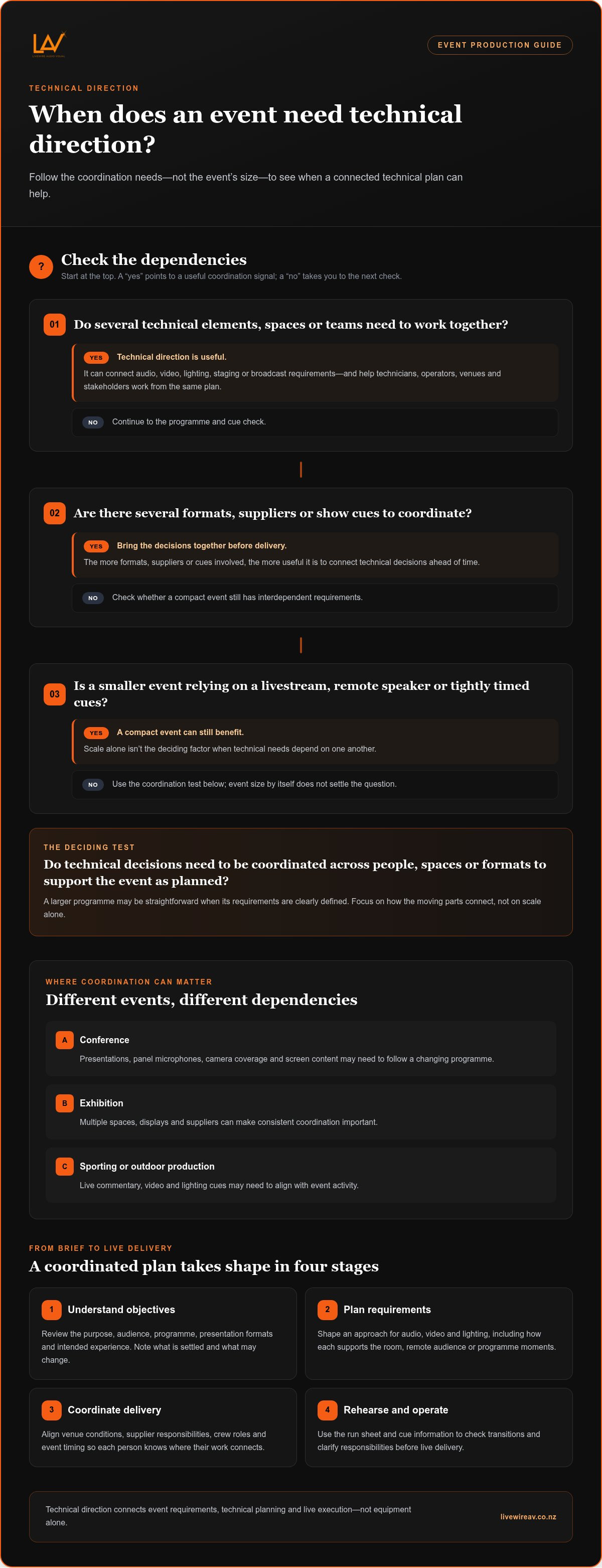
Event technical direction services add value when an event’s technical elements need to work as a connected system. Audio, video, lighting, staging and broadcast requirements can affect one another, especially when a programme includes presentations, performances, remote contributions or live vision switching. Clear communication helps technicians, operators, venues and other stakeholders work from the same plan. The broader Role of a Technical Director varies across industries, but in live events the focus is translating production needs into coordinated technical decisions and delivery.
What does event technical direction include?
Technical direction translates event objectives and programme requirements into a practical technical approach. This can mean identifying audio coverage, screen and projection needs, camera positions, lighting design and the people required to deliver each element. The plan also needs to account for how the venue will be used and when technical actions happen within the programme.
Align technical choices with the event format, content and audience experience.
Coordinate relevant audio, video and lighting requirements.
Make decisions and responsibilities clear to technicians, operators, venues and stakeholders.
Which events benefit from technical direction?
Technical direction is useful when several technical elements, spaces or teams need to work together. Conferences, exhibitions, corporate gatherings, sporting events and outdoor productions can all have distinct requirements. The more formats, suppliers or show cues involved, the more useful it is to connect decisions before delivery begins.
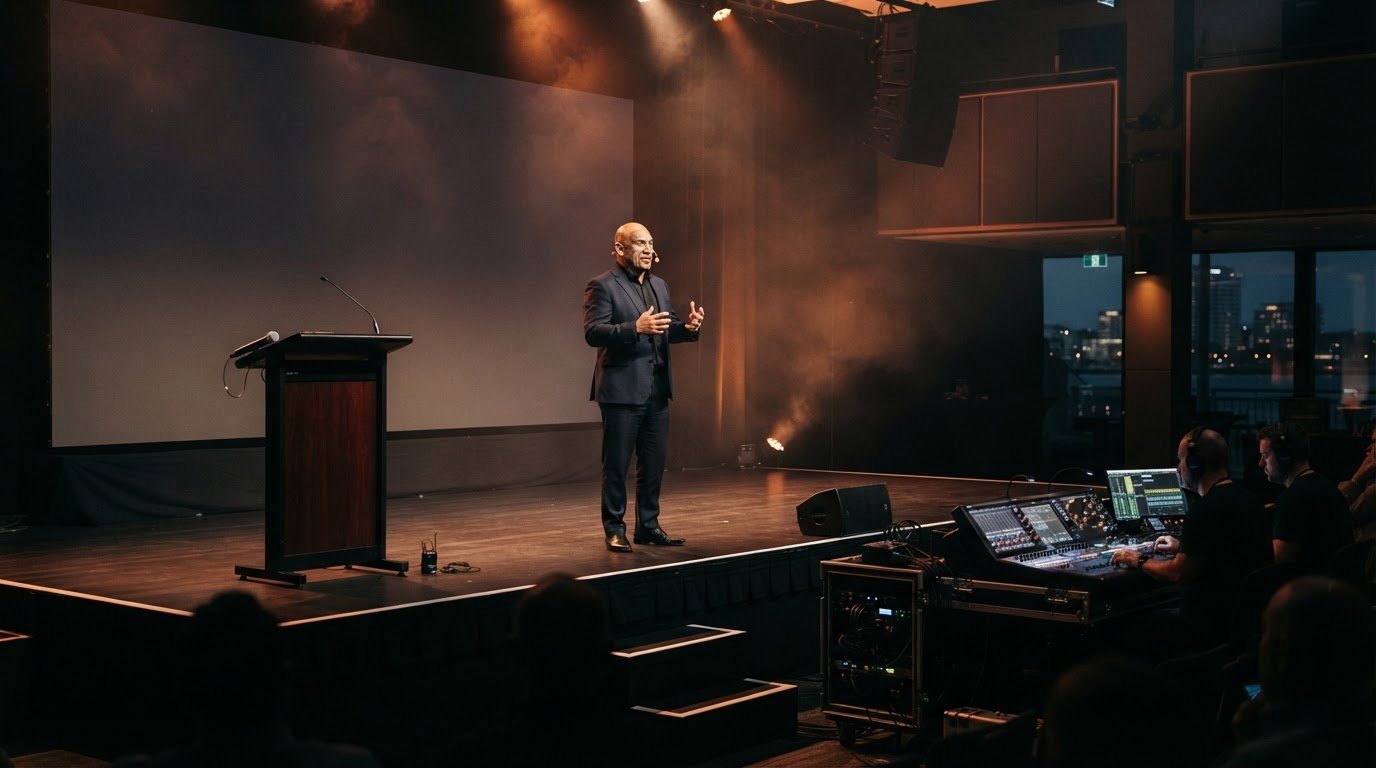
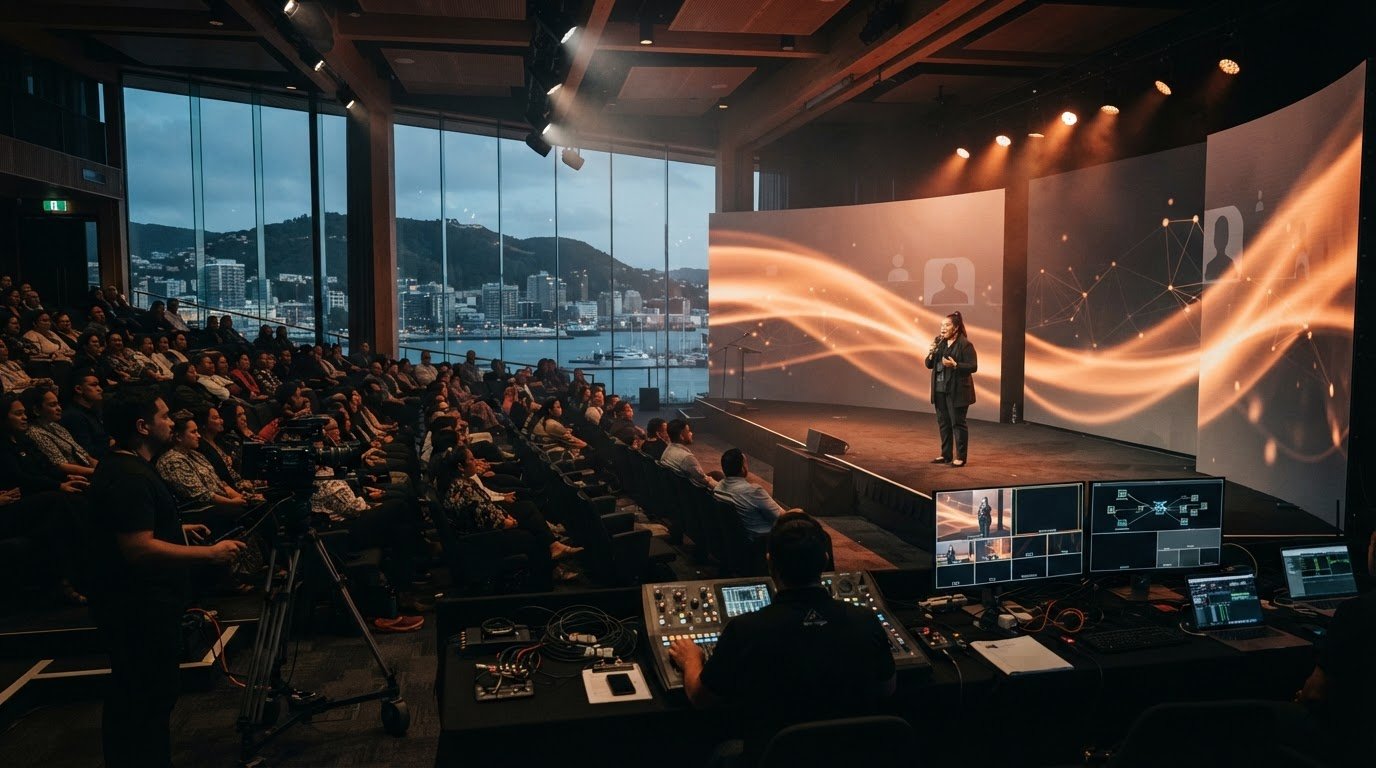
A conference may need presentations, panel microphones, camera coverage and screen content to follow a changing programme.
An exhibition can involve multiple spaces, displays and suppliers, making consistent coordination important.
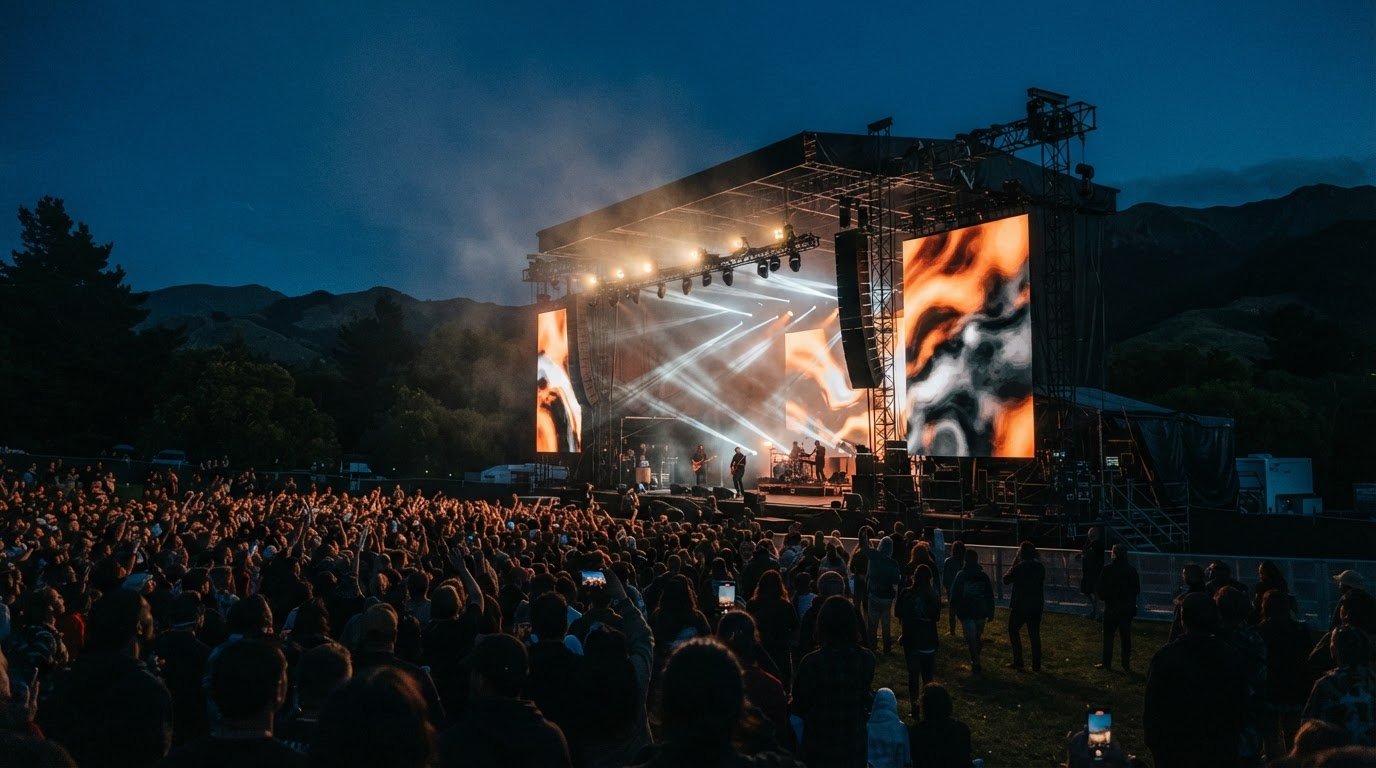
A sporting or outdoor production may combine live commentary, video and lighting cues that need to align with event activity.
Scale alone isn’t the deciding factor. A compact event with a livestream, remote speaker or tightly timed cues can have interdependent technical needs. A larger programme may be straightforward if its requirements are clearly defined. The key question is whether technical decisions need to be coordinated across people, spaces or formats to support the event as planned.
How event technical direction connects the brief to live execution
A production plan is useful when it reflects the event’s actual programme, venue and audience experience. Event technical direction services connect those details, so technical choices, crew responsibilities and live cues are considered together rather than in isolation. The workflow varies with the event format, venue and production scope, but clear hand-offs help turn an initial brief into an actionable plan.
From event brief to technical plan
Start with the essentials: who the audience is, what the programme includes, how presenters will contribute and what the event should feel like. A presentation-led conference, for example, has different needs from an exhibition with several active spaces. These details help shape audio, video, lighting and crew requirements. Early planning can also reveal dependencies before they become delivery-day surprises.
Understand the objectives. Review the event purpose, audience, programme, presentation formats and intended experience. Note which details are settled and where the plan may still change.
Plan the requirements. Translate those needs into a coordinated technical approach. Consider how audio supports speakers, how video serves the room or a remote audience, and how lighting relates to presentations, performances or other programme moments.
Coordinate delivery. Align the technical plan with venue conditions, supplier responsibilities, crew roles and event timing. Clear communication helps each person understand their responsibilities and where their work connects with others.
Rehearse and operate. Use the run sheet and cue information to check transitions, clarify responsibilities and prepare operators for live delivery. On site, technicians and operators manage the relevant equipment and cues as the programme unfolds.
The sequence matters because one decision can affect another. A change to a speaker’s presentation format may alter screen content, camera coverage or cue timing. Coordinating these dependencies early gives the team a shared reference point and makes changes easier to communicate.
From rehearsal to show operation
A run sheet gives the team the order and timing of programme items. Cue information connects those moments to technical actions. For instance, a speaker introduction might involve a microphone handover, a camera change and presentation content appearing on screen. Rehearsal lets presenters and operators walk through transitions, spot unclear instructions and agree who acts at each point.
During live delivery, on-site technicians and operators work from the plan while responding to the programme as it happens. Clear roles help avoid uncertainty about who triggers a cue, manages a technical change or communicates an update. The aim is coordinated execution, not a promise that nothing will change.
For an event with several formats, spaces or tightly timed cues, this structured approach can reduce the organiser’s coordination load. Discuss your event production requirements with LivewireAV to shape a technical plan around your programme, venue and production scope.
Event technical direction vs event management, venue support and AV supply
These roles can overlap in conversation, but they focus on different parts of an event. Event management keeps the wider programme and stakeholder priorities moving. Technical direction connects those plans to the systems, people and cues needed for technical delivery. Venue support and equipment provision contribute important pieces, but don’t necessarily coordinate the production as a whole.
Use this comparison to clarify where responsibilities sit. The exact division depends on the event and the teams involved.
Technical direction and event management have different centres of gravity
Event management coordinates the wider event plan, including programme timing, logistics and stakeholder needs. Technical direction focuses on how audio, video, lighting and the people operating those systems support the programme. The two functions work best when information moves between them. A programme change may affect a presentation cue, microphone handover or camera requirement. Technical direction doesn’t replace event management; it connects the technical work to the event plan.
Why equipment supply alone may not cover coordination
Equipment provision addresses what is supplied. Coordination addresses how systems work together, who operates them and how they relate to the running order. A display, cameras and audio equipment, for example, need to support the programme as a connected setup, with responsibilities clear to the relevant crew. Integrated production brings audio, video, lighting, equipment and on-site operation into one coordinated approach. LivewireAV provides full technical production for events across New Zealand. Its premium event production in New Zealand overview explores the broader scope.
How much direction is useful depends on complexity, not event size alone. A smaller programme with livestream elements, multiple suppliers or closely timed cues may need careful technical coordination. A larger event with a straightforward format may have fewer dependencies. Consider the number of systems, teams, spaces and transitions that must align. That’s a more practical guide than guest numbers on their own, and it helps define where event technical direction services can support the organiser and production team.
What to prepare before engaging event technical direction services
You don’t need every production decision finalised before a planning conversation. Start with a clear picture of what’s confirmed, what’s constrained and what’s still being decided. This gives the technical team context to shape the discussion around the event instead of filling gaps with assumptions.
Information that helps shape the technical approach
Bring the details that influence how the event will look, sound and run. Venue information can be preliminary, and presentation content may still be in progress. Label uncertainties clearly so open decisions aren’t mistaken for requirements.
Event format and audience: Note whether it’s a conference, exhibition, corporate gathering or another format, who will attend, and any audience access or participation needs.
Programme outline: Share the running order, session types, speaker transitions, performances and any tightly timed moments.
Content and presentations: Include available slides, video content, remote contributions or other presentation formats, and identify anything still being developed.
Venue information: Gather room layouts, venue documentation and known access, setup or scheduling constraints where available.
Technical priorities: List known needs for screens, cameras, sound reinforcement, lighting or livestreaming. Note what’s essential and what’s still under consideration.
For a conference, requirements can differ between keynote presentations, breakout sessions and streamed content. Organisers planning a conference can also use this audio visual guide for large conferences to consider the production demands that may shape the brief.
Decisions to align before production planning progresses
Preparation is also about people and decisions. Identify who approves programme changes, technical choices and content updates. List the teams and suppliers involved, along with how they’ll share the latest event information. If one person owns the running order while another approves presentation content, make that clear. This helps keep updates connected to the people who need them.
A clear brief helps align technical scope with event priorities, so planning can focus on what the event needs rather than assumptions. Keep a simple record with three labels: confirmed, constrained and undecided. For example, a venue may be confirmed while room layouts are pending, or a livestream may be required while the remote participation format is still being settled. This makes dependencies visible and gives the planning conversation a practical starting point.
With those details in hand, discuss your event production requirements with LivewireAV. Event-specific proposals connect your priorities with full technical production, equipment and experienced technicians or operators across New Zealand.
LivewireAV event technical direction services: coordinated production across New Zealand
LivewireAV provides event technical direction through full technical production, connecting planning with on-site delivery for events across New Zealand. Rather than treating audio, video and lighting as separate decisions, the team considers how each supports the programme, venue and intended audience experience. Full technical production brings relevant equipment and experienced technicians or operators together around the event’s requirements.
This coordinated approach is useful when a brief involves several technical disciplines or a live programme with transitions to manage. It gives the organiser a practical production partner for the technical details, while keeping the event’s wider objectives at the centre of planning.
One coordinated production approach for varied event formats
Conferences, exhibitions, corporate gatherings, sporting events and outdoor productions each have their own production considerations. A conference may need clear audio, presentation screens and camera coverage. An exhibition may call for LED displays and lighting that supports activity across the space. Sporting and outdoor productions can bring additional venue and environment considerations into the technical plan. LivewireAV’s capabilities include LED walls, camera packages, audio line array systems and intelligent lighting, with production requirements tailored to the event.
For outdoor events, early consideration of the site and programme helps inform how technical elements will be planned and delivered. Factors such as the production layout and how the audience will experience sound, visuals and lighting can shape the approach. LivewireAV’s guide to outdoor event production in New Zealand explores these considerations in more detail.
Hybrid and livestream formats can also involve cameras, vision switching and remote participation needs. Connecting these elements with the room’s audio and visual setup helps the technical plan serve both in-person and online audiences. The equipment and crew are selected to suit the event’s requirements, rather than a preset package.
Tailored proposals built around event requirements
Every event has a different combination of programme, venue, audience and technical priorities. LivewireAV prepares tailored proposals around project requirements, bringing relevant production elements and experienced operators into the planning conversation. Sharing a clear brief helps establish what the event needs, which details are confirmed and where decisions are still open.
Useful starting information includes the event format, objectives, programme outline, venue details and known technical requirements. If plans are evolving, note what’s undecided. That gives the production discussion room to develop without treating assumptions as fixed instructions.
For a composed, well-coordinated production, share your event format, objectives and known technical requirements with LivewireAV. Talk with LivewireAV about your event.
Make your next production conversation count
A technical plan can take shape before every detail is settled. Bring the event’s purpose, programme priorities and known constraints into one conversation, then identify which decisions need to happen first. This gives your team a practical way to move from broad ideas to a production scope, while keeping open questions visible instead of letting them become last-minute assumptions.
Event technical direction services are most valuable when the right people are involved early, with those who understand the event and the technical delivery in the same planning loop. You don’t need a perfect brief to begin. A clear outline of what you know, what matters most and what’s still taking shape is enough to start mapping the path ahead.
When you’re ready to discuss your plans, talk with LivewireAV about your event. Bring the details you have and take the next step towards a composed, well-planned production.
Frequently Asked Questions
Is event technical direction only needed for large events?
Not necessarily. Attendance is only one consideration; the number of technical hand-offs can matter more. A smaller awards programme, for example, may combine presenter microphones, video playback and timed lighting changes. If different people or systems support those moments, event technical direction services can help clarify who acts and when. If the setup is straightforward and responsibilities are already clear, the need for this oversight may be more limited.
What does an event technical director do during an event?
An event technical director helps keep technical delivery aligned with the live programme. This may involve following cue flow, coordinating technicians and operators, and communicating adjustments when timings or content change. For example, if a presenter updates a file shortly before a session, the relevant operator needs the correct content and cue information. The event organiser remains responsible for wider programme decisions and stakeholder priorities.
How is technical direction different from event production?
Technical direction focuses on coordinating technical decisions and delivery, while event production can cover a broader scope, including equipment, crew and operation. The terms can overlap, so compare the actual responsibilities: does the scope include planning, on-site technical support and cue coordination, or only selected elements? LivewireAV provides full technical production, with audio, video and lighting support tailored to the event’s requirements.
When should technical direction be brought into event planning?
Bring technical planning into the conversation while the programme and venue requirements are taking shape, rather than waiting until every presentation is locked. That allows time to flag constraints, such as a session needing camera coverage in a room also used for another activity. If the format is set but details remain open, share that early so the team can distinguish firm requirements from assumptions.
What information should I prepare for an event technical production discussion?
Start with the event format, audience, programme outline, venue details and any known sound, screen, camera, lighting or livestream needs. A draft running order can help identify moments that may need particular cues or content changes. Add access and scheduling constraints, then mark decisions as confirmed or still open. You don’t need a complete production brief; a clear snapshot of what’s known gives the discussion a useful starting point.
Does event technical direction include equipment and technicians?
LivewireAV provides full technical production with equipment and experienced technicians or operators, tailored to project requirements. A meeting focused on sound may call for a different combination from a hybrid conference involving cameras and livestreaming. Identify which systems need on-site operation and how they relate to the programme, rather than assuming every event needs every technical element.
Comments