Corporate AV Hire in New Zealand: How to Choose a Full-Service Event Partner
What if the biggest risk in corporate AV hire New Zealand isn’t the equipment, but a gap between the supplier, the technicians and the person calling the show? A clear picture and a loud speaker won’t help if no one has mapped how they’ll work together.
It’s reasonable to want clarity before event day. You need to know which equipment suits your venue, audience and programme, what the proposal includes, and who’s responsible for setup and technical operation. When suppliers have separate scopes, important details can fall between them.
This guide explains how to assess corporate AV hire in New Zealand, from audio, LED walls and projection to cameras, vision switching and intelligent lighting. You’ll learn what to clarify about technical crew, event-day coordination and inclusions, so you can compare proposals on a like-for-like basis. The goal is a dependable technical plan, with equipment and people working together before the first attendee arrives.
Table of Contents
What corporate AV hire in New Zealand should cover
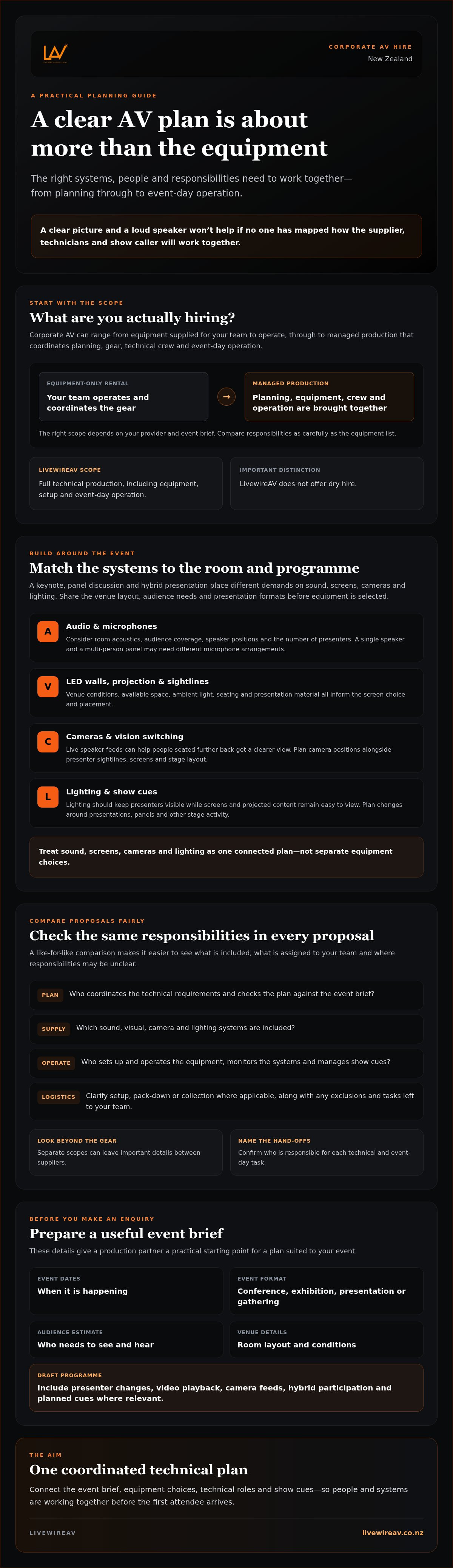
Event organisers need reliable delivery, not a confusing list of equipment names. Corporate AV hire New Zealand can range from equipment supplied for an organiser to operate, through to managed production that coordinates planning, equipment, technical crew and event-day operation. The right scope depends on the provider and your event brief, so compare responsibilities as carefully as the gear.
Audio, visual and lighting support may include sound systems, LED walls or projection, cameras and intelligent lighting. These elements need to suit the venue, presenters and programme. A clear scope helps prevent gaps between what’s supplied and what’s needed to run the event.
What does a corporate AV provider actually do?
With equipment-only rental, the organiser is responsible for operating the gear and coordinating how it fits into the event. Managed production brings technical planning and delivery together. LivewireAV provides full technical production, including equipment, setup and event-day operation, but doesn’t offer dry hire.
Before confirming a provider, check what the proposal assigns to them and what remains with your team. Ask who coordinates the technical requirements, sets up and operates the equipment, manages show cues, and handles pack-down or collection if applicable. Event management involves coordinating technical and logistical elements. This Event management overview provides broader context for how those responsibilities connect.
Which events commonly need professional AV support?
Conferences, exhibitions, corporate gatherings and presentations can all benefit from professional AV support, but they don’t need identical setups. A presentation with one speaker and a screen has different requirements from a multi-session conference with several presenters, camera feeds or hybrid participation.
Start with the audience and room. A larger audience or wide layout may call for sound and visuals that reach people across the space. Sightlines, room shape and seating also affect screen placement and speaker coverage. Then consider the programme: presenter changes, video playback and planned cues can influence the equipment and technical operation required. Let the brief guide the system, rather than choosing equipment first and trying to fit the event around it.
For more detail on how technical planning contributes to event delivery, read our premium event production guide. As you develop your scope, describe the audience experience you need and the moments that must run smoothly. That gives a production partner a practical starting point for a plan suited to your event, wherever it’s held in New Zealand.
How audio, visuals and lighting work together at a corporate event
The event brief should shape the production plan. A keynote, panel discussion and hybrid presentation place different demands on sound, screens, cameras and lighting. Share the programme, venue layout, audience needs and presentation formats with the production team so technical choices support the event, rather than being selected in isolation.
Each system affects the others. Camera positions need to work with presenter sightlines and stage lighting. Screens need to be visible without obscuring the room, and microphones need to suit the speakers and programme. Technicians and operators set up, monitor and run the agreed systems, including planned transitions and show cues. One coordinated production plan connects the brief, equipment choices, technical roles and event cues, reducing hand-off gaps between suppliers.
Audio and microphone planning for clear communication
Start with the room and the people who need to hear. Room acoustics, audience coverage, speaker positions and microphone requirements all inform the audio plan. A single presenter may need a different microphone arrangement from a panel with several speakers. The appropriate sound system depends on venue conditions and programme requirements, so ask the production team to explain its proposed approach and how the setup will be operated during the event.
Screens, cameras and lighting for presentations
LED walls and projection suit different viewing conditions and content needs. The venue, available space, ambient light, sightlines and presentation material all affect which option is appropriate. Camera packages and vision switching can support live speaker feeds, particularly where people seated further back need a clearer view. Discuss these choices together so camera positions, screens and stage layout work as one system.
Lighting also needs to serve the programme. Presenters should remain visible, while projected content and screens stay easy to view. If the event moves between presentations, panel discussions and other stage activity, intelligent lighting can be planned around those changes and their cues.
Ask prospective providers how they develop and check the technical plan, and whether they can explain relevant AVIXA standards that inform their work. For conference-specific considerations, see our audio visual guide for large conferences. If your brief involves several connected systems, LivewireAV’s full technical production is one option to consider against your requirements.
How to compare corporate AV hire proposals fairly
Two proposals can list similar equipment yet assign very different responsibilities. To compare corporate AV hire New Zealand fairly, assess each against the same event brief and outcomes: what needs to be heard and seen, who operates the systems, and how the technical plan fits the venue and programme. A standard package may not account for your event’s specific requirements.
What should a corporate AV proposal specify?
Look for clear equipment categories, setup and operation responsibilities, and a named point of contact. Ask how proposed changes to the programme, presentation content or venue conditions will be reviewed. If the proposal relies on information or equipment supplied by someone else, have that dependency confirmed before accepting it.
Use a simple comparison framework. Ask each provider to explain the scope in the same terms:
Use the table to surface differences, not just compare lists. A proposal that includes equipment but leaves operation or logistics unclear may place extra coordination on your team. You can also consult Entertainment Technology New Zealand (ETNZ), a professional association for the event technology sector, then ask providers how their team approaches technical practice and event delivery.
How to assess technical support and show-day readiness
Confirm who operates each system and coordinates cues, rather than assuming those responsibilities are included. Ask what the provider needs from presenters, speakers and organisers, such as presentation files, running-order updates or details of planned transitions. Agree how updates will be communicated so everyone is working from the same information.
For events with remote presenters or audiences, review the hybrid conference AV setup guide. Once you’ve clarified your priorities, discuss your event requirements with LivewireAV as a step towards defining a coordinated scope.
What to prepare before requesting corporate AV hire
A focused brief helps a production partner recommend a technical scope that fits your event, rather than making assumptions from a short equipment list. It also gives you a consistent starting point for comparing proposals. You don’t need every detail finalised before making an enquiry. Share what’s known, flag what’s provisional and identify what still needs to be confirmed.
Information to include in your event brief
Gather the essentials in this order. Add detail where it’s available, and mark anything that may change.
1. Event basics: Give the date or dates, event format, purpose and estimated audience.
2. Venue information: Name the venue and share room plans, stage or seating layouts, access details and any known technical restrictions.
3. Programme: Include a draft run sheet, session timings, presenters, speaker changes and planned content such as slides or video.
4. Presentation needs: Note any requirements for screens, cameras or lighting that are relevant to the format and audience.
5. Additional formats: State whether the event includes remote presenters or audiences, livestreaming, recording or multiple presentation spaces.
These details connect the technical requirements to the event. Several sessions in different rooms, for example, may affect how equipment and crew need to be planned. A hybrid format also brings remote participation into the brief. If you’re still waiting on a venue plan or confirmed programme, say so rather than guessing.
Questions to resolve with the production partner
Use the planning conversation to establish who is responsible for practical hand-offs. Clarify who supplies and checks presentation files, manages speaker changes and confirms show cues. Ask what access is available for setup and testing, whether equipment needs to move between spaces, and who your event-day contact will be.
For provisional details, ask what the provider needs to develop an initial plan and what must be confirmed before the scope is final. This keeps open questions visible and gives your team a clear next step, rather than leaving assumptions buried in the proposal. An enquiry for corporate AV hire New Zealand can be concise, provided it distinguishes confirmed details from decisions still in progress.
To start shaping a scope around your programme and venue, share your event requirements with LivewireAV.
Choosing a full-service corporate AV partner in New Zealand
A coordinated production partner can be useful when your event involves several connected systems, multiple presenters, planned show cues or technical delivery across different parts of the programme. Rather than treating audio, screens, cameras and lighting as separate decisions, a full-service approach brings them into one production scope, with technicians and operators supporting delivery.
The right scope still depends on your brief, venue and confirmed production requirements. A conference with presentations and panel discussions may call for different technical planning from a corporate gathering with a simpler programme. Ask the provider to explain how its proposed equipment and crew relate to your event, and which responsibilities are included.
When full technical production is the better fit
Full technical production may suit events where systems need to work together and someone needs to coordinate their operation. A programme with speaker changes, presentation content, camera feeds and lighting cues, for example, can involve several hand-offs if responsibilities are split. A single production plan can align equipment, technical labour and logistics. LivewireAV provides audio, video and lighting production, including LED walls and projection, camera packages and vision switching, intelligent lighting, and hybrid and livestream events.
LivewireAV doesn’t offer equipment-only dry hire. Its proposal should set out the production scope and responsibilities clearly, including what is planned, supplied and operated, along with any exclusions or details still to be confirmed.
What happens after you make an enquiry?
The next steps are practical: share your event brief and available venue details, clarify requirements and open questions, then review a proposed scope against your programme. Before confirming, check that responsibilities, equipment categories and technical operation are clear. If the venue or run sheet is still provisional, identify what information remains outstanding and agree what needs to be resolved next. Specific equipment, crew and event capabilities should be confirmed against your requirements.
For organisers comparing corporate AV hire New Zealand, this process helps turn an initial brief into a plan that can be reviewed and refined, without assuming every detail is settled at the outset. The proposal should make the intended technical approach understandable to both your event team and the production partner.
Once your brief and venue details are ready, request a tailored event production proposal.
Build a dependable production plan for your event
Reliable corporate AV hire New Zealand starts with a clear brief and a proposal that explains more than the equipment list. Match the technical scope to your venue, audience and programme, then compare who plans, supplies and operates each part. Clear responsibilities help reduce last-minute decisions and keep connected systems working towards the same event outcome.
LivewireAV provides audio, video and lighting production throughout New Zealand, with experienced technicians and operators supporting technical delivery. Its production capabilities include LED walls and projection, camera packages and vision switching, alongside audio and intelligent lighting. The right equipment and crew depend on your confirmed event requirements, so share what you know and flag details that are still being finalised.
Ready to shape your event brief into a coordinated technical scope?Discuss your event brief with LivewireAV. With the venue details, programme and key audience needs on the table, you can take the next planning step with greater clarity.
Frequently Asked Questions
What does corporate AV hire include?
Corporate AV hire may include equipment, planning, setup and event-day operation, but inclusions vary between providers. Ask whether the proposed scope covers audio, screens, lighting, cameras, technicians and show-cue operation. LivewireAV provides full technical production, with equipment and experienced technicians or operators supporting event delivery. It doesn’t offer dry-hire equipment rental. Before proceeding, check the proposal for responsibilities, exclusions and details that still need to be confirmed.
How do I choose a corporate AV provider in New Zealand?
Start with your event brief, then compare providers on planning, equipment suitability, technical staffing, logistics and show-day responsibilities. Ask how the proposed setup responds to your venue, audience and programme. For corporate AV hire New Zealand, look for a proposal that clearly sets out inclusions, exclusions and points of contact. A detailed scope is easier to compare than a generic equipment list and helps clarify who is responsible for each part of delivery.
Can one AV provider manage sound, screens and lighting?
Yes. A full-service event production provider can coordinate sound, screens and lighting as part of one technical plan. The appropriate scope depends on your event format, venue and production requirements, so confirm which equipment and operators are included. Ask how show cues, presenter changes and communication between technical roles will be managed. This helps you understand how the systems are intended to work together, rather than treating each equipment category as a separate decision.
How much does corporate AV hire cost in New Zealand?
The cost depends on your event brief, venue, equipment, technical labour, logistics and production requirements, so there’s no useful one-size-fits-all figure without those details. Request a tailored proposal based on your event date, format, estimated audience, venue information and programme. When reviewing it, consider the full scope and exclusions as well as the quoted total. This makes it clearer what the proposed investment covers and which responsibilities may sit with your event team.
What information should I provide when requesting an AV proposal?
Share your event date, format, estimated audience, venue details, draft programme and presentation requirements. Note whether the event needs cameras, livestreaming, recording or additional screens, where relevant. Include any available room plans or known venue restrictions. If the programme or venue details aren’t final, label them as provisional and ask what needs to be confirmed next. Distinguishing known information from open questions helps shape a practical proposal without relying on assumptions.
Does LivewireAV offer dry-hire equipment rental?
No. LivewireAV provides full technical production, including equipment and experienced technicians or operators to support event delivery. If you’re comparing providers, distinguish equipment-only rental from a managed production service and check who will plan, set up and operate the systems. Share your event requirements, including the venue and programme, to clarify whether the production scope can be tailored to your brief. Confirm the proposed responsibilities and exclusions before proceeding.


Comments