Benefits of Using a Single AV Supplier for Your Event
Updated: Oct 2
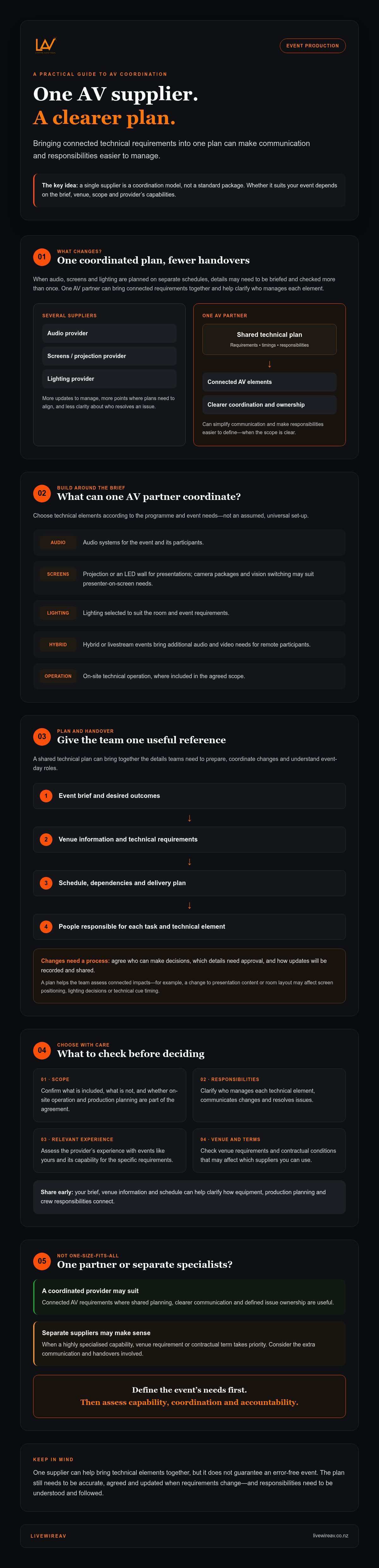
What happens when the sound system, screens and lighting are planned on separate schedules? A small gap in communication can become a handover problem on event day. The benefits of using a single AV supplier start with bringing connected technical requirements into one plan, with clearer communication and accountability.
It’s understandable to choose specialists for different parts of an event. But coordinating several suppliers can mean more updates to manage, more points where plans need to align and less clarity about who resolves an issue. One AV partner can coordinate requirements such as audio, LED walls or projection, lighting and camera packages, helping the technical elements work together.
This article explains where a single supplier can reduce planning effort and make responsibilities easier to define. It also covers what to check before placing multiple AV requirements with one provider, including the scope of work, event-specific experience and who is responsible for each technical element. The aim is a considered decision based on your event’s needs, not a one-size-fits-all answer.
Table of Contents
What does a single AV supplier mean for event production?
A single AV supplier is one provider responsible for coordinating the technical services agreed for an event. That could include audio, video, lighting and on-site technical operation, with the scope shaped around the event brief. It doesn’t mean every event needs every service, or that one supplier must be the right choice for every requirement.
Think of it as a coordination model, not a standard package. A provider offering full technical production may plan connected requirements and clarify who is responsible for delivering them. That differs from a dry-hire arrangement, where equipment is supplied without the same production coordination being part of the agreement. Be clear about what’s included before you commit. Event management involves coordinating the parts that bring an event together, including technical elements and external providers.
Which event requirements can one AV partner coordinate?
Start with what the programme needs. A conference might call for audio systems, projection or an LED wall for presentations, and lighting suited to the room. If presenters need to appear on screen, camera packages and vision switching may also be relevant. For hospitality spaces or venues planning multi-screen setups that require dedicated commercial distribution hardware, you can learn more about HDTV Supply to explore specialised systems. Hybrid or livestream events bring additional audio and video needs for remote participants. The point is to plan around the brief, not assume a universal set-up.
When might separate AV suppliers still make sense?
A highly specialised technical requirement may call for a provider with capability that a broader production partner doesn’t offer. Venue requirements or contractual terms may also influence which suppliers you can use. Confirm these conditions with the venue and relevant providers before making a decision, so there are no surprises about access, responsibilities or coordination.
Compare the specialist capability you need with the additional communication and handovers involved in using separate suppliers. One coordinated provider can suit connected AV requirements; separate suppliers may be more appropriate when a distinct expertise or requirement takes priority. The benefits of using a single AV supplier depend on the event’s scope, the venue and the provider’s actual capabilities.
How can one AV supplier reduce planning and handover complexity?
Planning becomes easier to follow when the technical requirements are gathered, checked and coordinated through one agreed process. Begin with the event brief and venue information, then confirm the production requirements, schedule, responsibilities and delivery plan. If different suppliers are involved, each handover can require another briefing and another check that the details match.
Coordination is shared planning across connected technical disciplines, with clear responsibilities and timings. A single supplier can help reduce duplicated briefings by keeping relevant information together. That can make changes easier to communicate, but it doesn’t guarantee an error-free event. The plan still needs to be accurate, agreed and updated when requirements change.
How does a shared technical plan support event preparation?
A shared plan can bring together the event schedule, venue details, technical requirements, dependencies and the people responsible for each task. For example, a change to presentation content or room layout may affect screen positioning, lighting decisions or the timing of technical cues. Recording these connections helps the team assess a change across the production rather than treating it as an isolated update.
Agree early on who can make decisions, which details need approval and how changes will be recorded and shared. These simple steps give the production team and event organisers a common reference point.
What changes during event-day coordination?
On the day, defined roles help everyone understand who is managing equipment, operating cues and communicating schedule changes. On-site technicians and operators can manage equipment and cues during the event, according to the agreed scope. If a session runs late or a presenter’s requirements change, clear ownership helps the right people assess the update and communicate its impact.
Preparation matters. So do calm communication and practical decision-making. A shared plan gives the team a useful reference, but delivery still depends on the agreed responsibilities being understood and followed.
Before confirming a supplier, check that the production plan covers the event brief, venue information, timings, responsibilities and a process for changes. Ask how updates will reach everyone who needs them, and what support is included on site. These are practical benefits of using a single AV supplier when several technical requirements depend on one another.
For events that need connected production planning, you can review LivewireAV’s full technical production and consider whether its scope matches your event requirements.
Does one AV supplier improve accountability and technical integration?
It can, provided the supplier’s scope is clear. With one provider coordinating connected AV services, there may be fewer communication channels to manage and a clearer route for raising a technical issue. With several providers, each may own a different part of the system, so organisers need to understand how responsibilities and equipment interfaces fit together.
Integration still depends on the actual plan, equipment and agreed responsibilities. A single provider isn’t automatically accountable for work outside its scope, and using one supplier concentrates responsibility as well as coordination. Compare the potential advantages with the conditions that make them possible:
How can a single point of contact clarify responsibility?
Name the person responsible for technical decisions and event-day escalation, and confirm who acts as their contact on the supplier’s side. Clear ownership helps route an issue to the right person sooner, even though it can’t guarantee how quickly the issue will be resolved.
Ask for the proposal or scope to record inclusions, exclusions, dependencies and approval responsibilities. For example, clarify who supplies information, who signs off a change and which party is responsible for coordinating with the venue or another provider. Specifics matter more than the label “single supplier”.
How should organisers manage reliance on one provider?
Check the provider’s relevant capability against the complete event brief, not just its strongest service area. Ask how backup equipment, staffing cover and contingency planning are handled for your production, then confirm the response in writing. Don’t assume these arrangements are included.
Also document the responsibilities of the client, venue and any other suppliers. The benefits of using a single AV supplier are strongest when there’s one clear production scope and no gaps between it and the work others are doing. A considered agreement gives you coordination without leaving accountability or contingency arrangements to assumption.
How should you assess whether one AV supplier suits your event?
Start with the event, not a supplier’s equipment list. Define the outcomes you need, then identify the technical requirements and assess whether one provider can plan and deliver them within a clear scope. This helps you judge the benefits of using a single AV supplier against your actual needs, rather than assuming a broader service list is automatically a better fit.
Give prospective suppliers a useful picture of the event. Include its format and audience, available venue information, the schedule and any known constraints, such as room changes, presentation needs or a hybrid component. The more relevant detail you provide, the easier it is to assess whether a proposal addresses the real production requirements.
What should an AV supplier proposal make clear?
Look for a proposal that makes the plan straightforward to review. Check which production services, equipment and on-site roles are included, and note what is excluded or depends on information from you, the venue or another supplier. A clear scope should also state how changes will be considered and who needs to approve them.
Ask how technical planning will be organised and how event-day updates will be communicated. If the event includes audio, visual and lighting requirements, the proposal should make their relationship and responsibilities understandable, not leave you to infer how separate elements will be coordinated.
Which questions help test supplier fit?
Use a conversation to test relevant capability, not just general confidence. Ask for examples of experience with your event format and technical needs, then clarify who will lead planning and who will operate the technical systems on the day. These questions help distinguish a suitable production partner from a supplier whose listed services don’t match your brief.
Which parts of our event brief are included in your proposed scope?
Who will coordinate technical planning, and who will manage operation on the day?
What venue information or decisions do you need from us, and by when?
What contingency arrangements are proposed for this specific scope?
Compare proposals on fit, clarity and accountability, not simply on how many services appear in them. Check that assumptions, logistics, responsibilities and contingency arrangements are specific enough for you to make a considered decision. If something is unclear, ask for it to be explained or documented before committing.
For a production brief involving connected technical requirements, discuss your event’s technical production needs with LivewireAV and assess how the proposed scope aligns with your event.
How can a full-service AV partner support a more coordinated event?
A single partner adds value when its capabilities match the technical needs that connect across your event. The benefits of using a single AV supplier aren’t simply about placing more services with one provider. They come from agreeing a suitable production scope, understanding who is responsible for each part and planning the technical elements in relation to the event’s format and priorities.
LivewireAV provides full technical production for events across New Zealand. Its work includes conferences, exhibitions, corporate gatherings, sporting events and outdoor productions. Depending on the brief, relevant services may include audio systems, LED walls and projection, intelligent lighting design, camera packages and vision switching, as well as hybrid and livestream event production. Not every event needs every service. The proposal should connect the production requirements to what the event needs to achieve.
What kinds of event requirements can LivewireAV discuss?
Consider the audience experience and programme first. A conference may need clear audio and presentation visuals, while an outdoor production may have different lighting, video and technical operation requirements. An event with remote attendees may also need a hybrid or livestream component. These examples are starting points, not set packages. The right scope depends on the event, its venue and the services the supplier can provide.
LivewireAV’s full technical production and technical management can bring relevant AV requirements into a considered proposal. Focus on how the proposed services support the event, rather than treating an equipment list as the plan.
What information should you provide to start planning?
Share the details that shape production decisions. A clear initial brief can include:
Event format and intended audience
Schedule, including key sessions or programme changes
Venue details and any confirmed access or technical constraints
Known requirements for audio, visuals, lighting, cameras or remote participation
Decisions already made, along with any open questions
These details help establish a realistic scope and show where more information may be needed. Ask for a tailored proposal that sets out the proposed services, responsibilities and assumptions, so you can review how the plan fits before committing.
If you’re planning an event with connected AV requirements, discuss your event production requirements with LivewireAV and request a proposal shaped around your brief.
Choose a partner that fits your event plan
The benefits of using a single AV supplier are clearest when the provider’s capabilities match your connected technical needs. A shared plan can help reduce handovers, while clear scope, responsibilities and contingency arrangements help keep accountability practical. The right choice still depends on your event, venue and the support the supplier agrees to provide.
LivewireAV provides full technical production and on-site technical operators, with services spanning audio, video, lighting, camera packages and hybrid event production. The useful next step is to share your event format, schedule, venue information and technical requirements, then review a tailored proposal for fit and clarity.
Discuss your event production requirements with LivewireAV to explore a scope suited to your event. With the right plan and responsibilities agreed, you can move into the next stage of event planning with greater clarity and confidence.
Frequently Asked Questions
What are the benefits of using a single AV supplier for an event?
The main benefits of using a single AV supplier can include fewer handovers, more coordinated planning and a clearer route for raising technical questions. If audio, visuals and lighting are planned together, organisers may find it easier to track responsibilities and communicate changes. These advantages depend on the supplier’s capability and agreed scope, so check what’s included, who owns each task and how issues will be escalated.
Is it better to use one AV supplier or several specialist providers?
One supplier may suit an event with connected AV needs that can be managed within a clear production scope. Several specialists may be a better fit if a particular requirement calls for expertise the main provider doesn’t offer. Compare the capability each option brings with the coordination involved, including communication, system integration and handovers. Confirm any venue or contractual requirements before deciding, and document how suppliers’ responsibilities will work together.
Can one AV supplier provide sound, lighting and video production?
How does a single AV supplier improve event-day communication?
A single supplier can give organisers one agreed contact for production updates and technical escalation, rather than requiring them to relay information between several providers. Before the event, confirm who will communicate schedule changes, who can approve technical decisions and who is responsible for each system. On-site technicians and operators can manage equipment and cues within their agreed roles. Clear communication supports coordination, but it can’t guarantee that issues won’t arise.
What should an AV supplier proposal include?
A useful proposal should explain the production services and equipment included, the on-site roles, and how the plan relates to your event schedule and venue information. Check for assumptions, exclusions, dependencies and responsibilities assigned to you, the venue or other suppliers. It’s also practical to ask how changes will be handled, who approves them and how event-day communication will work. These details help you compare proposals on fit and clarity.
What happens if a single AV supplier has a technical issue during an event?
The response depends on the issue, the agreed scope and the contingency arrangements made for that event. Before confirming a provider, ask who should be contacted, how technical issues are escalated and whether backup equipment or staffing cover is planned. Request specific details rather than assuming they’re included. Documenting responsibilities for the supplier, venue and client can help the right people understand their roles if a problem occurs.
How do I choose an AV supplier for a corporate event in New Zealand?
Choose a supplier by matching its capabilities and relevant event experience to your brief, then reviewing the proposed scope and responsibilities. Share the event format, audience, schedule, venue information and technical requirements. Ask who leads planning, who operates the systems and what contingency arrangements are proposed. LivewireAV provides full technical production for events across New Zealand, including corporate gatherings, with services spanning audio, video, lighting and hybrid event production.
Comments